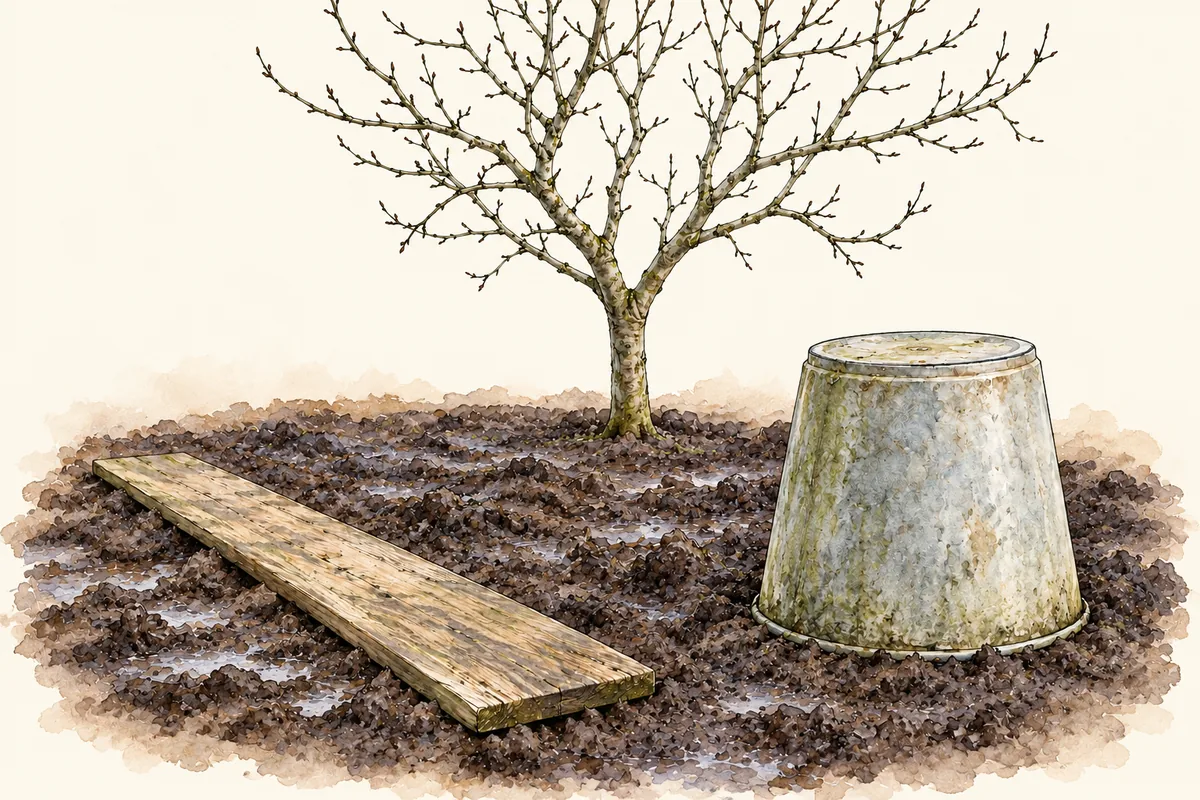
January is the month when gardening magazines invent jobs. The plot is cold, wet and mostly asleep, and very little you do to the soil now will help it. What January is good for is pruning, planning and a small amount of cheating with a bucket. Here is the short list of what is worth your time, in order, and a longer list of what can wait without guilt.
In pictures
-
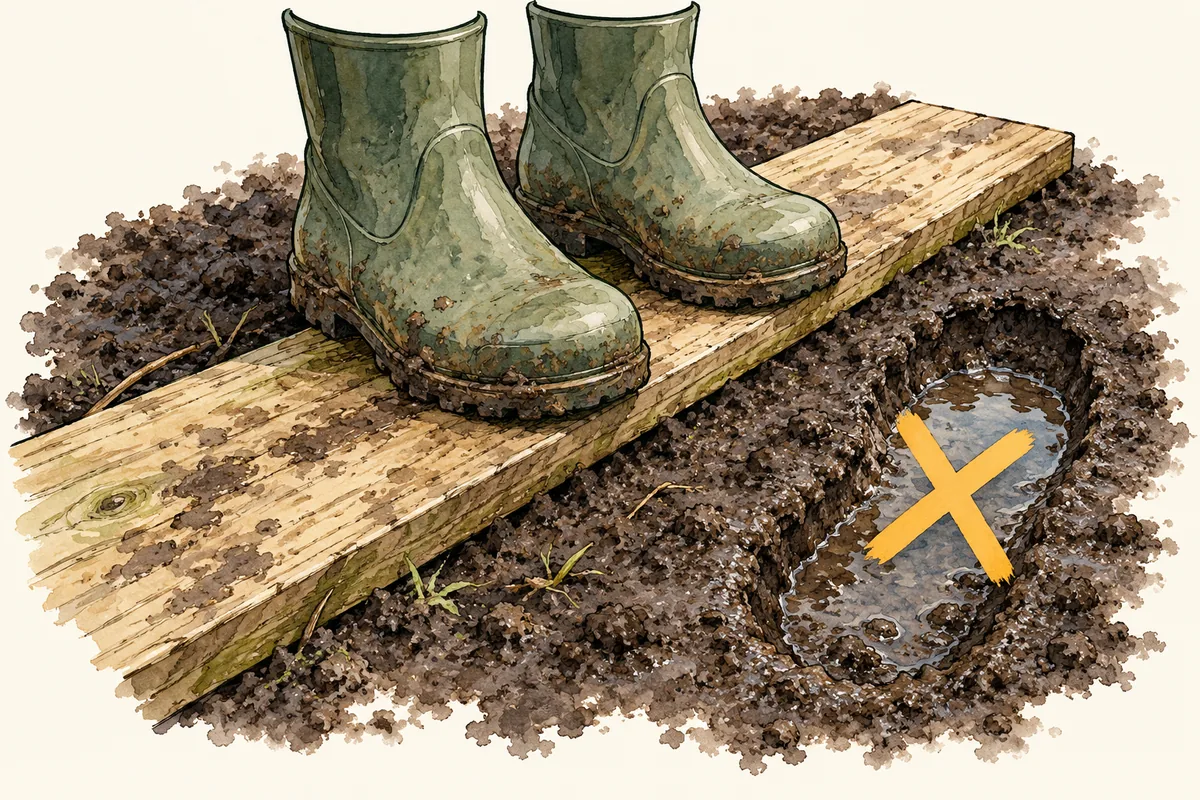
2Stand on a plank, not the wet soil — one footprint compacts it (crossed out). -
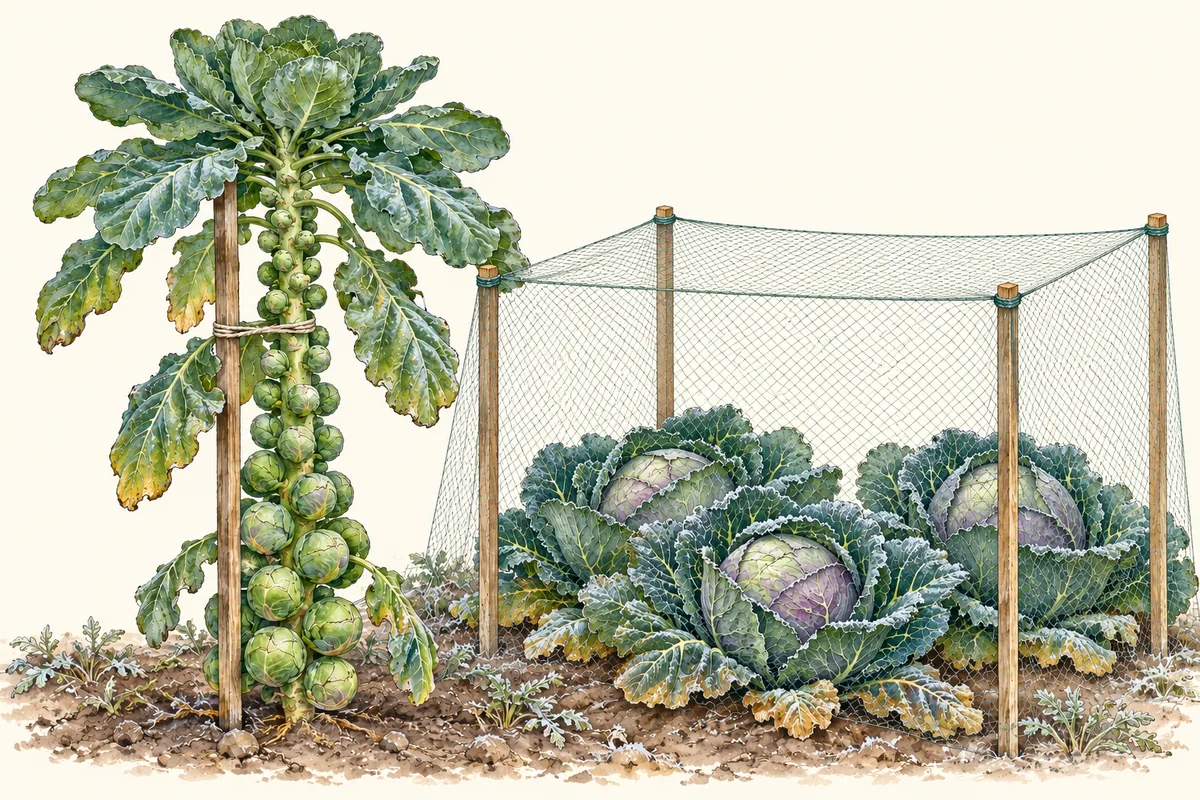
3Stake tall sprouts against wind rock, and net cabbages against pigeons.
01The jobs worth doing, in order
- Stay off wet soil. This one is a job by omission. The RHS warns that soil, clay above all, can be damaged if you work it while wet. If you must cross a bed, lay a plank and work from that to spread your weight.
- Winter-prune apples and pears. The trees are dormant, the branches are bare and you can see what you are doing. Go gently: our guide to winter pruning apples and pears explains why hard pruning backfires. While you are up there, the RHS suggests checking apple trees for canker and cutting out affected wood. Plums and cherries are a different job for a different season: see pruning plums and cherries.
- Force a rhubarb crown. Cover a strong, healthy rhubarb plant with a tall bucket or bin to shut out the light. Pale, tender stems about 30cm long follow four to eight weeks later. Don't force the same plant two years running. The full method is in forcing and dividing rhubarb.
- Check what you have in store. Go through stored apples, pears and root vegetables, and take out anything that has started to rot before it spreads to its neighbours.
- Plan the rotation. The RHS advises planning crop rotation before the season starts, at the point you order seed. The idea is simple: brassicas, legumes, onions, the potato family and roots each move to a fresh bed every year, so soil pests and diseases don't build up. A sketch on the back of an envelope is enough.
- Order seed, with the plan in front of you. Order what the plan has room for and no more. Our guide to buying seed honestly covers what is worth paying for.
- Get seed potatoes and start saving egg boxes. Chitting means standing early potatoes somewhere bright and frost-free to sprout before planting. The RHS says to start in late January in milder areas, and as late as early March in colder ones. It takes four to six weeks. More in chitting and planting potatoes.
- Cover a bed or two. The RHS suggests covering prepared seed beds now so the soil underneath warms earlier for the first spring sowings.
- Guard the winter greens. Protect brassicas from pigeons. Stake or earth up Brussels sprout stalks that are rocking in the wind, and pick the largest sprouts first.
02What can wait
- Most sowing. The RHS January list does include sowings, but look closely: broad beans in pots in a cold frame in mild areas, onion seed in a heated propagator, a few early crops started indoors. Every one needs cover or heat. Nothing on the list goes into open ground, because seed won't germinate in soil below about 7°C. If you have no greenhouse or propagator, you are not behind.
- Digging. Don't dig ground that is wet and claggy, waterlogged or frozen. Heavy clay is best dug in autumn, when it is drier. If you missed that, a January dig of sodden clay does more harm than leaving it.
- Autumn raspberries. The RHS lists cutting the canes down this month. Our raspberry pruning guide has it in February, so there is no rush.
- Currants and gooseberries. The RHS lists these for January as well. If the weather is foul, check the timing in pruning currants and gooseberries before you feel obliged.
- Bare-root fruit trees and bushes. Plant them in January only if the soil isn't frozen. If it is, wait. Our guide to planting bare-root trees, shrubs and roses has the method.
That's January. Prune, plan, put a bucket over the rhubarb and keep your boots off the beds. The soil will tell you when it is ready, and it won't be this month.
How we checked this
Every care and safety claim on this page is verified against horticultural and veterinary sources.
Sources: RHS — Grow Your Own: January jobs · RHS — How to grow rhubarb · RHS — How to grow potatoes · RHS — Crop rotation · RHS — Soil cultivation · RHS — Allotment basics for beginners · RHS — Root vegetables: storing · RHS — Getting started with vegetables: seed sowing techniques
Checked 3 October 2026. If our advice ever conflicts with the RHS, believe them and tell us.