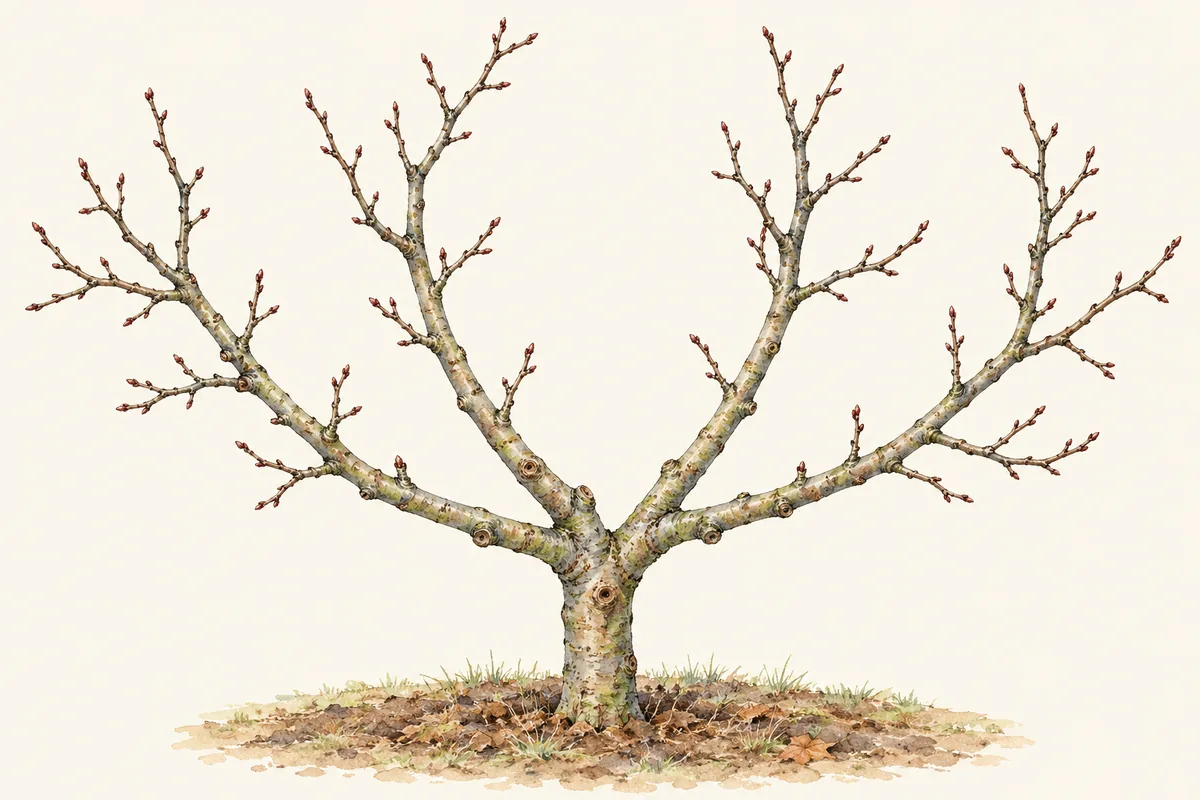
Most apple trees that disappoint haven't been pruned too little. They've been pruned too hard. Cut a lot off in winter and the tree answers in spring with a forest of vigorous upright shoots — leaves, not fruit. The aim of winter pruning is modest: a healthy, open framework, with light and air getting into the middle. This guide is for free-standing bush and standard trees. Trained trees (cordons, espaliers, fans) are mainly pruned in summer — see summer pruning trained apples and pears.
Plums, cherries, apricots and other stone fruit are different. Don't winter-prune them — see pruning plums and cherries.
In pictures
-
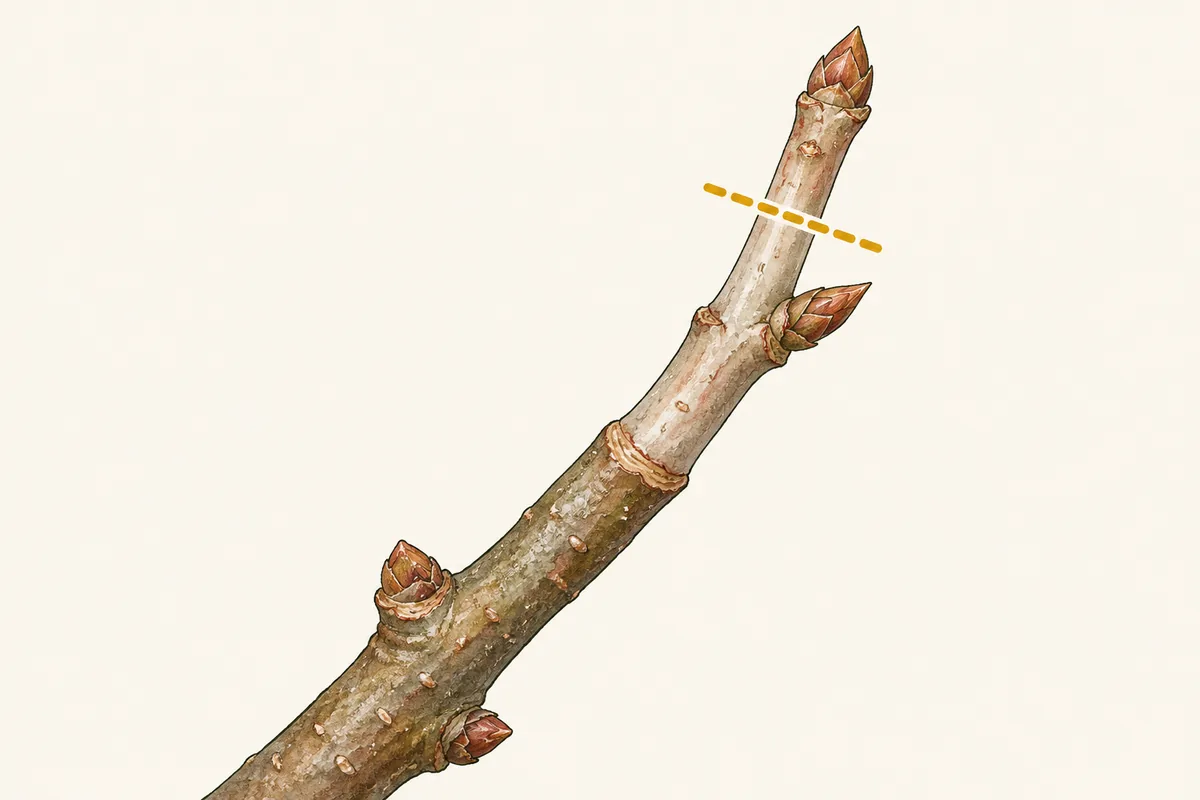
2Shorten last year's growth on each leader by a quarter to a third, to an outward-facing bud. -
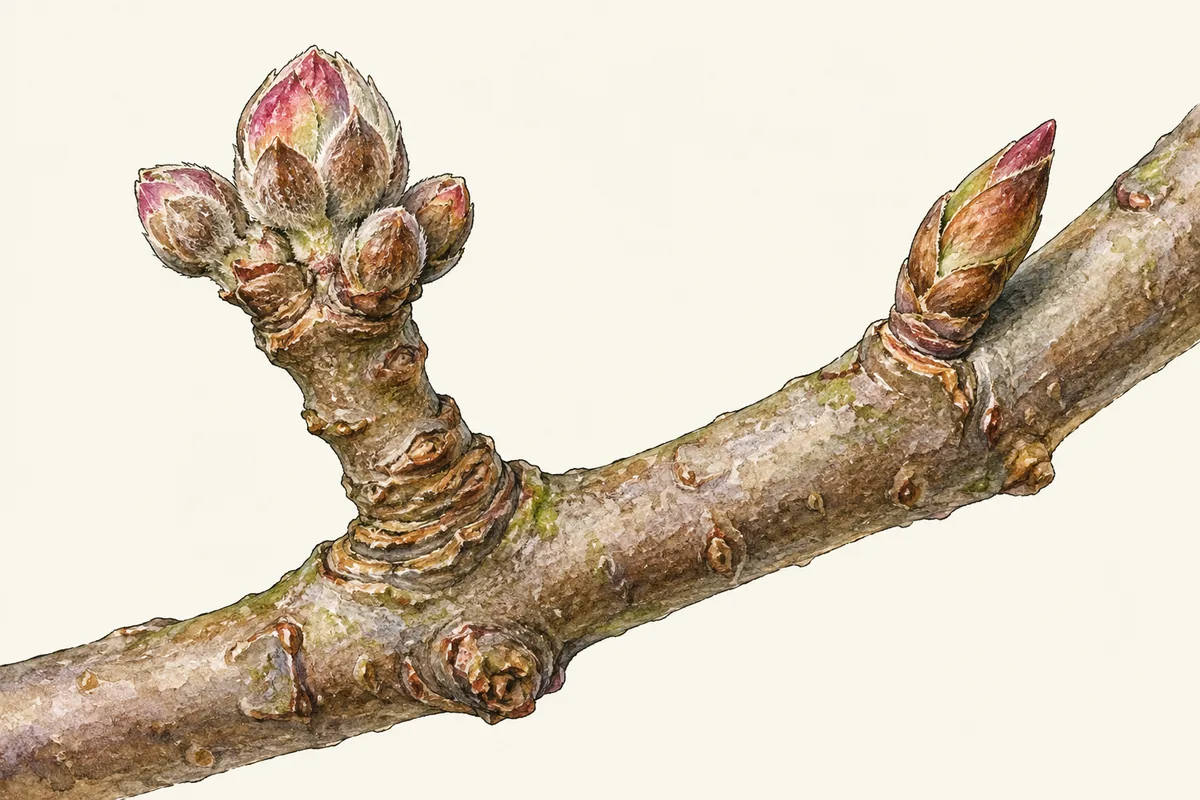
3Fruit buds (left) are fat and rounded; leaf buds (right) are slim and pointed. -
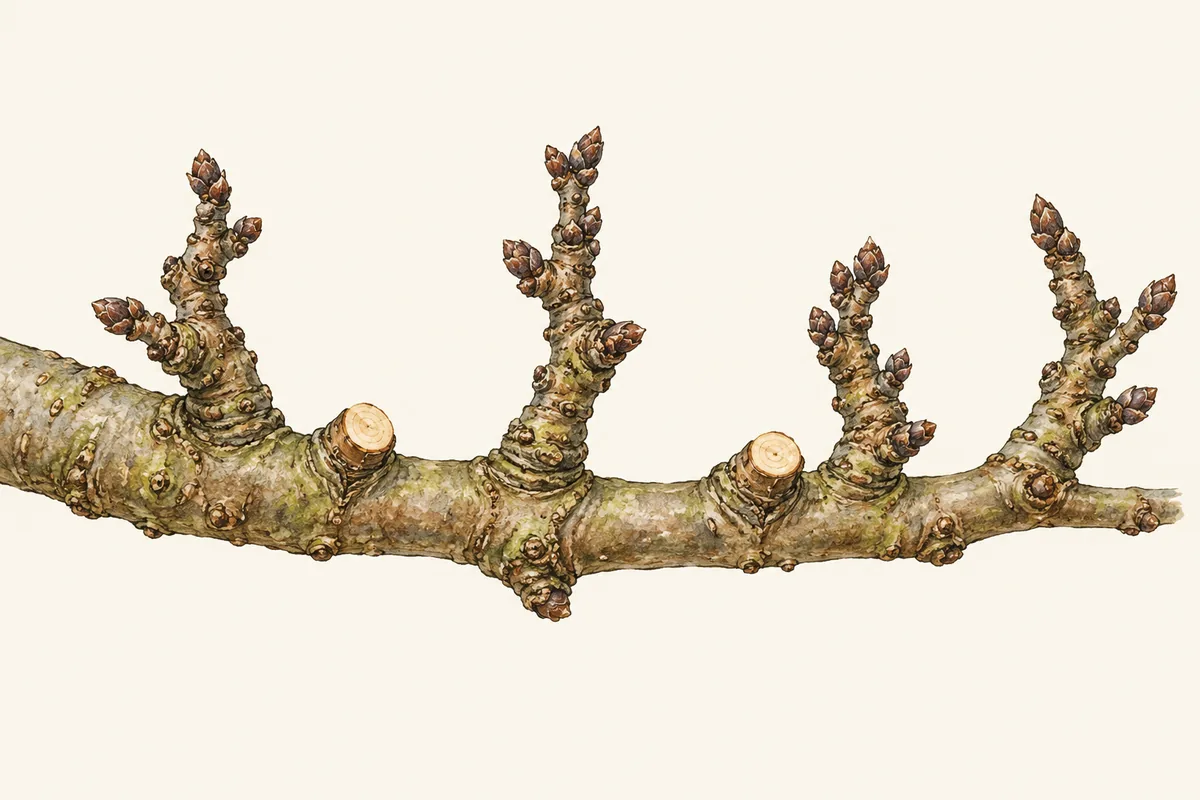
4Thin overcrowded spurs so the rest sit evenly spaced.
01At a glance
- When: while the tree is dormant, November to early March.
- Time: an hour or two for a mature tree.
- Tools: secateurs, loppers, a pruning saw, gloves, eye protection, a sturdy ladder (and someone to foot it).
- The rule: remove no more than about 10–20% of the canopy in one winter.
02Step by step
- Stand back first. Walk round the tree and decide what you're keeping before you cut anything.
- Remove dead, diseased and damaged wood.
- Take out crossing and rubbing branches, and anything growing straight into the centre. You want a goblet shape, open in the middle.
- Shorten the leaders. On each main branch, cut last year's growth back by a quarter to a third, to an outward-facing bud.
- Leave young side-shoots alone unless they're crowded — closer than about 10–15cm apart. These are where fruit buds form.
- Thin congested spurs. On older trees, the stubby fruiting spurs can get overcrowded. Thin them so clusters sit about 10–15cm apart.
- Tip-bearers get a lighter touch. Some varieties carry fruit at the tips of shoots. On those, leave young shoots unpruned and just shorten some of the long, older branches that have fruited, by up to a quarter.
- Stop and count. If the pile on the ground looks like a third of the tree, you've gone too far. Leave the rest for next winter.
03How to tell a fruit bud from a leaf bud
Fruit buds are fat and rounded, often slightly furry; leaf buds are slim, pointed and lie close against the stem. Keep the fat ones.
04Mistakes that cost you fruit
- Hard pruning to "control" a big tree. You'll get vigorous upright watershoots and fewer apples. Spread a big reduction over several winters.
- Cutting off every young side-shoot to make it tidy. That's next year's fruit.
- Pruning stone fruit with the apples because you're out there anyway.
How we checked this
Every care and safety claim on this page is verified against horticultural and veterinary sources.
Sources: RHS — Apples and pears: winter pruning · RHS — Silver leaf (on wound paint)
Checked 1 October 2026. If our advice ever conflicts with the RHS, believe them and tell us.