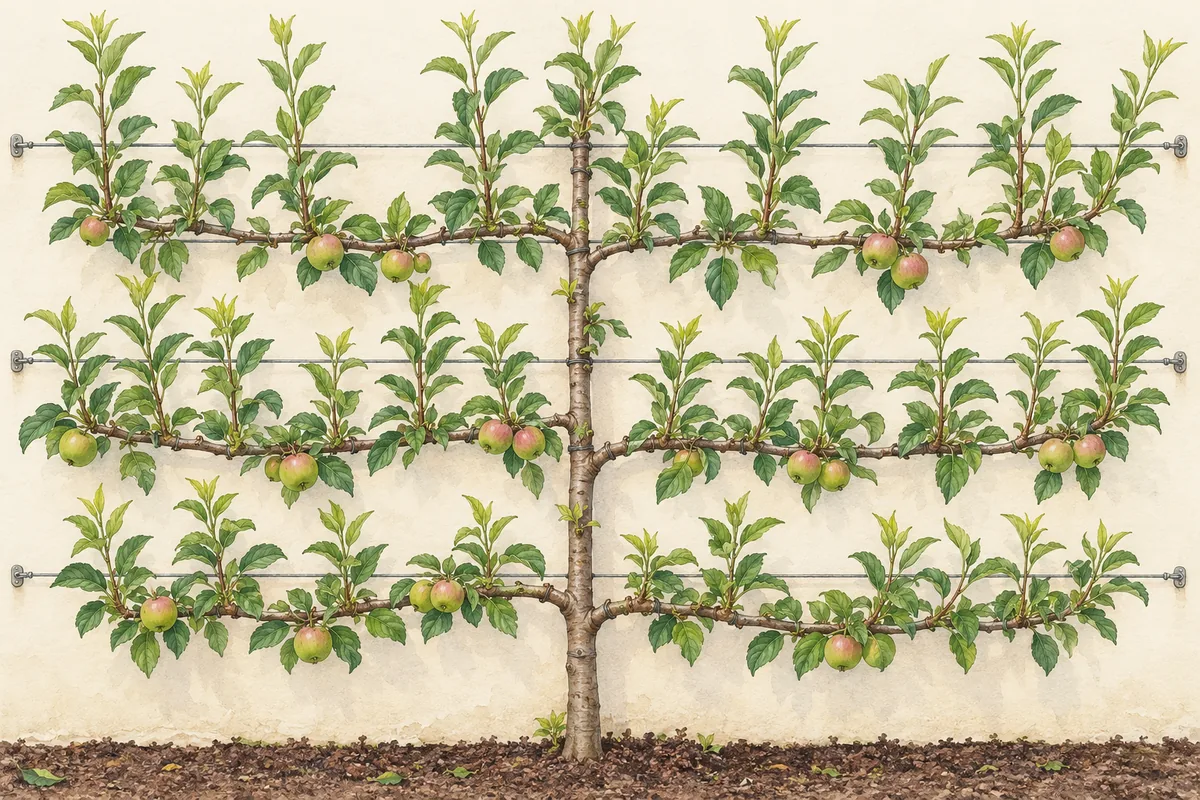
A cordon or espalier is a tree on a strict budget: limited space, so every shoot has to earn its place. Summer pruning is how you keep it that way. Cutting back this year's growth in late summer stops the tree putting energy into leafy shoots and nudges it to form fruit buds instead. It's quick, satisfying, and — once you know what the basal cluster is — very hard to get wrong.
In pictures
-
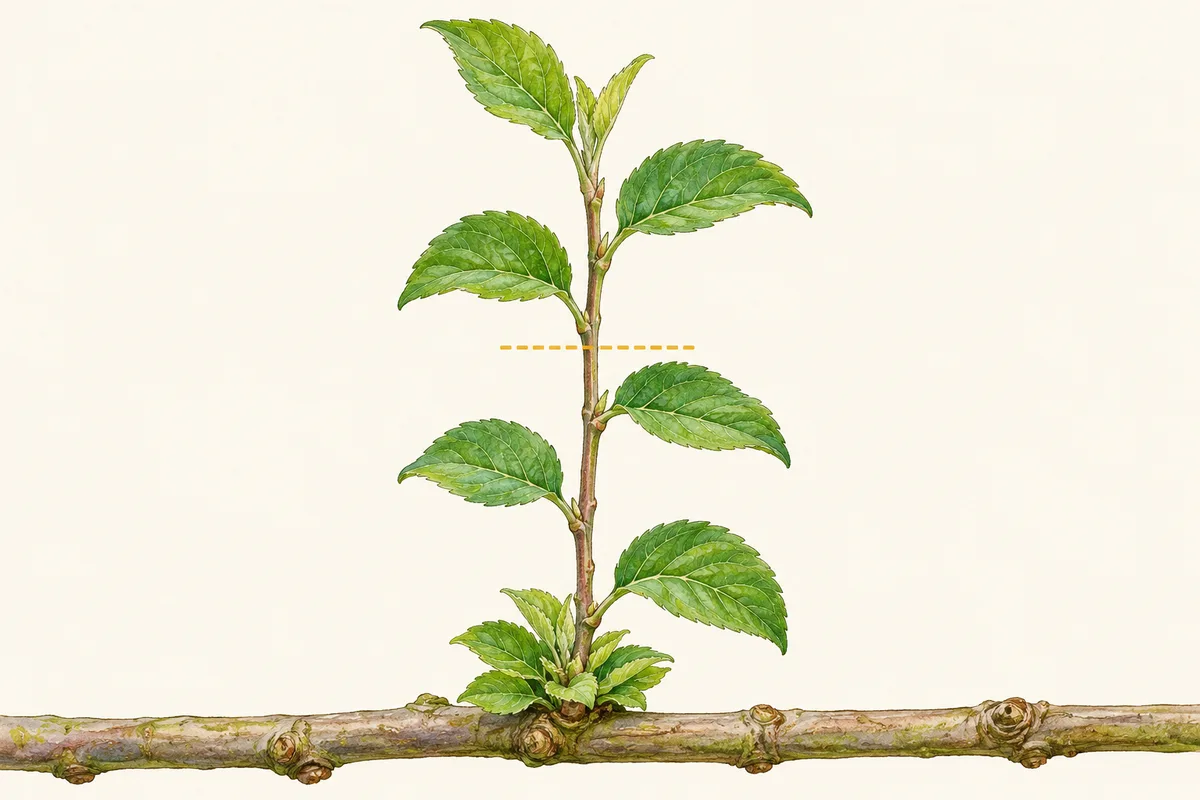
2New shoots from the main arm: cut to three leaves above the basal cluster. -
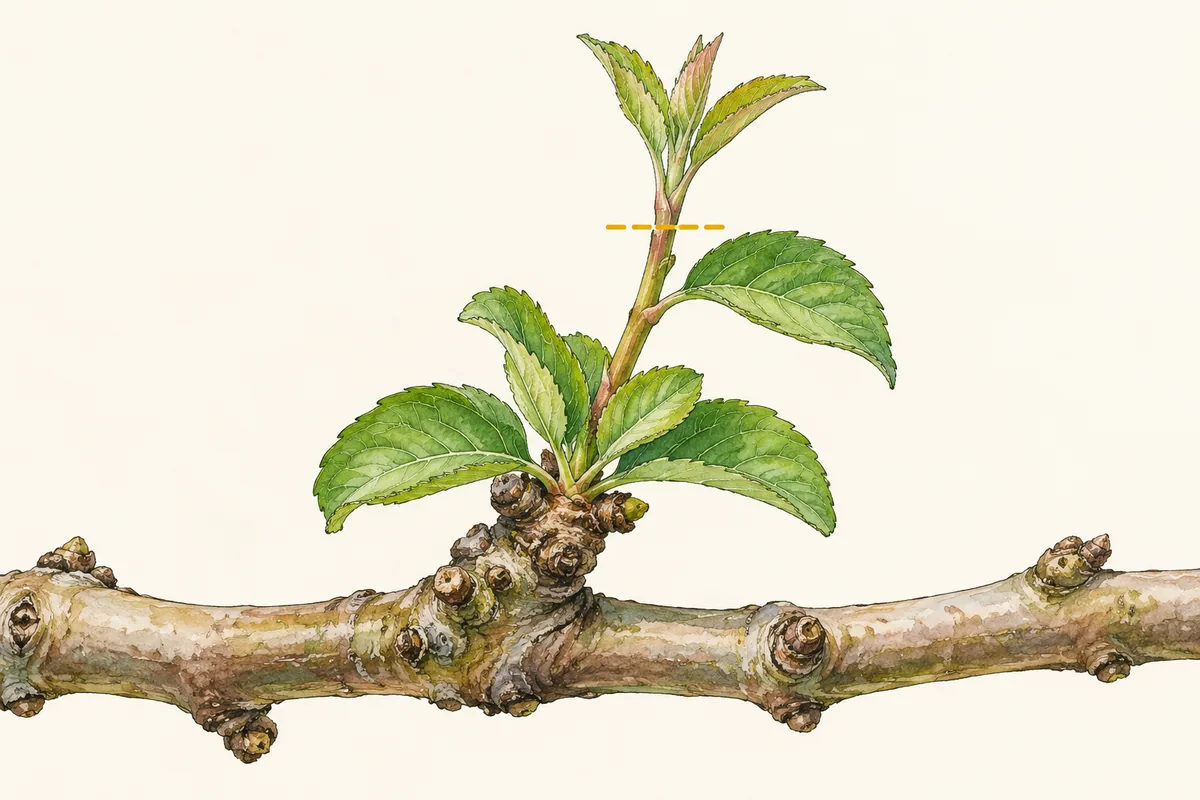
3Shoots from an existing spur: cut to one leaf above the basal cluster. -
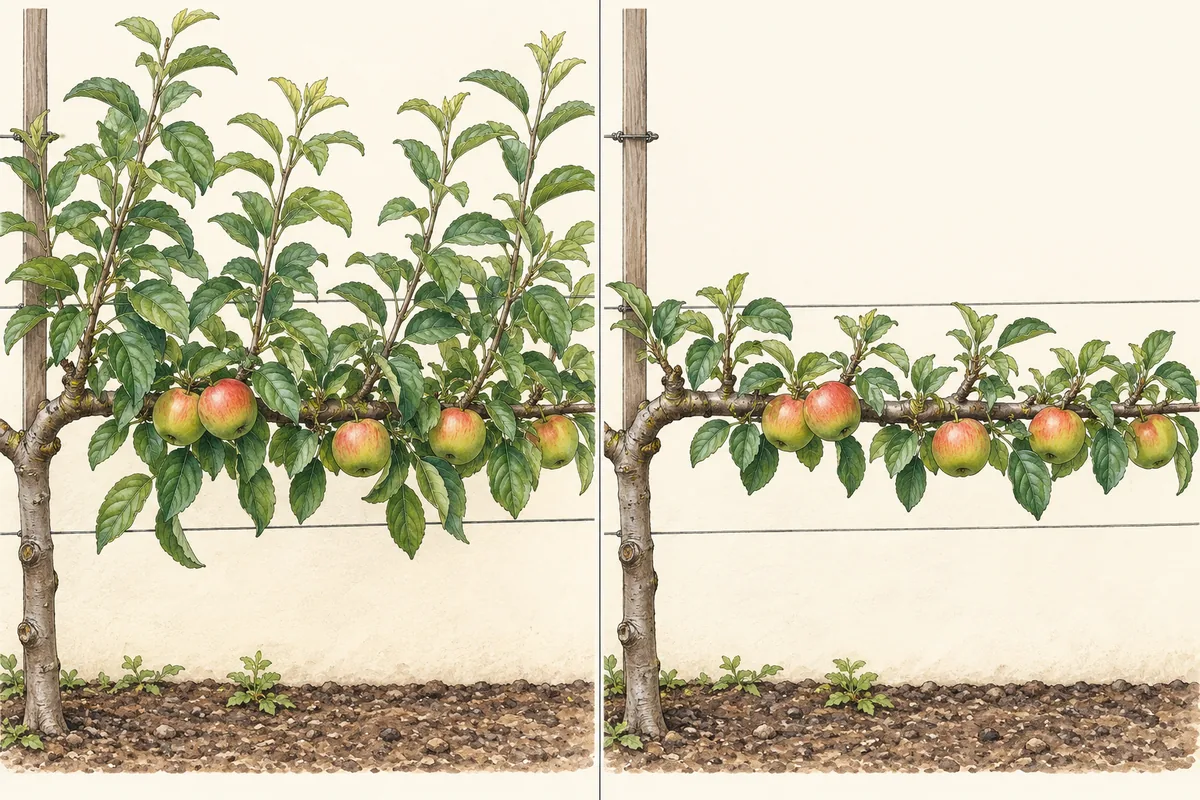
4Before and after on one arm: the fruit is now open to the light.
01At a glance
- When: July to September. Pears first (from late July), apples from mid to late August. Add about ten days in the north.
- The readiness test: the bottom third of the new shoots is stiff and woody. If they're still soft and bendy, wait.
- Time: 15–30 minutes per tree.
- Tools: sharp secateurs.
02Find the basal cluster
At the base of each new shoot there's a little rosette of leaves sitting close together, right where the shoot starts. That's the basal cluster. Don't count those leaves. Your "one leaf" or "three leaves" are counted from the first leaf above the cluster.
03Step by step
- Long new shoots from the main stem (over about 20cm, growing directly from a main branch or the main stem): cut back to three leaves above the basal cluster.
- New shoots from existing side-shoots or spurs: cut back to one leaf above the basal cluster.
- Short shoots under about 20cm: leave them. They often end in a fruit bud.
- Vigorous upright shoots: remove completely — they'll never fruit usefully on a trained shape.
- Tie in any shoot you need to extend the framework, rather than cutting it.
- Regrowth? If cut shoots sprout again, trim them in September or October to one leaf beyond your previous cut.
04Mistakes to avoid
- Pruning too early. Cut soft shoots before they've firmed up at the base and the tree pushes out a second flush of growth — exactly what you were trying to stop.
- Counting the basal cluster leaves. You'll leave everything too long.
- Doing it all in winter instead. Winter pruning a trained tree stimulates growth; summer pruning restrains it.
How we checked this
Every care and safety claim on this page is verified against horticultural and veterinary sources.
Sources: RHS — Apples and pears: summer pruning · RHS — Apples and pears: winter pruning
Checked 1 October 2026. If our advice ever conflicts with the RHS, believe them and tell us.