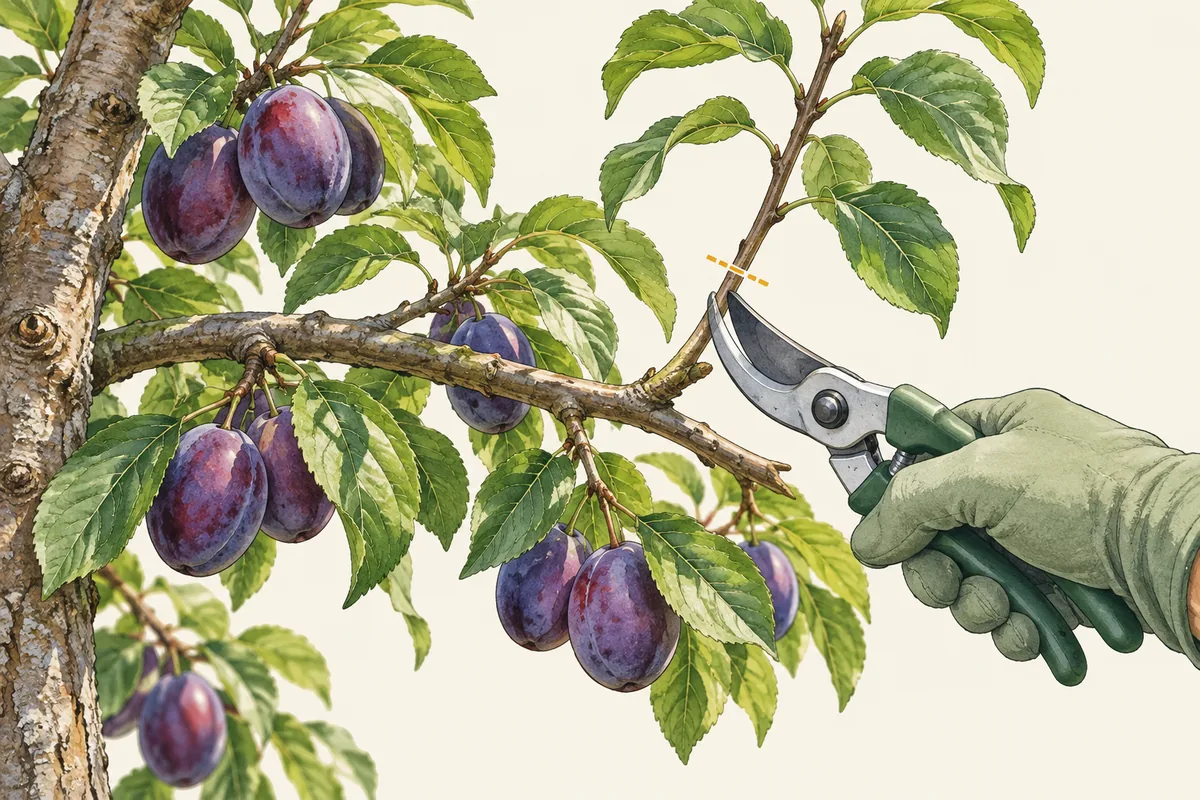
Here's the single most useful thing to know about plums and cherries: don't prune them in winter, even though you're out pruning the apples. Stone fruit is vulnerable to silver leaf, a fungal disease whose spores are released mainly in the damp autumn and winter months and get in through fresh wounds. Cherries are also prone to bacterial canker. Prune in spring and summer instead — wounds heal faster then, and the risk is lower.
In pictures
-
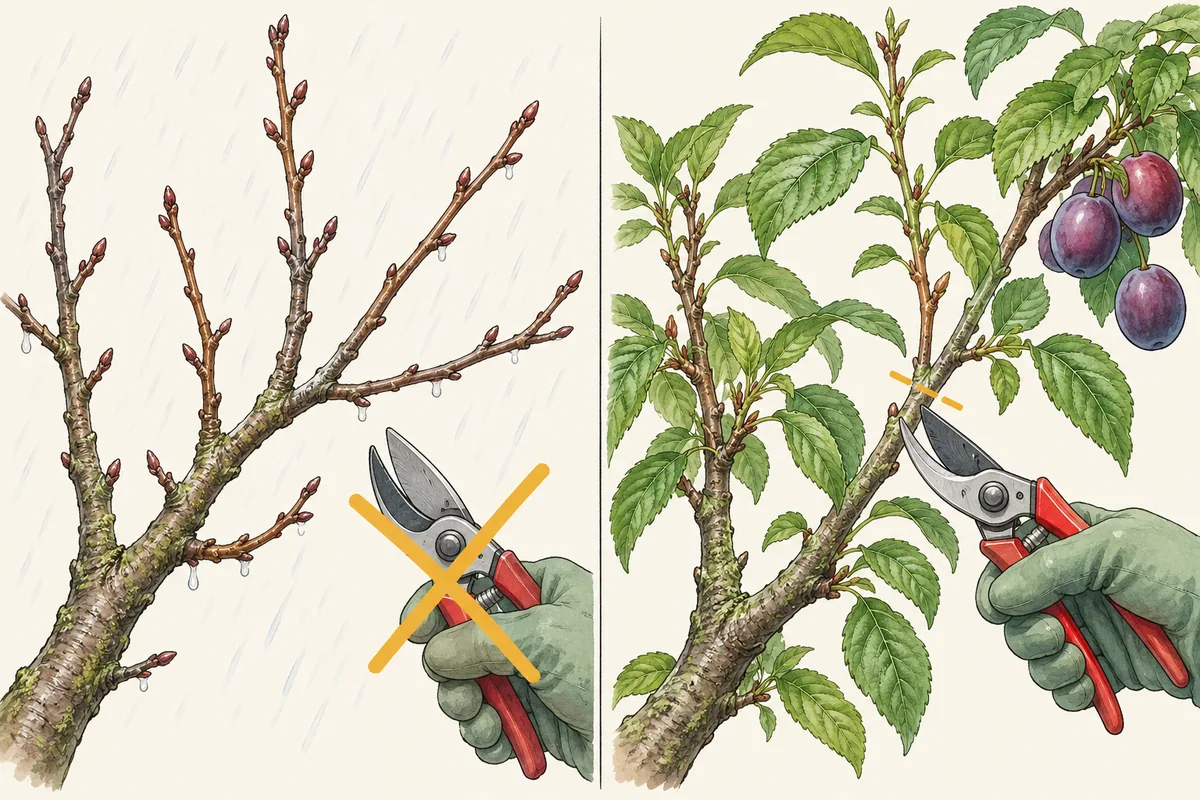
2Not in winter: damp, dormant wood lets silver leaf in. Prune in summer instead. -
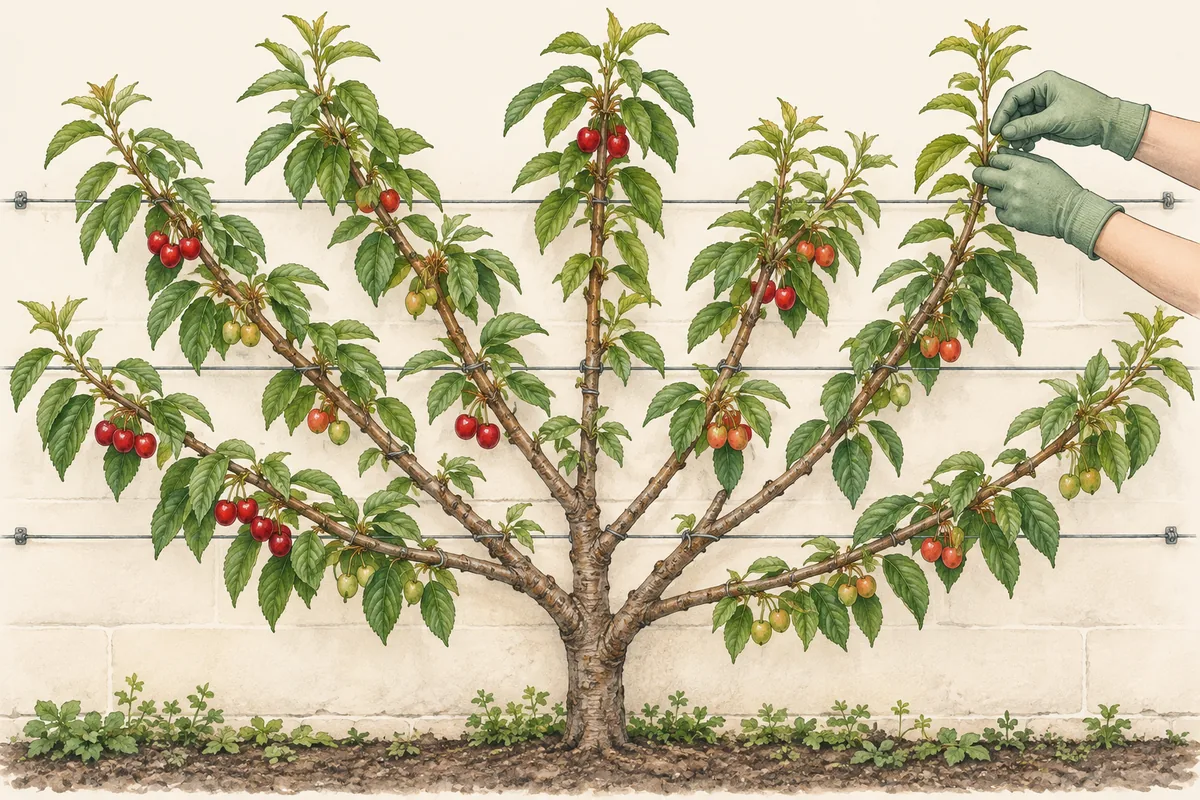
3Fan-trained cherry in June: tie in the shoots you need, pinch the rest to about six leaves. -
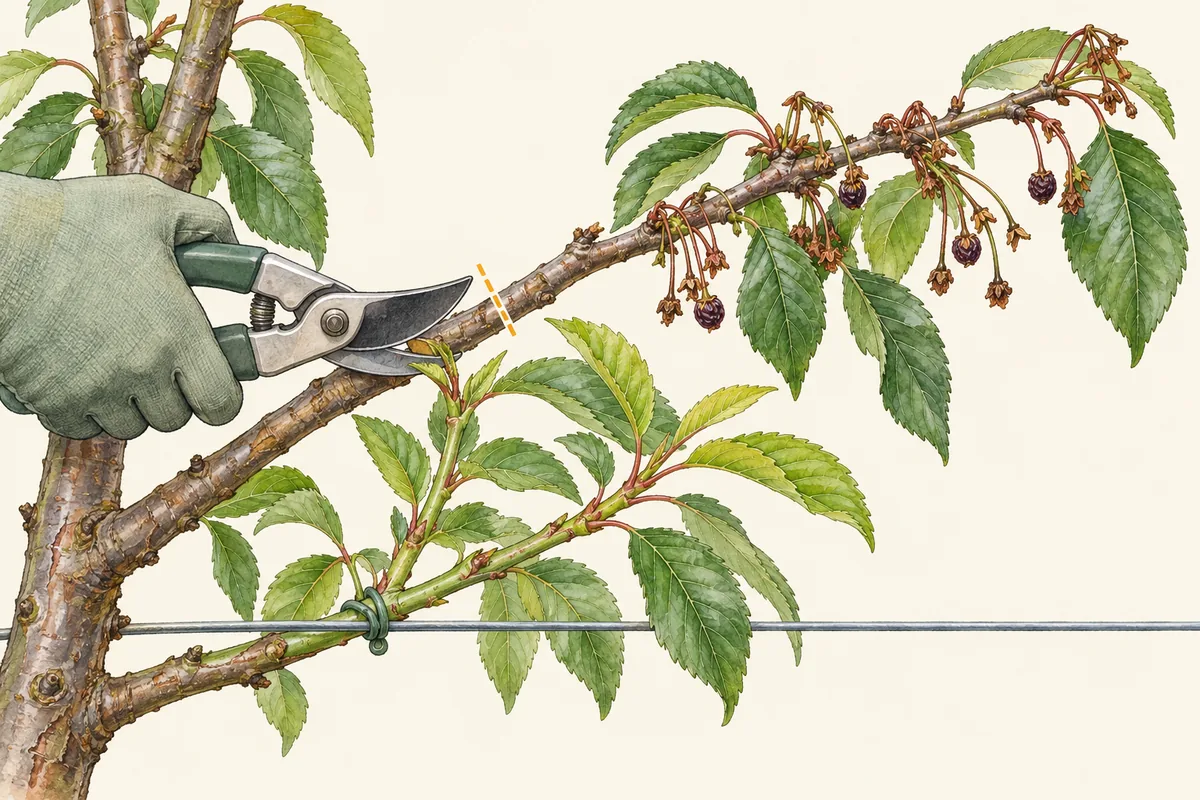
4Acid cherry after harvest: cut fruited wood back to a new shoot and tie that in.
01At a glance
- Young trees (formative pruning): early spring, as the buds break.
- Established plums: midsummer — the RHS names July.
- Established cherries: straight after harvest, usually late July or August.
- Weather: a dry day, with dry weather forecast for at least the next two days.
- Tools: clean, sharp secateurs, loppers, a pruning saw.
02Established free-standing trees: keep it light
Plums and cherries need far less pruning than apples. Each summer:
- Remove dead, diseased and damaged wood, cutting back to healthy growth.
- Take out crossing, rubbing and badly placed branches.
- Thin crowded growth so light gets into the centre.
- Stop there. Heavy cuts on stone fruit are rarely needed and open more wounds.
03Fan-trained plums and sweet cherries
- June: tie in shoots you want to extend the fan; remove any growing directly towards or away from the wall; pinch the rest back to about six leaves.
- August (after fruiting): cut those pinched shoots back to about three leaves to form fruiting spurs.
04Acid (Morello) cherries: replacement pruning
Acid cherries fruit almost entirely on shoots made the previous year, so you keep a supply of new shoots coming:
- After harvest, cut each shoot that has fruited back to a vigorous new shoot lower down, and tie the new shoot in.
- Shoots that can't be tied in: cut back to two leaves.
05Mistakes that cost you trees
- Winter pruning. The classic route in for silver leaf — look for a silvery sheen on leaves and dark staining inside cut branches.
- Pruning in wet weather. Damp is what the spores need.
- Dirty tools. Clean blades between trees.
How we checked this
Every care and safety claim on this page is verified against horticultural and veterinary sources.
Sources: RHS — Plums: pruning · RHS — How to grow cherries · RHS — Fan-trained trees: pruning established fans · RHS — Silver leaf
Checked 1 October 2026. If our advice ever conflicts with the RHS, believe them and tell us.