Seed catalogues arrive in the darkest weeks of the year, and they are very good at their job. Every page promises a better summer. Most of us already own half the seed we are about to order again. So before the order goes in, a few honest checks.
In pictures
-
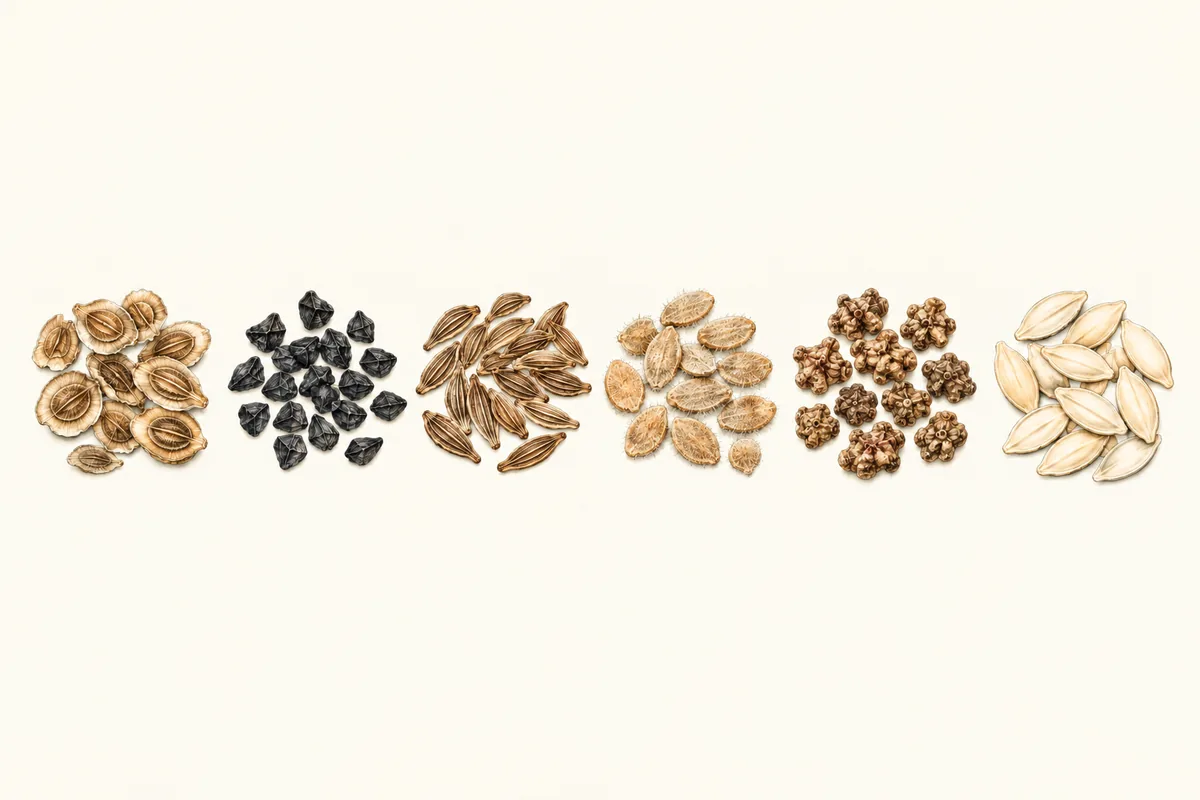
2Parsnip, onion, carrot, tomato, beetroot and cucumber seed. -
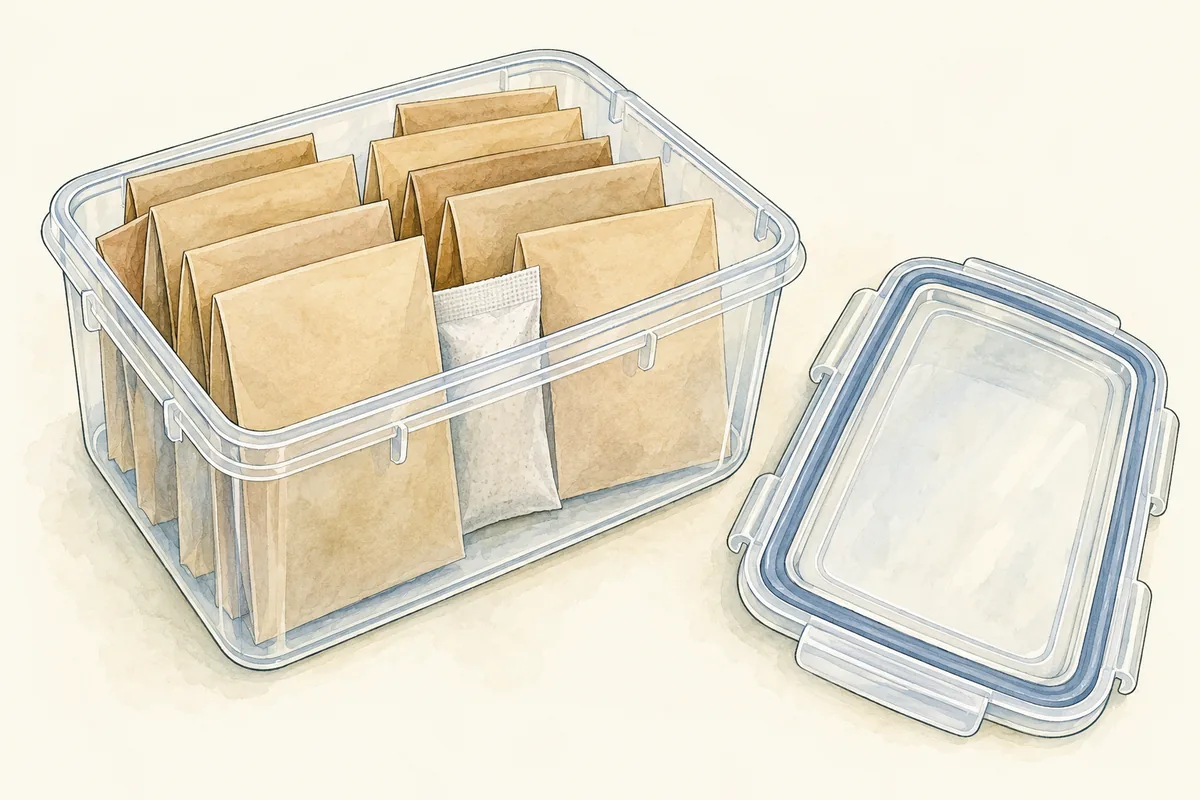
3Store seed in paper packets in an airtight tub, somewhere cool and dry. -
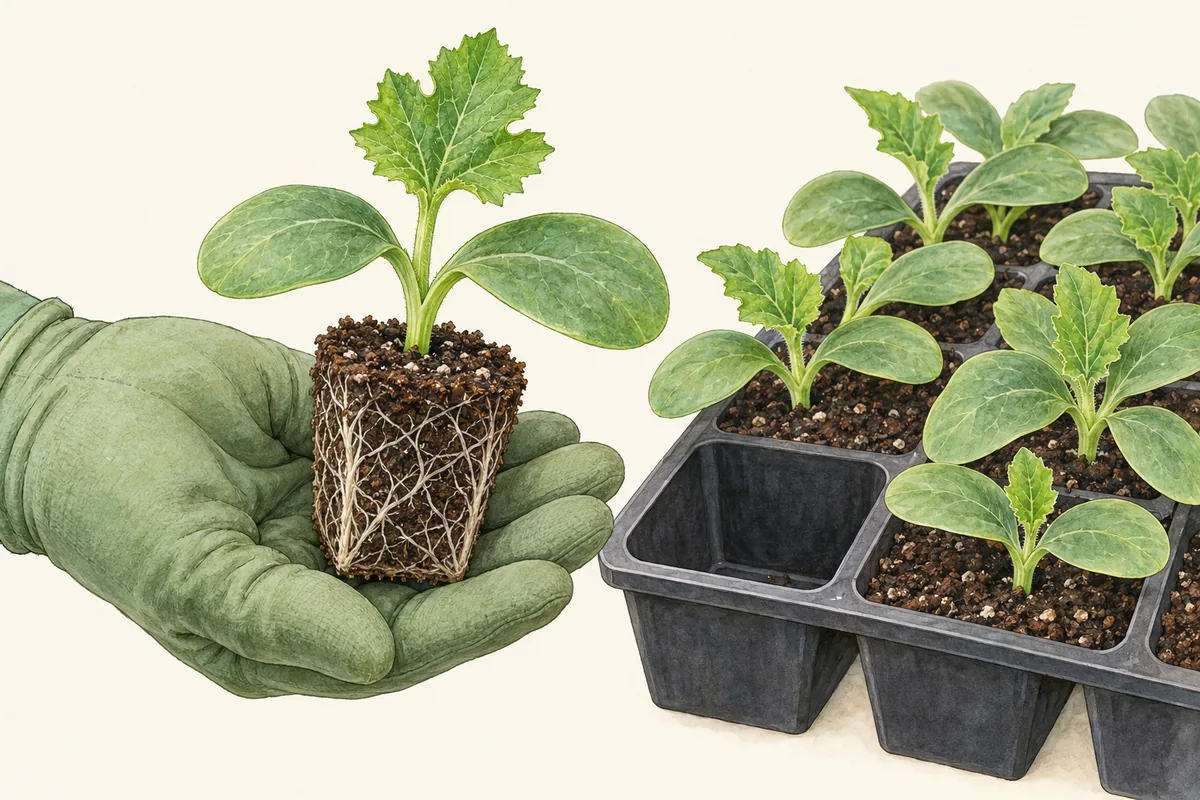
4A plug plant: a ready-grown seedling with its rootball intact.
01At a glance
- First job: go through the seed you already have.
- Buy fresh every year: parsnips. Onion seed is short-lived too.
- Usually fine for several years: brassicas, beetroot, cucumbers, courgettes and pumpkins.
- Useful filter: the RHS Award of Garden Merit (AGM).
- Storage: cool and dry, in an airtight tub.
02How long seed keeps
It depends on the crop and on how the packet was kept. The best free table we found is from University of Nebraska–Lincoln Extension, and gives these rough lifespans for seed stored cool and dry:
- About one year: onion, parsnip.
- About two years: sweetcorn, peppers and chillies.
- About three years: carrots, peas, beans, spinach, tomatoes.
- About four years: beetroot, cabbage, kale, pumpkins and squash (which covers courgettes).
- About five years: cucumbers, radish.
The RHS backs the short end of that list: its parsnip advice is to buy only enough for the current year, because old seed germinates poorly. Published tables don't all agree, and lettuce is one where they differ widely. Treat the numbers as a prompt to test, not a use-by date.
03Test old seed before you bin it
A germination test costs nothing and takes a fortnight or so.
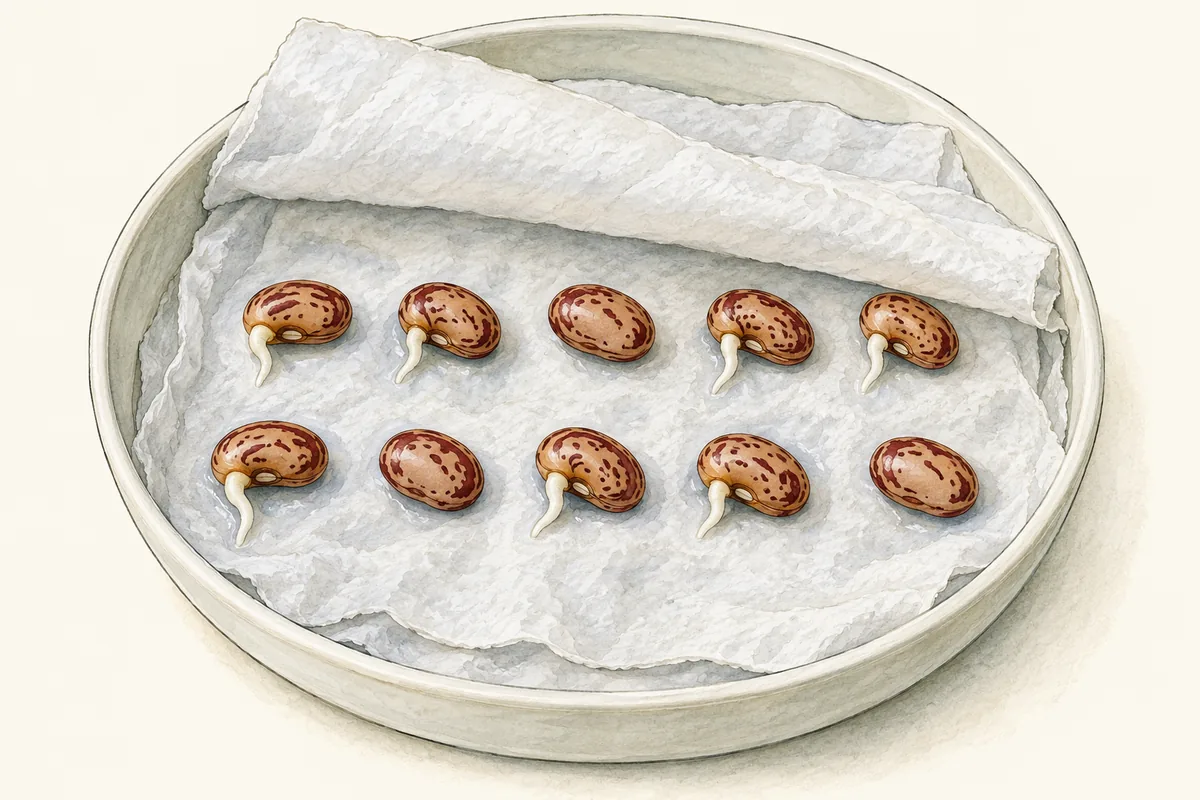
- Count out a set number of seeds. Ten makes the sum easy.
- Lay them between sheets of damp kitchen paper in a dish or tub.
- Cover it so the paper can't dry out, and keep it at warm room temperature, around 21–24°C.
- Check every few days. Make the final count after two to three weeks.
- Do the sum. Seven sprouted out of ten is 70%.
If most have sprouted, use the packet. If only some have, sow more thickly. If almost none have, that is the one packet to replace.
04F1 or open-pollinated?
An F1 hybrid is the first generation from crossing two stable parent lines. According to the RHS, the result is more uniform and often more vigorous, with better yields. Plants crop and mature together.
The costs are real too. F1 seed is expensive because the cross has to be made afresh every year. Seed saved from F1 plants won't come true to type. And the RHS notes hybrids are often sold for only a few years before they are withdrawn.
Open-pollinated seed is relatively cheap and you can save your own. The RHS is frank that it is usually less uniform, vigorous and productive.
Our view: a whole row ripening in one week suits a farmer better than a household. For crops you sow by the handful, an ordinary packet is the sensible buy.
05What the AGM actually means
The Award of Garden Merit is the RHS's mark for plants that perform reliably in gardens. It is usually decided by trial: varieties of the same crop are grown side by side and judged by an expert panel. To hold it, a plant has to be:
- An excellent performer, resilient in the right conditions.
- Healthy, with good overall growth.
- Reasonably resistant to common pests and diseases.
- True to type.
- Available to buy.
The awards are reviewed regularly, so a variety can lose it. In a catalogue with forty carrots, each described as outstanding, the AGM is the one claim on the page that somebody independent has tested.
06When plug plants make more sense
The RHS points out that raising plants from seed takes both time and space. Plug plants are seedlings grown singly in small modules, so they transplant with little root disturbance. They cost far more per plant than seed, so they earn their place in narrow cases:
- You want two plants. A packet of courgette seed holds far more plants than you have room for.
- You have no warm, bright place to raise tender seedlings in early spring.
- You missed the sowing date.
Cheaper still, as the RHS says, is swapping spare plants with friends and neighbours. Root crops such as carrots are the opposite case. Sow them direct: see direct sowing carrots, beetroot and salads.
07Storing what you buy
The RHS advice is simple. Keep seed in labelled paper packets inside an airtight container, somewhere cool and dry. A sachet of silica gel in the tub absorbs stray moisture. For long keeping, the RHS suggests the fridge, at about 5°C. Heat and damp are what shorten seed life, so the greenhouse shelf is the worst place for the tub.
How we checked this
Every care and safety claim on this page is verified against horticultural and veterinary sources.
Sources: University of Nebraska–Lincoln Extension — Vegetable garden seed storage and germination requirements · RHS — How to grow parsnips · RHS — Seed: collecting and storing · RHS — Tips on saving your own seeds · RHS — F1 hybrids · RHS — Plant trials and awards · RHS — Allotment basics for beginners · RHS — Seeds: the inside story
Checked 3 October 2026. If our advice ever conflicts with the RHS, believe them and tell us.