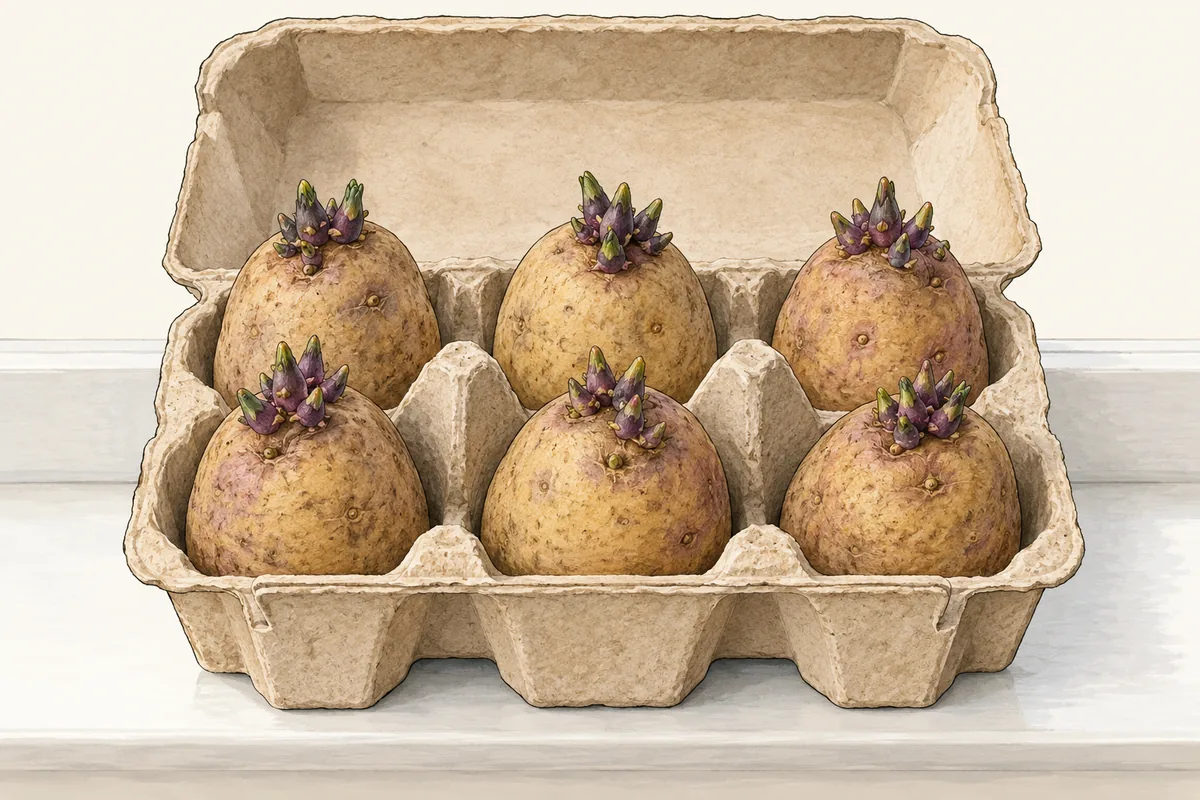
Potatoes come with more ritual than any other vegetable: egg boxes on the windowsill, sprouts rubbed off, soil ridged up like a ploughed field. Some of it matters and some of it is habit. The RHS is refreshingly plain about which is which.
In pictures
-
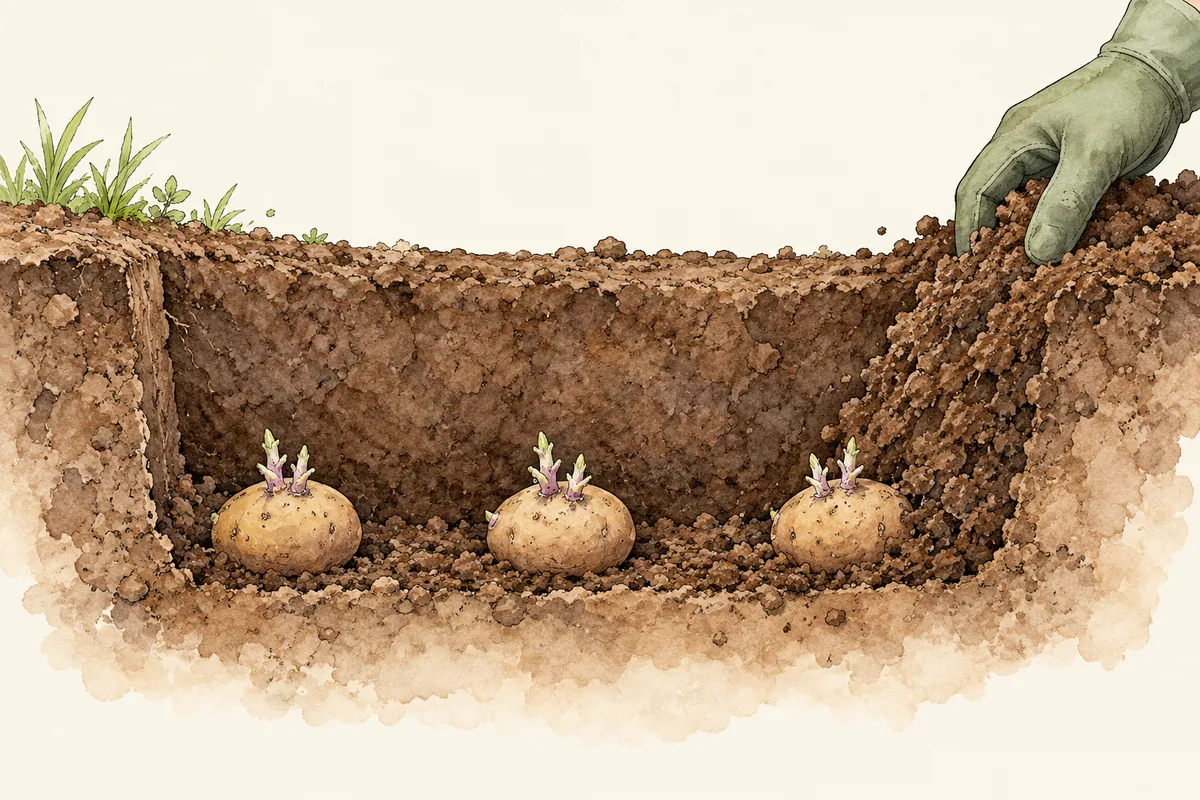
2Plant in a trench about 15cm deep, sprouts pointing upwards. -
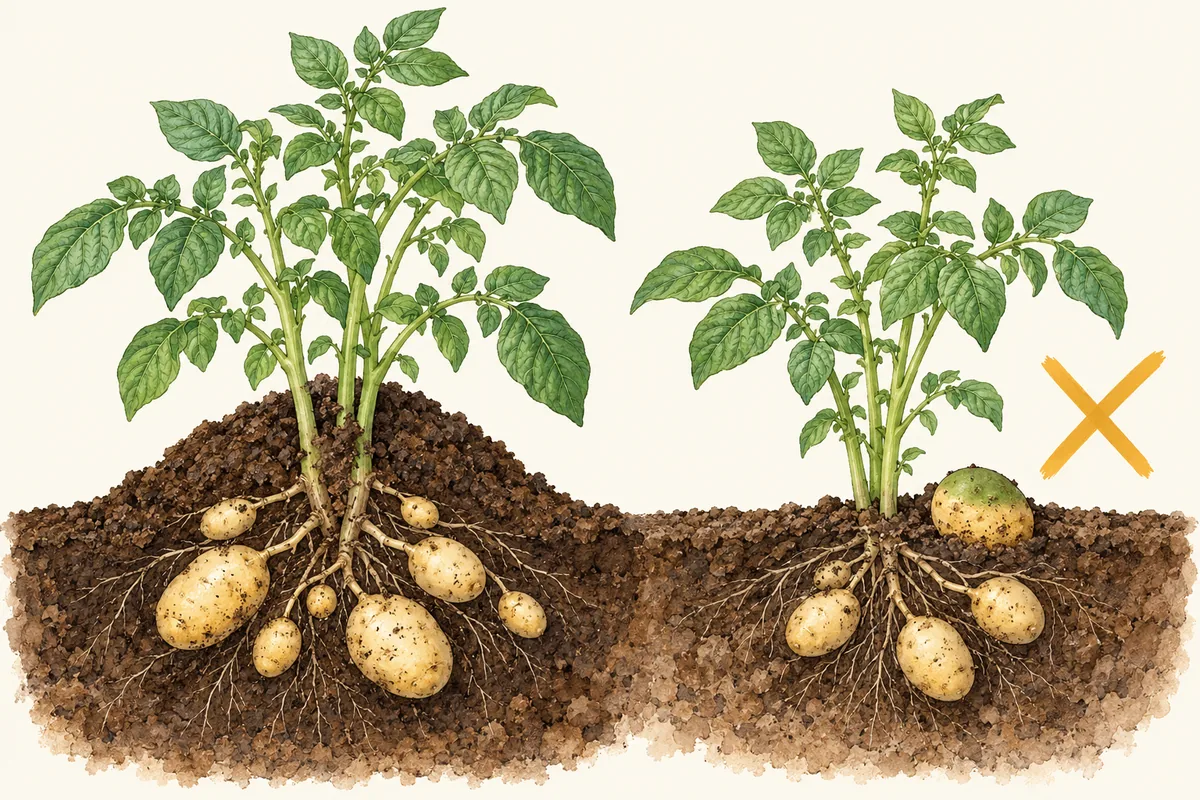
3Earthing up keeps new tubers in the dark (left). Uncovered tubers turn green (crossed out). -
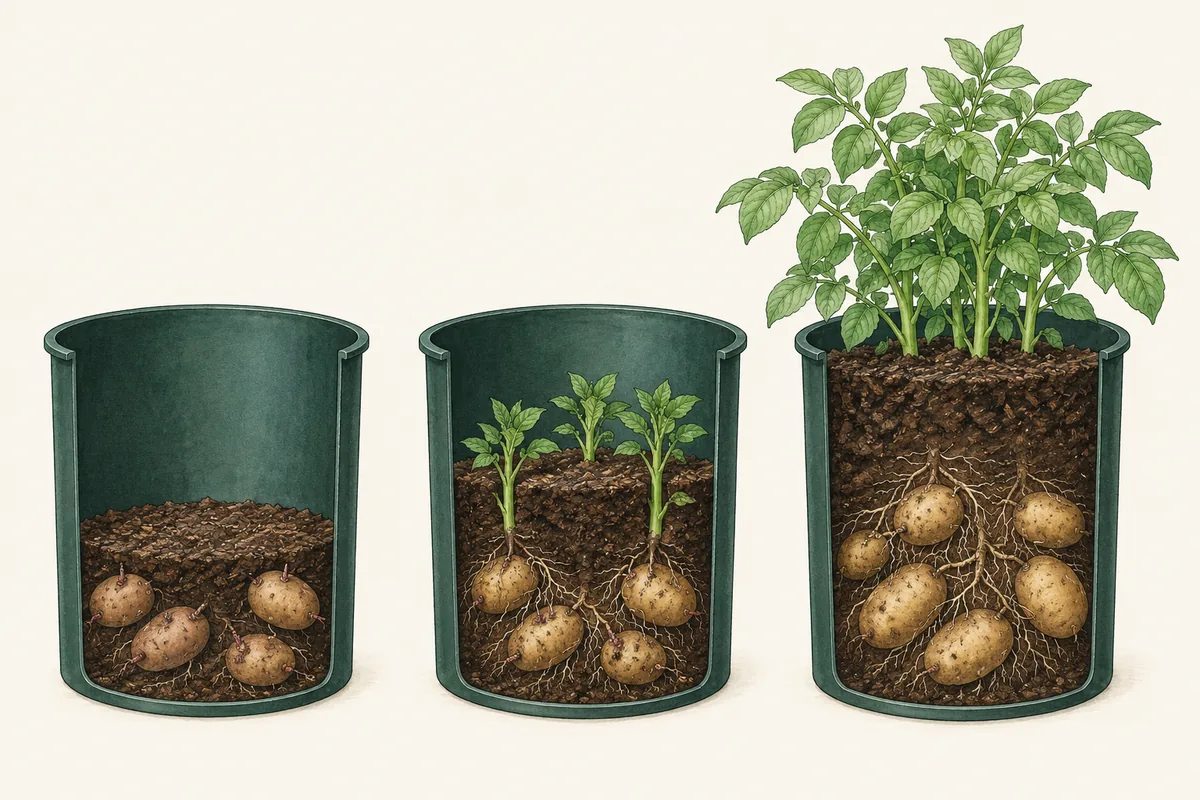
4In a tub: start with about 15cm of compost, then top up as the shoots grow, until it's just below the rim.
01At a glance
- Chit: from late January in mild areas to early March in cold ones. It takes four to six weeks.
- Plant first earlies: around late March.
- Plant second earlies: early to mid-April.
- Plant maincrops: mid-April to early May.
- Depth: in a trench 15cm deep, sprouts pointing up.
- Kit: certified seed potatoes, egg boxes, a spade or draw hoe.
02Chitting: what it is and when it matters
Chitting means letting seed potatoes sprout before you plant them. Stand the tubers in egg boxes or seed trays with the buds, or eyes, uppermost. Gardeners call the blunter end with the most eyes the rose end, and that's the end that faces up. Keep them somewhere bright, cool and frost-free until they have short, sturdy shoots a few centimetres long.
Does it matter? For earlies, yes, a bit. The RHS says chitting isn't essential but is worthwhile with early varieties, because it leads to quicker growth and an earlier crop. For first earlies it also suggests rubbing off all but the strongest four sprouts.
For maincrops, no. The RHS says there is no real advantage to chitting them, as they grow over a much longer period. There's no need to thin the sprouts on second earlies or maincrops either. If your maincrop seed potatoes have sprouted on their own, fine. If they haven't, plant them anyway.
03When and how to plant
Earlies are the "new potatoes": faster growing and ready in as little as 12 weeks. Maincrops stay in the ground through to late summer or early autumn.
- Dig a trench 15cm deep.
- Set the tubers along the bottom, sprouts upwards. Earlies go 30cm apart in rows 60cm apart. Maincrops go 37cm apart in rows 75cm apart.
- Cover with soil, taking care not to snap the sprouts.
Expect to lift first earlies in June and July, second earlies in July and August, and maincrops from late August to October.
04Earthing up, and what it's really for
When the shoots are about 23cm tall, draw soil up around them, and repeat a few weeks later until you have a ridge 20–30cm high.
The RHS gives two reasons. It protects young growth from frost, and it stops the new tubers being exposed to light, which turns them green. It also says earthing up is not thought to increase yields significantly. So it's worth doing to keep the crop in the dark, and not worth agonising over the height of your ridges.
05If frost is forecast
Potato shoots are tender. If freezing temperatures are forecast once they're showing, cover them overnight with a cloche, hessian or straw, or simply pull soil or garden compost over the top. Earthing up does the same job.
06Growing in pots and bags
Potatoes do well in containers, and it's the easy way to grow a few earlies on a patio.
- Choose a container at least 30cm wide and deep.
- Put in 15cm of peat-free multi-purpose compost.
- Plant one seed potato per 30cm of pot diameter, just below the surface.
- Add more compost gradually as the shoots grow, until the level is just below the rim.
- Water regularly all season. Potatoes in open ground need watering in dry weather; potatoes in pots need it throughout.
07Green potatoes and the green parts of the plant
Potatoes are nightshades, like tomatoes, and the tuber is the only part to eat. The RHS lists the plant as harmful if eaten, except the potato crop, and says to discard any potatoes that have turned green because they are potentially poisonous. That applies to people.
For pets, our potato profile has the detail: the leaves, stems, sprouts and green tubers contain solanine, and cats, dogs and horses that eat them can show vomiting, drooling and lethargy. Normal, non-green cooked potato is not the concern. So keep the tops, the sprouts you rub off and any green tubers out of reach, and store the crop in the dark. If a pet does eat them, take the plant away and phone your vet or the Animal PoisonLine on 01202 509000. If a person has eaten green potato or any of the plant, call NHS 111 for advice, or 999 if they are seriously unwell.
How we checked this
Every care and safety claim on this page is verified against horticultural and veterinary sources.
Sources: RHS — How to grow potatoes · RHS — Growing potatoes: secrets of success · RHS — Chit early potatoes · RHS — Solanum tuberosum · RHS — Potentially harmful garden plants
Checked 3 October 2026. If our advice ever conflicts with the RHS, believe them and tell us.