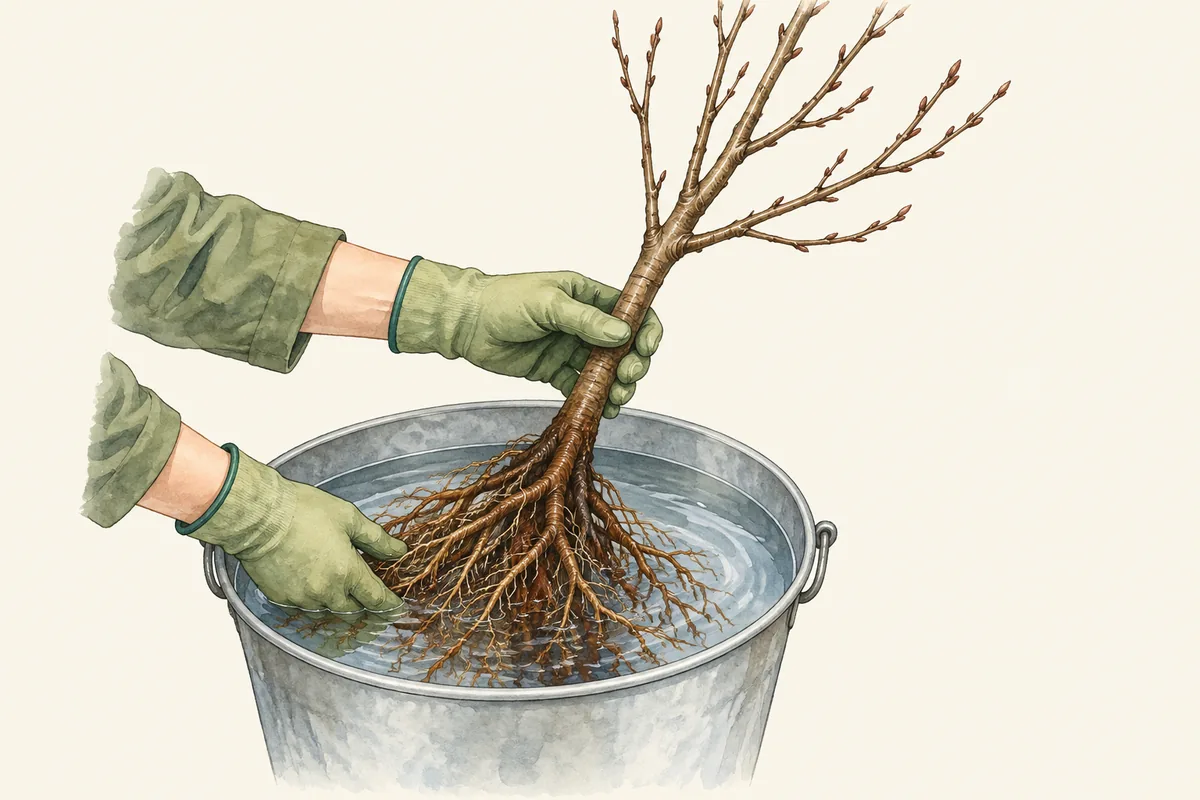
Bare-root plants are dug from the field while dormant and sold without a pot or soil. They're usually much cheaper than the same plant in a container, there's more choice, and planted properly they establish just as well. The catch is timing: they're a winter thing, and their roots must never dry out.
In pictures
-
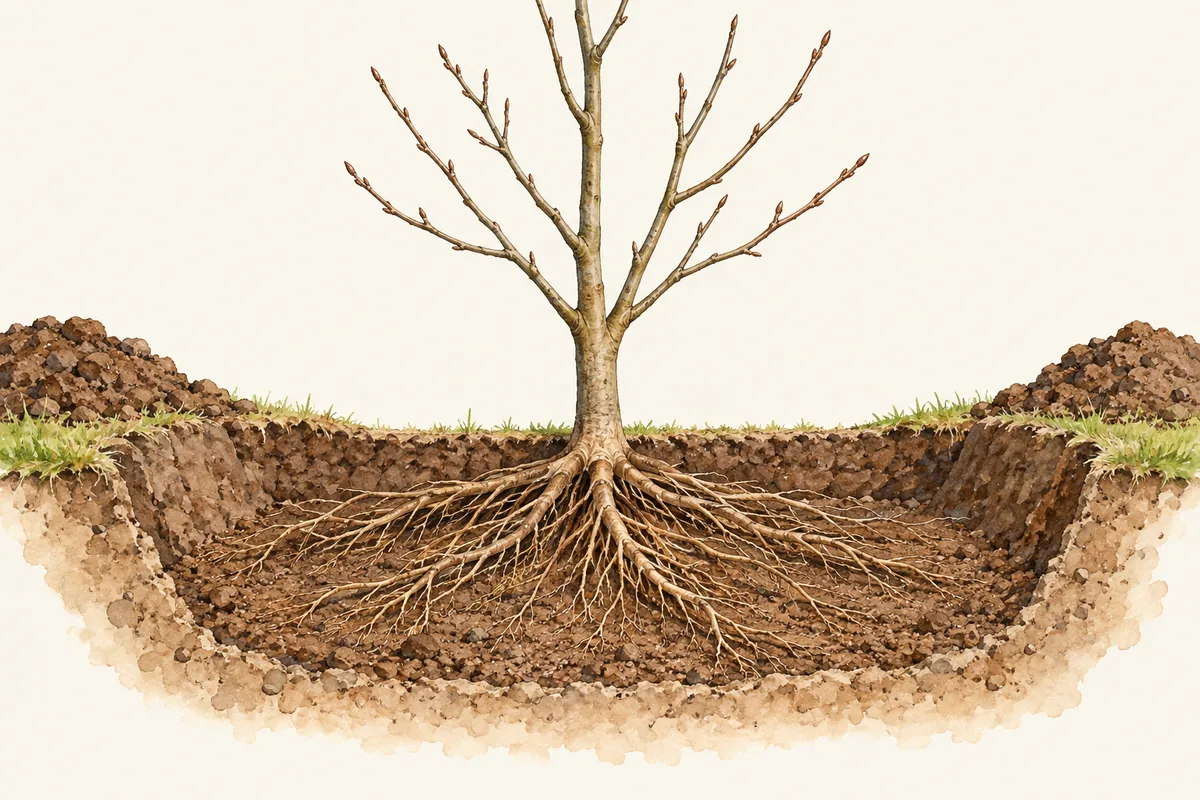
2A wide, shallow hole, with the top roots level with the soil surface. -
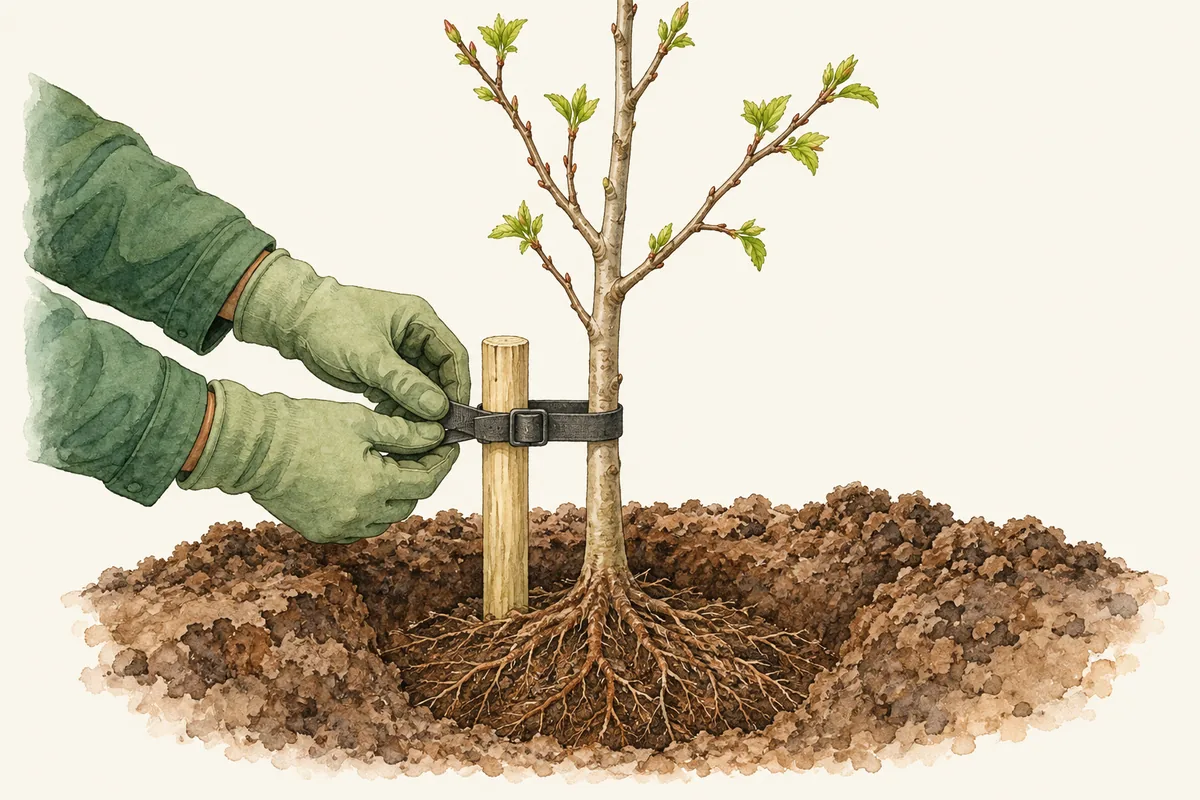
3A short stake, with the tie low — about a third of the way up the trunk. -
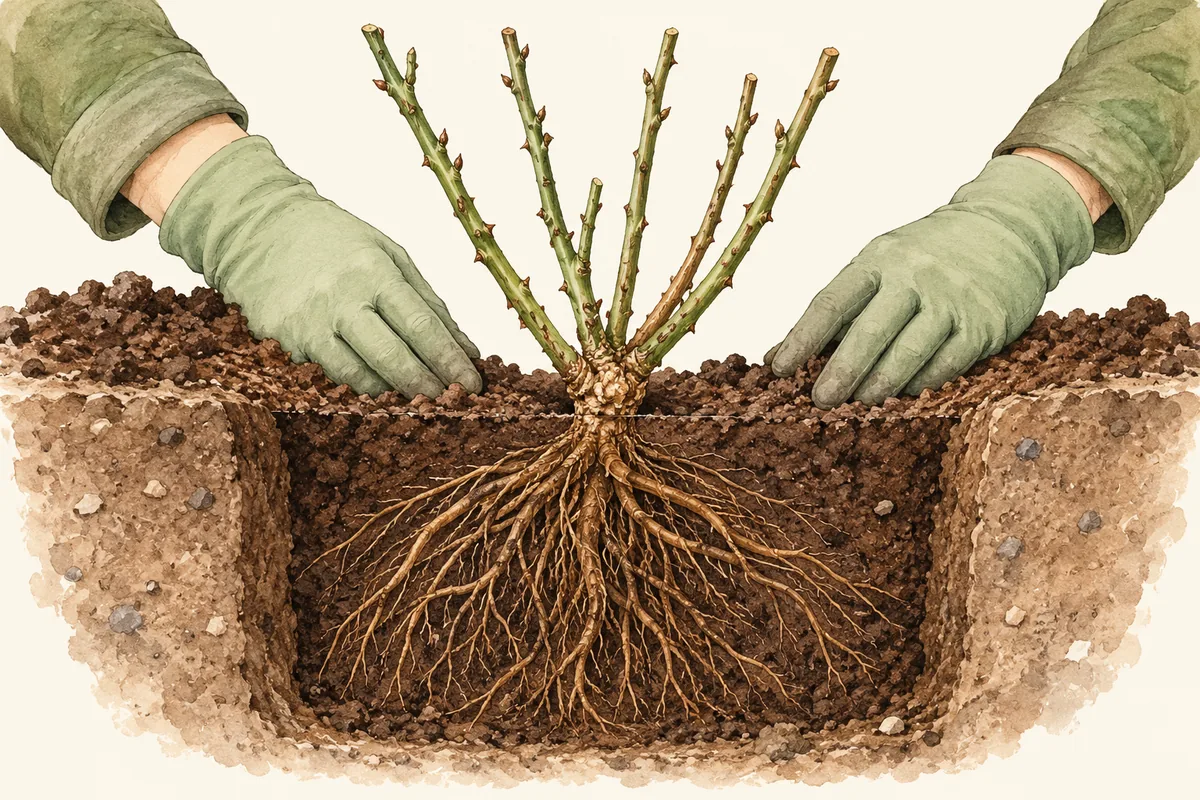
4Bare-root roses: the knobbly graft union sits at soil level.
01At a glance
- When: bare-root trees, shrubs and hedging come on sale from about November. Plant any time the soil isn't frozen or waterlogged. Roses: late autumn at leaf fall, or late winter to early spring before growth starts.
- Can't plant yet? "Heel them in" — lay them in a shallow trench and cover the roots with soil until conditions improve.
- Tools: spade, fork, bucket, stake and tie for trees.
02Step by step
- Soak the roots in a bucket of water for about 30 minutes before planting. Keep them covered until they go in the ground — dry roots are the main way bare-root plants fail.
- Dig a wide hole — at least three times the spread of the roots — but no deeper than the roots need.
- Get the depth right. The point where the first roots flare out from the stem should sit level with the soil surface. Planting too deep invites disease. For roses, the graft union (the knobbly bit where the stems meet the rootstock) sits at soil level.
- Trees: put the stake in first. For bare-root trees, drive the stake in before backfilling so it sits between the roots, on the side the wind usually comes from.
- Backfill with the soil you dug out. For trees and most shrubs, don't add compost or organic matter to the hole — the RHS says there's little evidence it helps and it can hinder establishment. Roses are the exception: fork at least a bucket of well-rotted organic matter per square metre into the top 20–30cm of soil.
- Firm gently with your heel and water in well.
- Tie trees low. Fix the tie about 40–50cm above ground, roughly a third of the tree's height. Small trees may not need a stake at all.
- Mulch, leaving a 10cm collar of bare soil around the stem.
03Aftercare
- Water through the first summer in dry weather — around 30–50 litres per square metre a week. Roses for at least two summers.
- Check tree ties at least once a year so they don't cut into the bark.
- Remove the stake after about two growing seasons (anywhere from 18 months to three years).
04Replanting a rose where a rose grew before?
Roses can suffer replant disease in soil where roses grew before. The RHS fix is to replace the soil in the planting area rather than rely on products.
05Mistakes to avoid
- Planting too deep.
- Letting roots dry out on the way from car to hole.
- Staking high. A low stake lets the trunk flex and strengthen.
- Leaving ties and stakes on for years.
How we checked this
Every care and safety claim on this page is verified against horticultural and veterinary sources.
Sources: RHS — Trees and shrubs: planting · RHS — How to stake a tree · RHS — Roses: planting · RHS — Replant disease
Checked 1 October 2026. If our advice ever conflicts with the RHS, believe them and tell us.