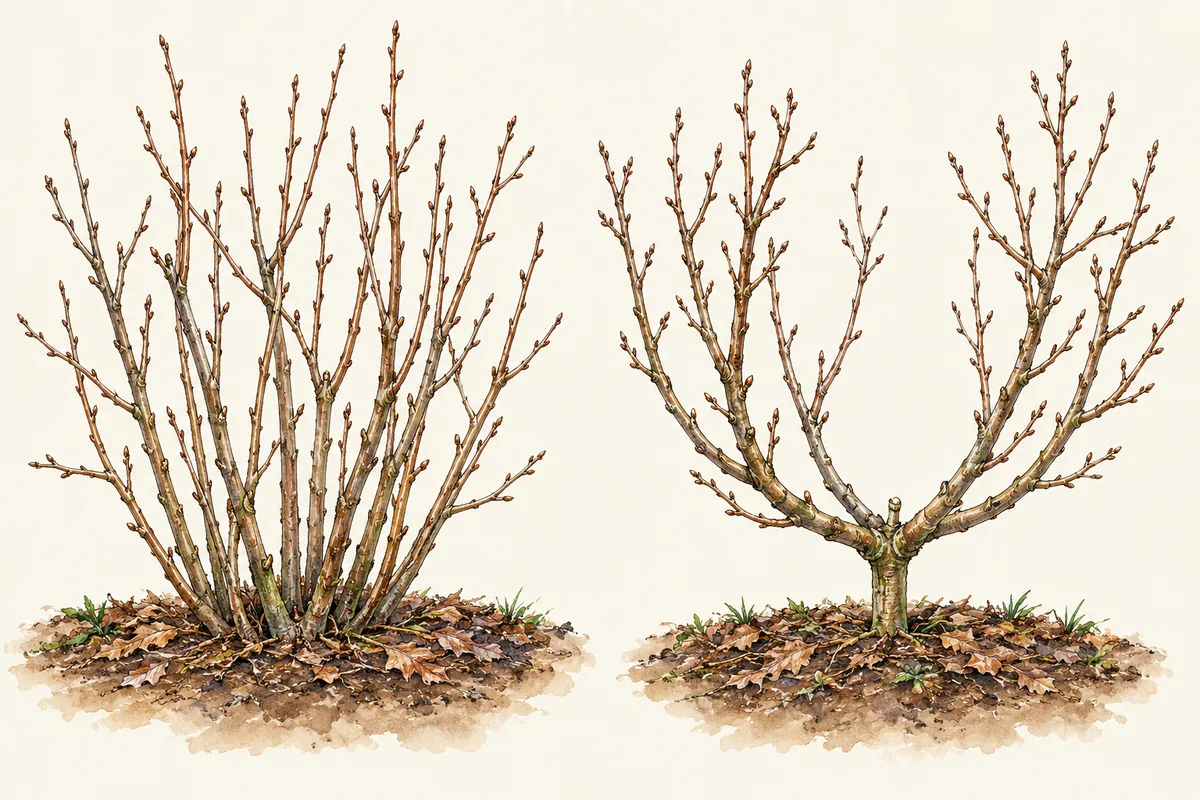
Currants and gooseberries look like close relatives and often grow side by side, so it's natural to prune them the same way. Don't. Blackcurrants fruit best on young wood, so you keep renewing them from the base. Redcurrants, whitecurrants and gooseberries fruit on spurs along older branches, so you keep a permanent framework. Prune a blackcurrant like a redcurrant and you cut off the wood that fruits.
In pictures
-
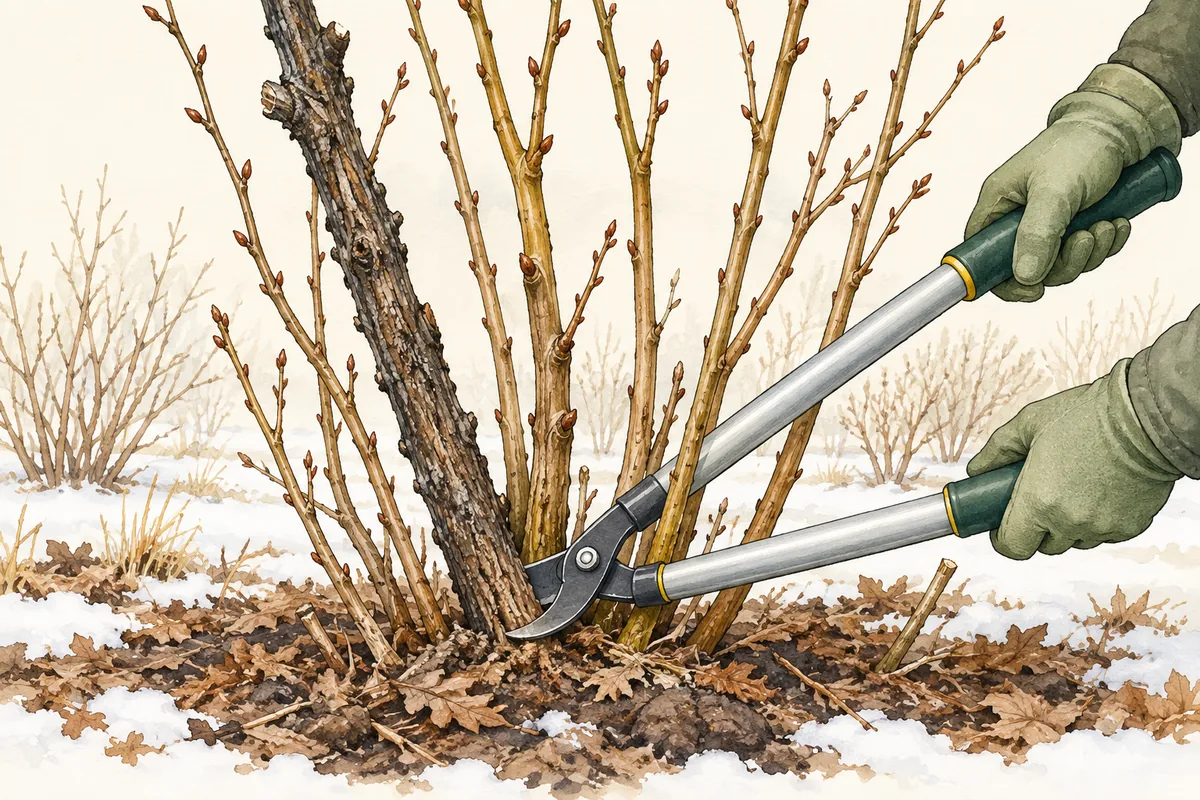
2Blackcurrants: cut up to a third of the oldest, darkest stems at the base. -
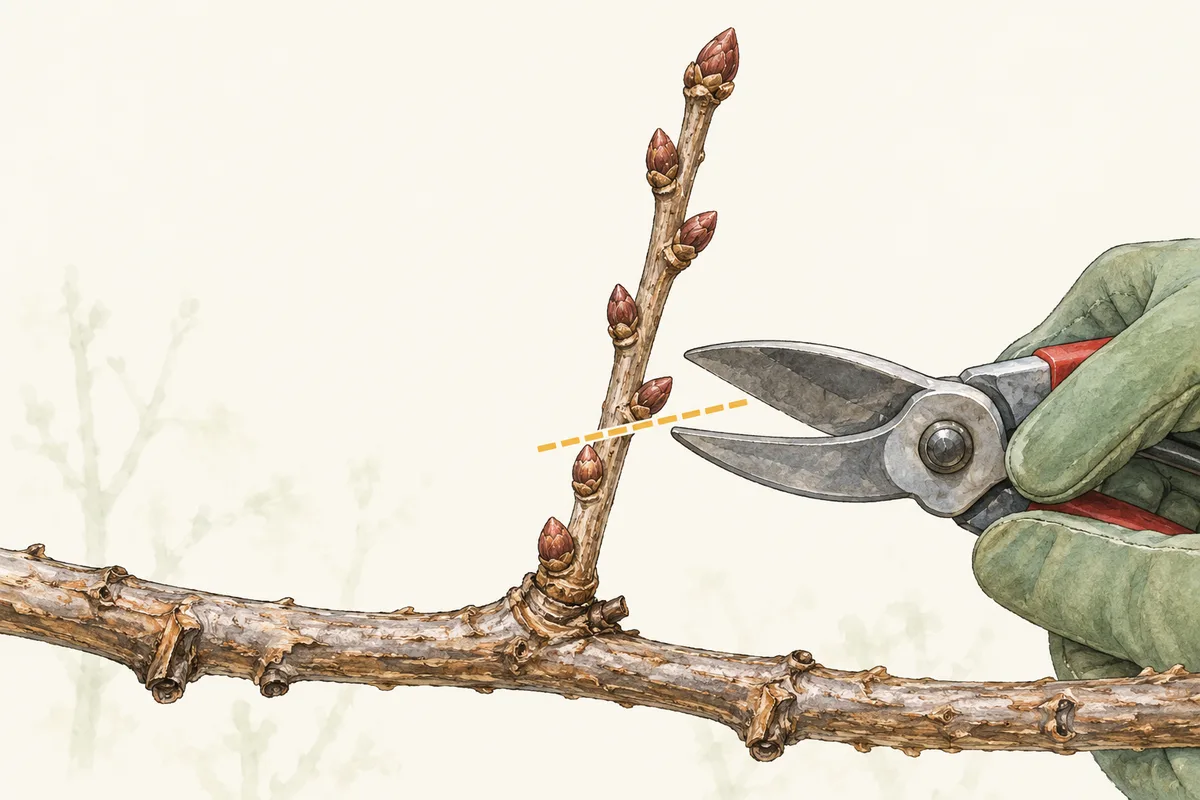
3Redcurrants: cut side-shoots back to one or two buds. -
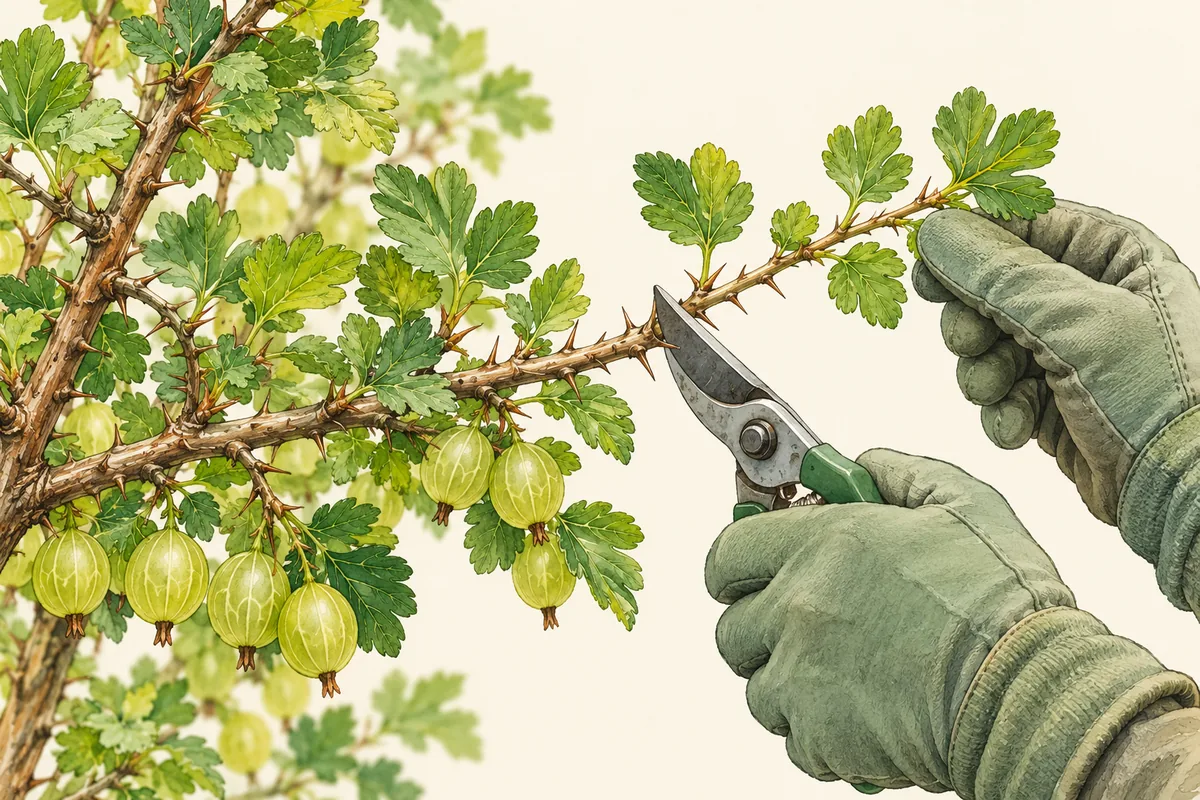
4Gooseberries in summer: cut side-shoots back to five leaves. Wear thick gloves.
01At a glance
- Blackcurrants: winter, while dormant. Remove up to a third of the oldest stems at the base each year.
- Redcurrants, whitecurrants, gooseberries: winter (late winter to early spring), plus an optional summer prune from mid-June to July.
- Tools: secateurs, loppers, and thorn-proof gloves for gooseberries.
02Blackcurrants
Blackcurrants are grown as a stool — a multi-stemmed bush with six to ten upright stems coming from the base.
New plants: plant about 5cm deeper than they were growing in the pot, so new shoots come from below ground. Straight after planting, cut all stems back to one or two buds above soil level.
Years one to three: if growth is strong, prune lightly. If it's weak, cut at least half the shoots to the base.
Established bushes (four years and older), every winter:
- Identify the oldest stems — they're darker and thicker.
- Cut up to a third of them right down at the base.
- Remove any weak, low or damaged shoots.
- Keep the strong, young stems — they carry next summer's fruit.
03Redcurrants and whitecurrants
These are grown as an open-centred goblet of eight to ten main branches on a short "leg" of clear stem, about 10–15cm high.
Winter prune (late winter to early spring):
- Shorten the main branch leaders by a quarter to a half.
- Cut side-shoots back to one or two buds from the main branches, forming fruiting spurs.
- Keep the centre open so air and light get in.
- Every year or two, remove one or two older, less productive branches.
Summer prune (mid-June to July): for vigorous bushes, cordons and fans, cut this year's side-shoots back to five leaves.
04Gooseberries
Gooseberries are pruned like redcurrants — an open goblet of eight to ten branches on a short leg — and the RHS advises pruning them in both summer and winter.
Winter prune (late winter to early spring):
- Shorten the main branches: cut last year's growth back to three or four buds.
- Spur-prune: cut side-shoots (including previously pruned ones) back to two buds.
- Open the centre and remove low branches that will drag fruit on the ground.
- Every year or two, take out one to three older branches.
Summer prune (bushes, cordons and fans): from mid-June to July, cut this year's side-shoots back to five leaves.
05Mistakes that cost you fruit
- Pruning blackcurrants like redcurrants.
- Planting blackcurrants at pot depth. They're meant to go deeper.
- Letting redcurrants and gooseberries close up in the middle. The RHS notes a crowded centre raises disease risk and slows ripening.
How we checked this
Every care and safety claim on this page is verified against horticultural and veterinary sources.
Sources: RHS — How to grow blackcurrants · RHS — Redcurrants and whitecurrants: pruning and training · RHS — Gooseberries: pruning and training · RHS — Cuttings: hardwood
Checked 1 October 2026. If our advice ever conflicts with the RHS, believe them and tell us.