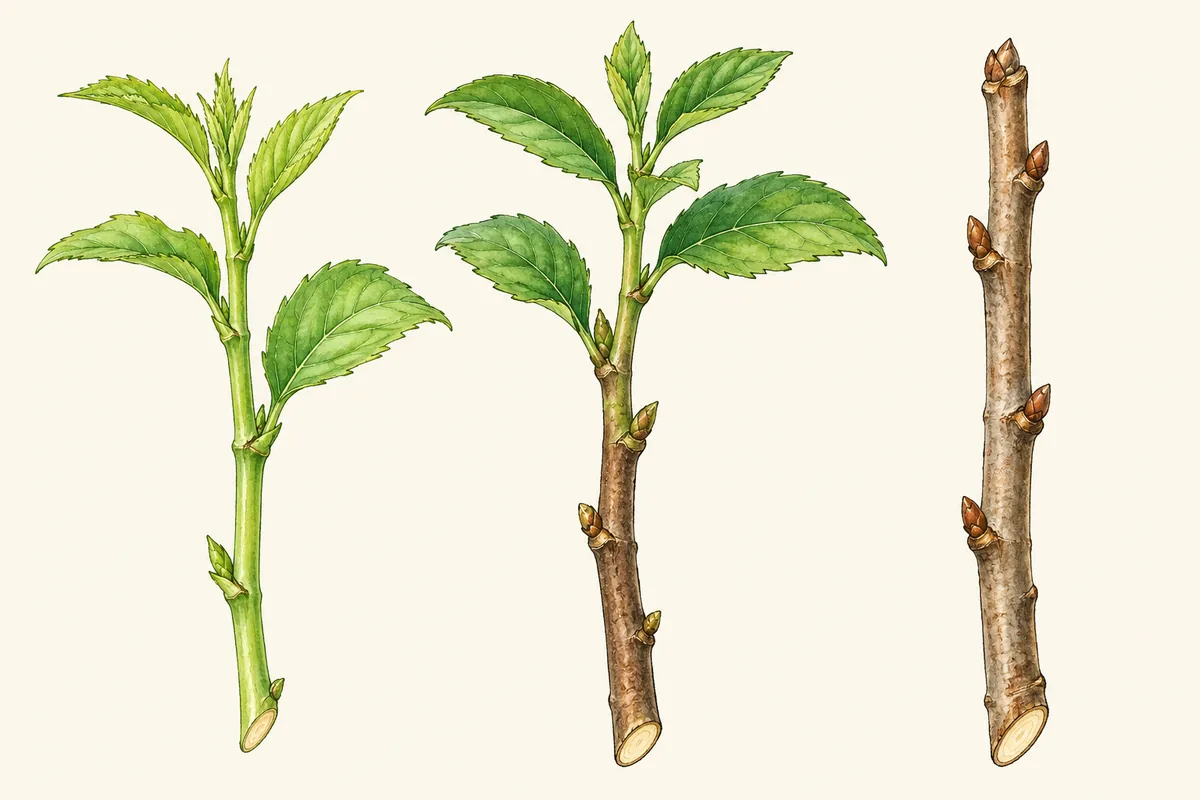
Cuttings are the best-value job in the garden: take a piece of a plant you already have, and in a few weeks or months it's a new plant. Different plants root best from wood at different stages of ripeness, which is why there are three kinds of cutting — and why each has its own season.
In pictures
-
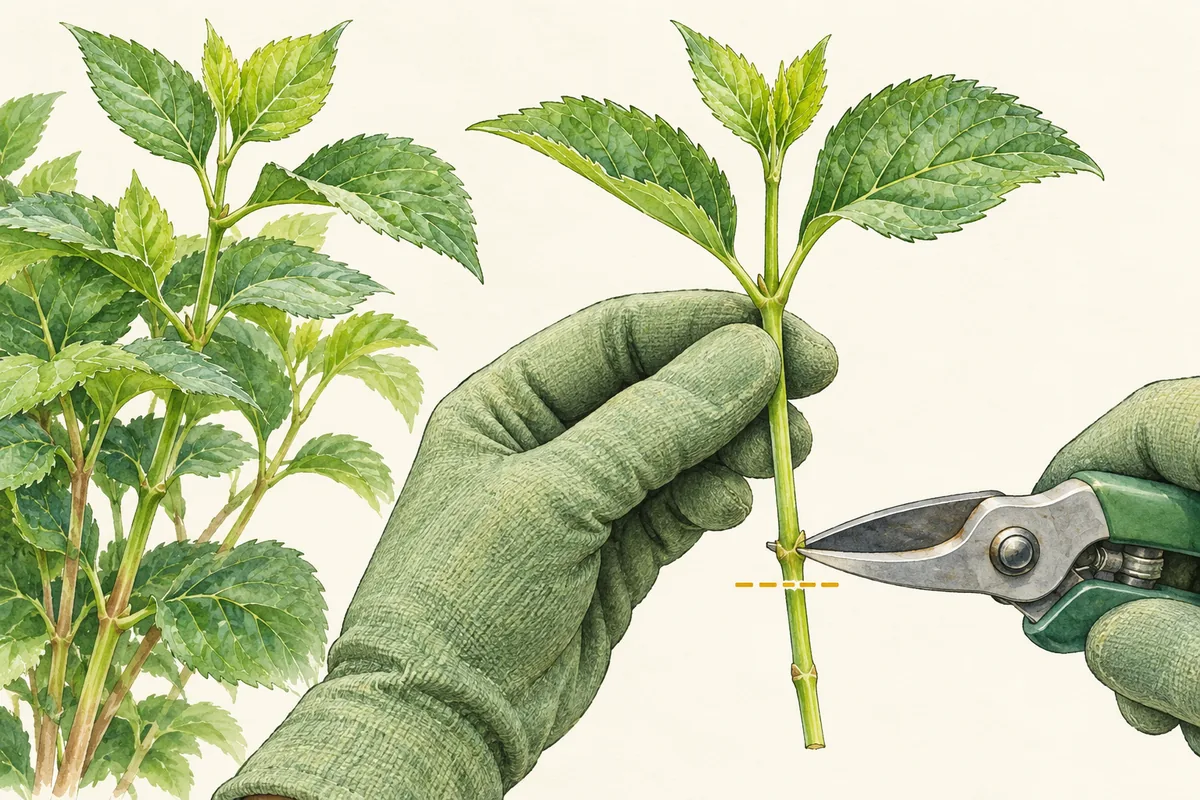
2Trim softwood cuttings just below a leaf joint. -
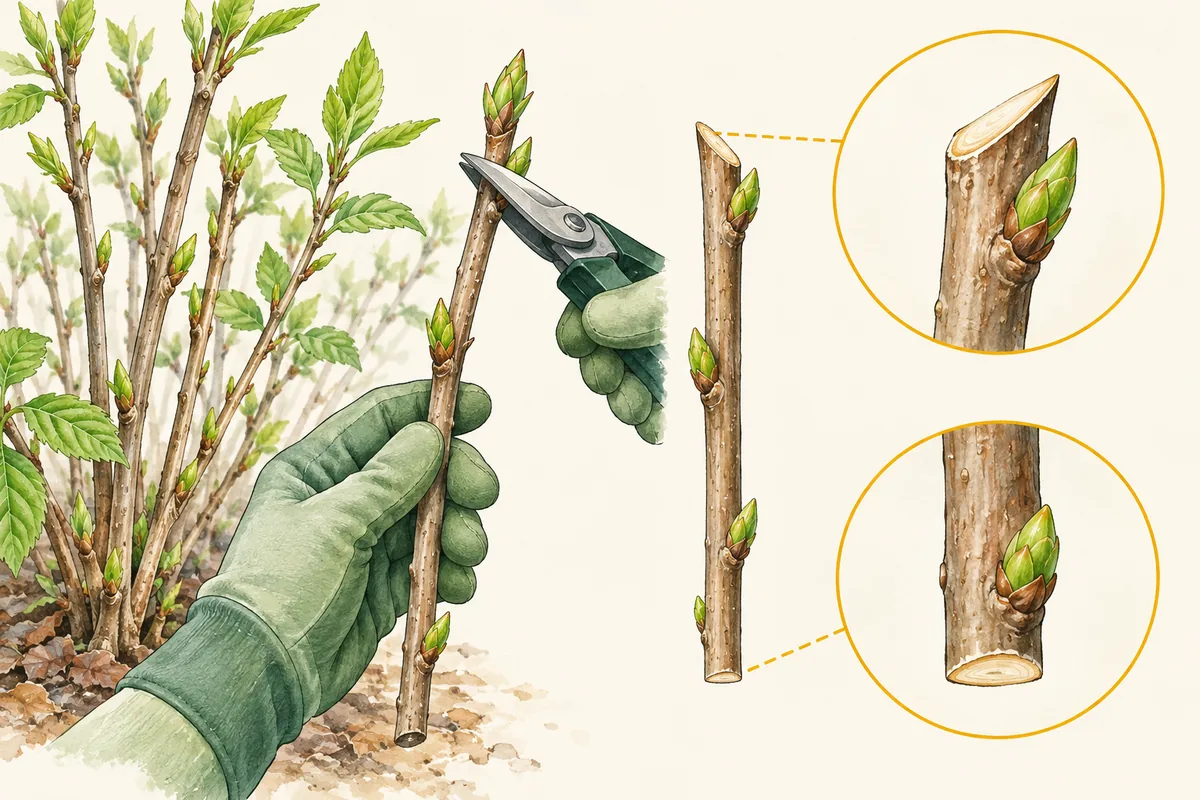
3Hardwood: slope the top cut above a bud, cut the bottom straight below one. -
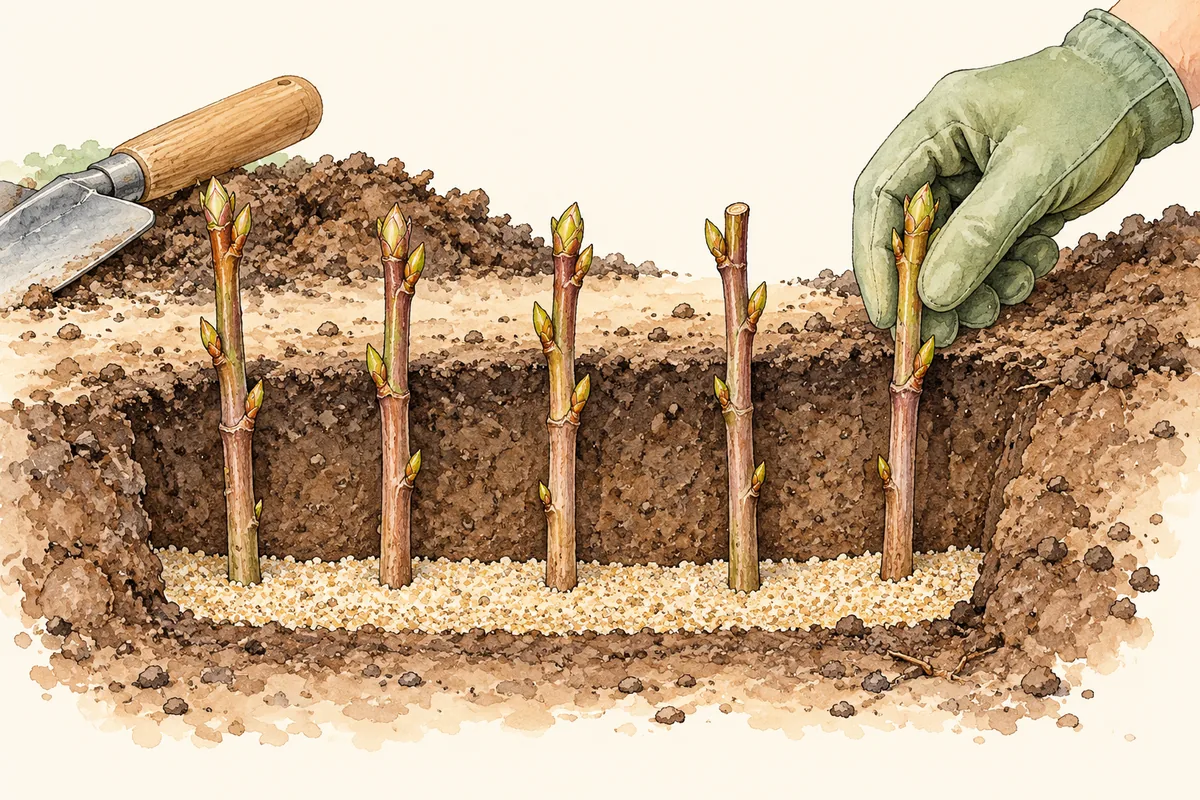
4Insert hardwood cuttings two-thirds deep in a slit trench with sand at the base.
01Which cutting, when
- Softwood: spring to early summer (about April to June), from soft new shoots. Fast to root. Examples: penstemon, pelargonium, fuchsia, hydrangea.
- Semi-ripe: mid-summer to early autumn (about July to September), from this year's shoots that are firm at the base but still soft at the tip. Examples: lavender, rosemary, sage, hebe, box, bay.
- Hardwood: mid-autumn to late winter, after leaf fall, from fully ripe stems. Slow but almost no effort. Examples: dogwood, willow, currants, gooseberries, roses, forsythia.
02Softwood cuttings
- Take up to 10cm of young shoot in the morning, while the plant is full of water.
- Trim just below a leaf joint (node) to 5–10cm long.
- Remove the lower leaves and pinch out the soft tip.
- Insert into a pot of cuttings compost.
- Cover with a clear bag or propagator lid, in good light but out of scorching sun. Gentle bottom heat helps.
- Air them at least twice a week for about ten minutes, and remove anything rotting.
- Pot up once rooted, usually within about two to four weeks, after a couple of weeks of hardening off.
03Semi-ripe cuttings
- Take a 10–15cm shoot that's firm at the base and soft at the tip.
- Trim just below a leaf joint and leave about four leaves; halve any large leaves to cut water loss.
- Insert into a mix of half peat-free potting compost, half sharp sand.
- Keep warm and light, out of direct sun. Summer cuttings rarely need extra heat.
Some plants root better from a "heel" — a side-shoot pulled away from the main stem with a sliver of bark attached.
04Hardwood cuttings: the no-kit method
- Choose healthy, pencil-thick stems from this year's growth, after the leaves have fallen.
- Trim the soft tip off and cut to 15–30cm long.
- Top cut: sloping, just above a bud, so rain runs off. Bottom cut: straight across, just below a bud. That way you always know which end is up.
- Make a slit trench with a spade in a sheltered spot, with a little sand in the base.
- Insert each cutting two-thirds deep, 10–15cm apart, leaving a few buds showing, and firm in.
- Leave them until the following autumn, then lift and plant. Re-firm any that frost lifts in spring.
Avoid taking hardwood cuttings in very cold spells.
05Mistakes to avoid
- Strong sun on softwood cuttings. They wilt and die before rooting.
- No ventilation. Covered cuttings rot without fresh air.
- Lifting hardwood cuttings too early. Give them the full year.
Save your money
A clear plastic bag does what a propagator does.
Hardwood cuttings need no kit at all — a spade, a bit of sand, a sheltered corner.
Use your winter prunings. Dogwood and currant prunings are ready-made hardwood cuttings.
How we checked this
Every care and safety claim on this page is verified against horticultural and veterinary sources.
Sources: RHS — Cuttings: softwood · RHS — Cuttings: semi-ripe · RHS — Cuttings: hardwood
Checked 1 October 2026. If our advice ever conflicts with the RHS, believe them and tell us.