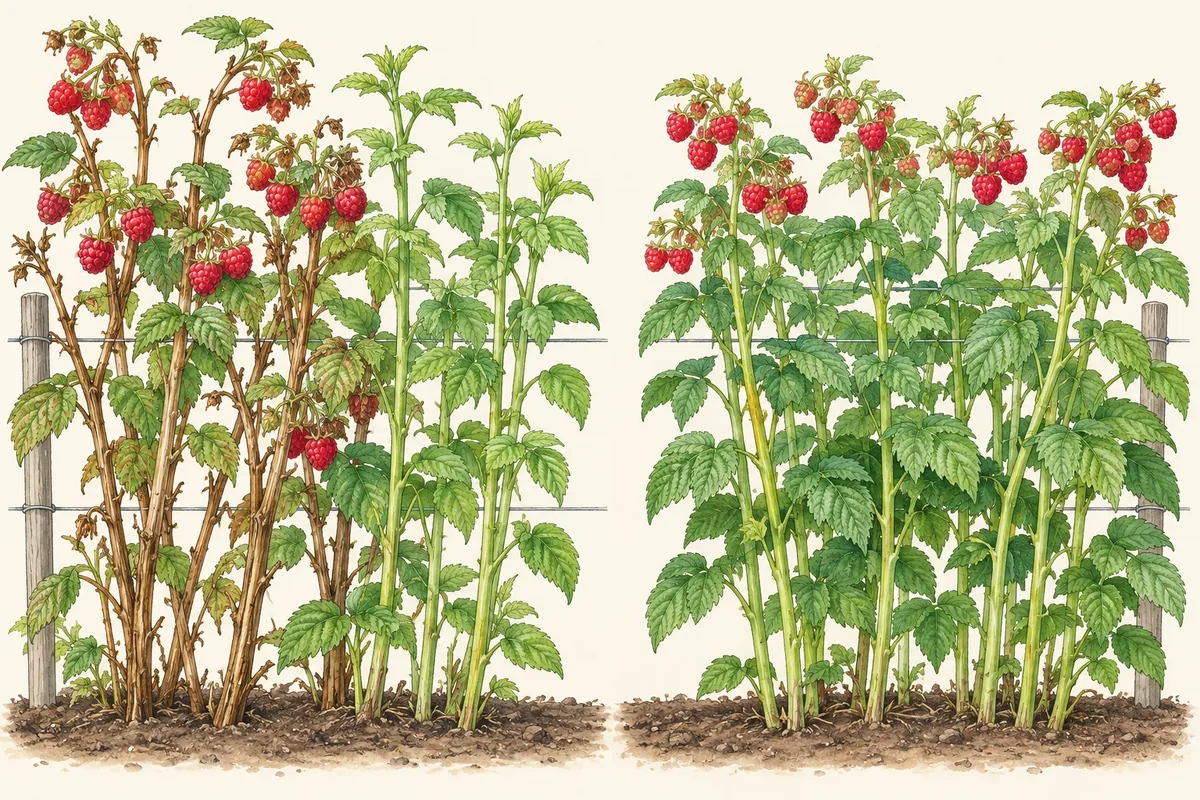
Raspberries are the easiest fruit to prune and the easiest to get catastrophically wrong, because the two types are pruned in completely opposite ways. Cut a summer-fruiting row to the ground in February and you've just removed this year's entire crop. So, the one question first.
In pictures
-
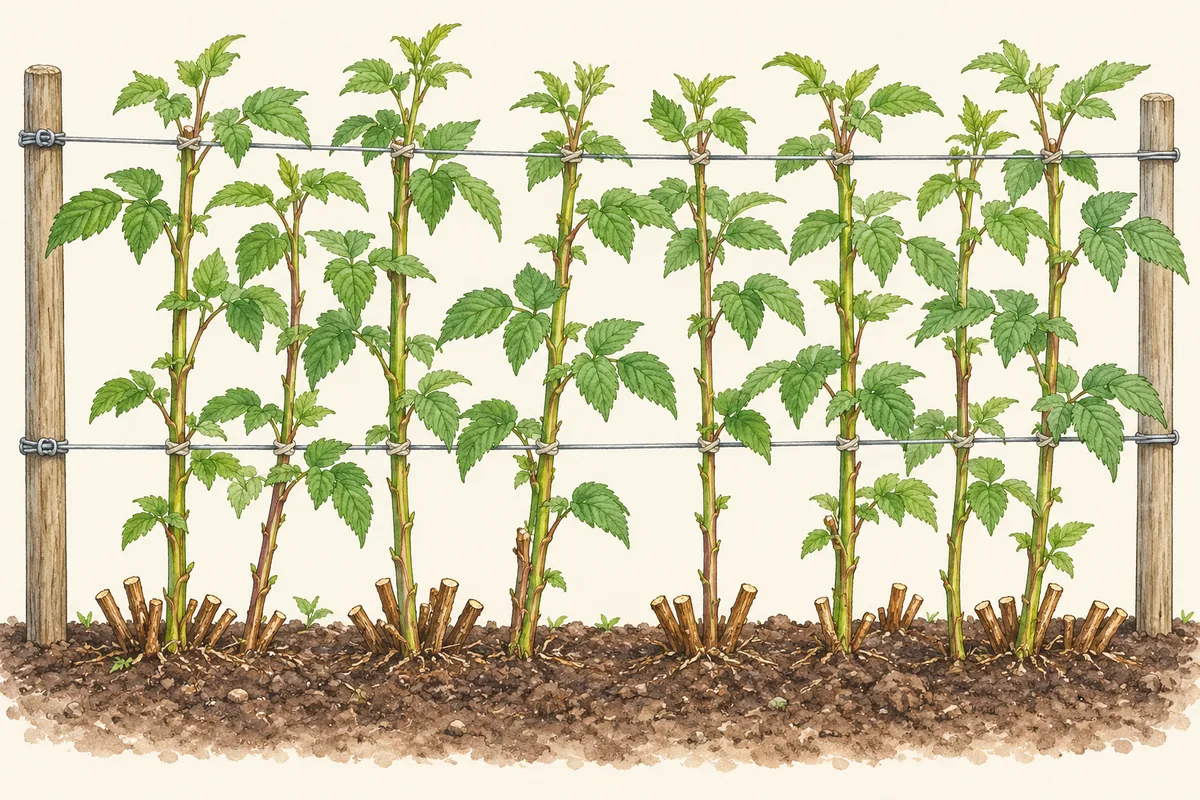
2Summer-fruiting after picking: old canes cut to the ground, the best new canes tied in. -
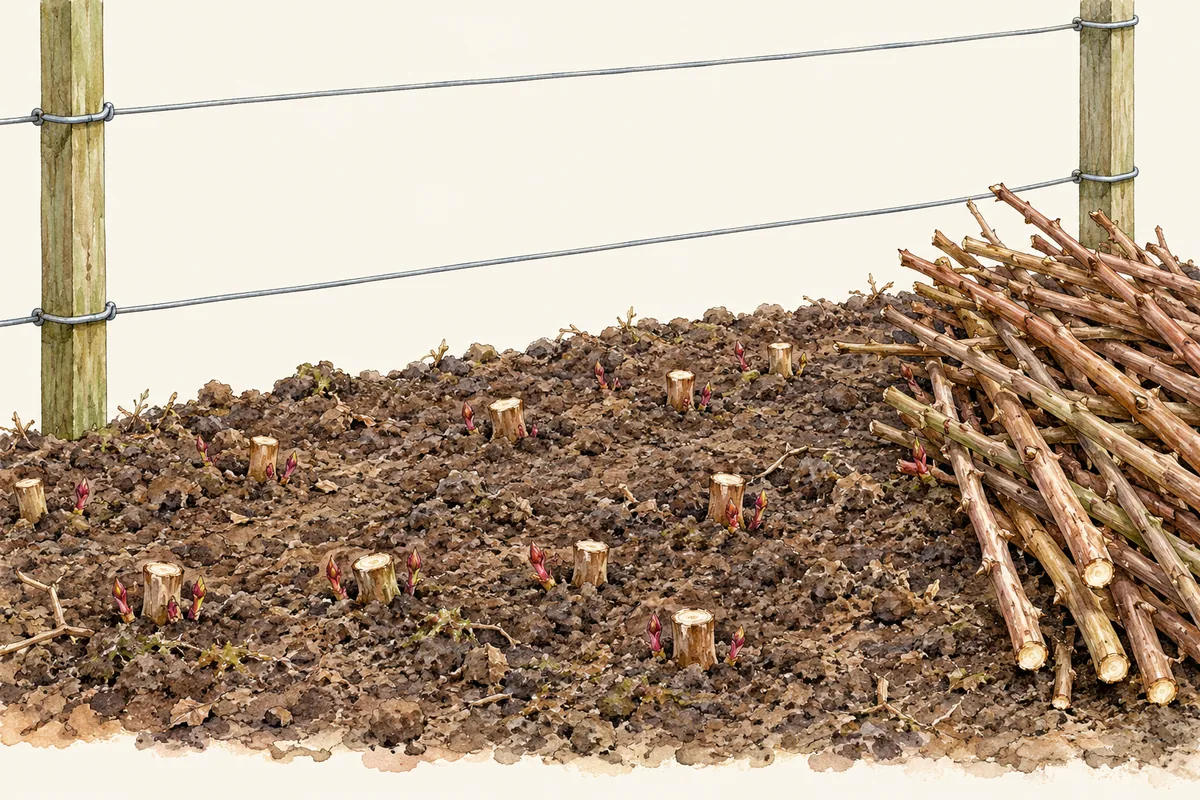
3Autumn-fruiting in February: every cane cut to the ground. -
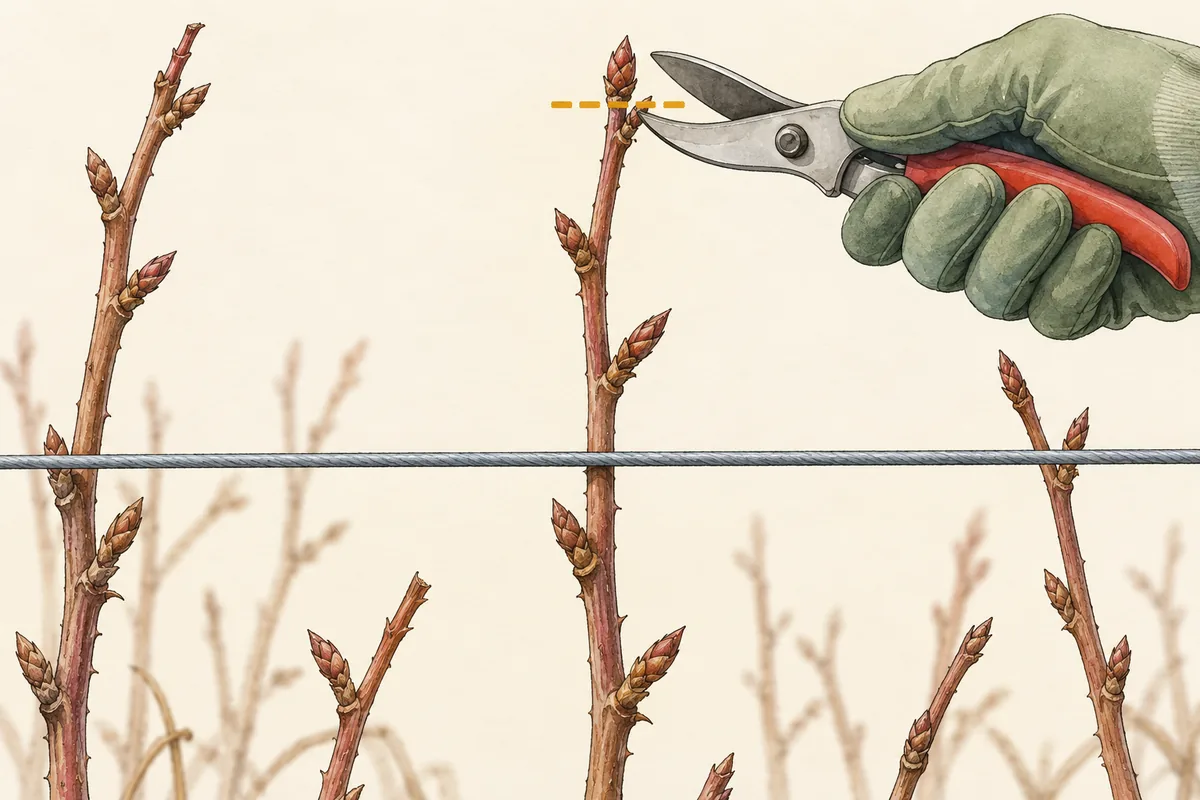
4In February, tip canes about 10cm above the top wire.
01First: which raspberry have you got?
- Summer-fruiting — fruits in early to midsummer on canes that grew the previous year. So at any time there are two kinds of cane: this year's fruiting canes and next year's new ones.
- Autumn-fruiting — fruits from late summer into autumn on canes that grew this year.
Not sure? Look at when it fruited this year. Or look at the row now: if the canes that fruited are going brown and woody while fresh green canes grow alongside them, you've almost certainly got a summer-fruiting variety.
02At a glance
- Summer-fruiting: prune straight after harvest (usually July–August); tip the canes in February.
- Autumn-fruiting: cut everything to the ground in February.
- Time: 20–30 minutes per row.
- Tools: secateurs, gloves, soft twine.
03Summer-fruiting: step by step
- After picking, cut every cane that has just fruited down to ground level.
- Choose the replacements. Of the new green canes, tie in the strongest — around six to eight per plant, spaced about 10cm apart along the wires.
- Remove the rest, along with any suckers popping up away from the row.
- In February, trim any canes that have grown above the top wire back to a bud about 10cm above it.
04Autumn-fruiting: step by step
- In February, cut every cane down to ground level. Yes, all of them.
- In early summer, if the new canes come up crowded, thin them to about 10cm apart.
05The double-crop trick (autumn varieties)
With some autumn-fruiting varieties — the RHS names 'Joan J' and 'Polka' — you can get a small early-summer crop as well:
- In February, keep the strongest six to eight canes per metre of row, and only remove their fruited tops. Cut the rest to the ground as usual.
- The half-pruned canes fruit again lower down in early summer; the new canes fruit in autumn.
- Once the half-pruned canes have fruited, cut them to the ground.
06Mistakes that cost you fruit
- Muddling the two types. The big one.
- Leaving too many canes. A crowded row gives smaller berries and more disease.
- Forgetting the suckers. Raspberries wander; pull or cut stray shoots away from the row.
How we checked this
Every care and safety claim on this page is verified against horticultural and veterinary sources.
Sources: RHS — How to grow raspberries · RHS — Winter pruning soft fruit
Checked 1 October 2026. If our advice ever conflicts with the RHS, believe them and tell us.