Wildlife · Guide · 30 October 2026
Do cats kill garden birds? What the numbers show, and what helps
Yes, though most prey cats bring home are mammals. Whether that drives bird declines is unresolved. Curfews, bright collars and feeder siting all help.
Yes, pet cats kill garden birds, but birds are a minority of what they catch. In the best-known UK study, 24% of prey cats brought home were birds and 69% were mammals. Nobody has shown whether that is driving bird declines. Keeping cats in at night, dawn and dusk, a bright collar cover, and careful feeder siting all reduce it.
This is an argument where people tend to pick a side first and look for numbers afterwards. We’ve tried to do it the other way round. Below is what each body says, what its figures are, and where the evidence runs out.
How many birds do cats catch?
The figures most people quote come from one study, and the Mammal Society has recently set them in context. Its chief executive’s blog post walks through two studies.
The 2003 study (Woods, McDonald and Harris). Owners recorded what their cats brought home between 1 April and 31 August 1997: 14,370 prey items from 986 cats in 618 households. Of those, 69% were mammals and 24% were birds. The rest were amphibians, reptiles, fish and invertebrates. That works out at about two prey a month per outdoor cat.
The 2025 study (Lockwood, Bulling and Huck). It followed 533 cats across the UK from June 2018 to December 2021, so it covers every season. The average was 1.5 prey a month per outdoor cat, and 83% of the prey were mammals.
The Mammal Society then took the PDSA’s 2024 estimate of 7.45 million outdoor cats in the UK. From that it arrives at “around 140.4 million prey returned by domestic cats each year”. That’s all prey, not birds alone.
The caveats the Mammal Society attaches matter as much as the numbers:
- Both studies count only what owners saw. The 1997 figures “could at least be deemed to demonstrate minimum prey numbers for those months”. Prey eaten or left outside isn’t counted.
- The 1997 survey covered spring and summer only, and it’s nearly 30 years old.
- Scaling up to every cat in the country has a large margin of error, and it ignores changes since 1997 such as night curfews and indoor cats.
- The lower rate in the newer study may not be a real fall. It covered winter as well as summer.
Does it cause bird declines?
This is where the evidence runs out.
The Mammal Society’s position is that cats “can and do have a significant and detrimental impact on wildlife.” It is equally clear that prey counts can’t tell you the size of that impact “when the predation numbers are provided without the context of the population numbers for the prey species”. It suggests cats are likely to take the weakest animals, and that some fallen chicks may not have survived anyway. It also says the impact varies from place to place, and can be “devastating” for vulnerable species such as ground-nesting birds.
The BTO notes in its garden research summary that “birds nesting in gardens may be more exposed to predation by domestic Cats” than countryside nesters, which face crows, badgers and weasels instead. That says something about exposure. It doesn’t measure an effect on population.
So the fair summary is this. Cats kill a lot of animals, birds among them. Killing a lot of individuals is not the same as reducing a population, and for UK garden birds that link hasn’t been measured. “Cats are wiping out songbirds” and “cats make no difference” both go further than the evidence.
What reduces it
The good news is that the practical steps are largely agreed, even though the size of the problem isn’t.
Keep cats in at night, dawn and dusk
All three bodies recommend this.
- The RSPCA recommends keeping cats in “at dusk and dawn when wildlife is most active, at least an hour before sunset and an hour after sunrise”. It also suggests keeping them in after rain, “to allow birds to come out and feed.”
- The RSPB, in its July 2026 expert Q&A, says cat owners can “keep them in overnight to reduce predation”. It asks owners to keep pets away from fledglings on the ground until the young birds can fly.
- The Mammal Society says “a night-time curfew can also bring predation down”.
Our view: spring and early summer, when fledglings are on the ground, is when a curfew is likely to do the most good.
Collars: bells are disputed, bright covers are favoured
This is the one practical point where the bodies disagree.
- The RSPCA recommends “a bell to a quick-release safety collar”. The RSPB says owners “can also use bell collars”.
- The Mammal Society says bells have “been shown to be largely ineffective in reducing predation”. Instead it recommends a bright-coloured collar cover, or “ruff”, on a quick-release collar.
We can’t settle that from the pages we read. What they all share is the quick-release collar, the kind that comes apart if it snags. If you try a collar of either kind, that’s the one to use.
The Mammal Society adds a complete, meat-rich diet and daily play to satisfy the hunting instinct. It also stresses neutering before a cat starts going outside.
Site feeders, baths and boxes with cats in mind
If you’re the one feeding the birds, you can make the garden safer whoever owns the cat.
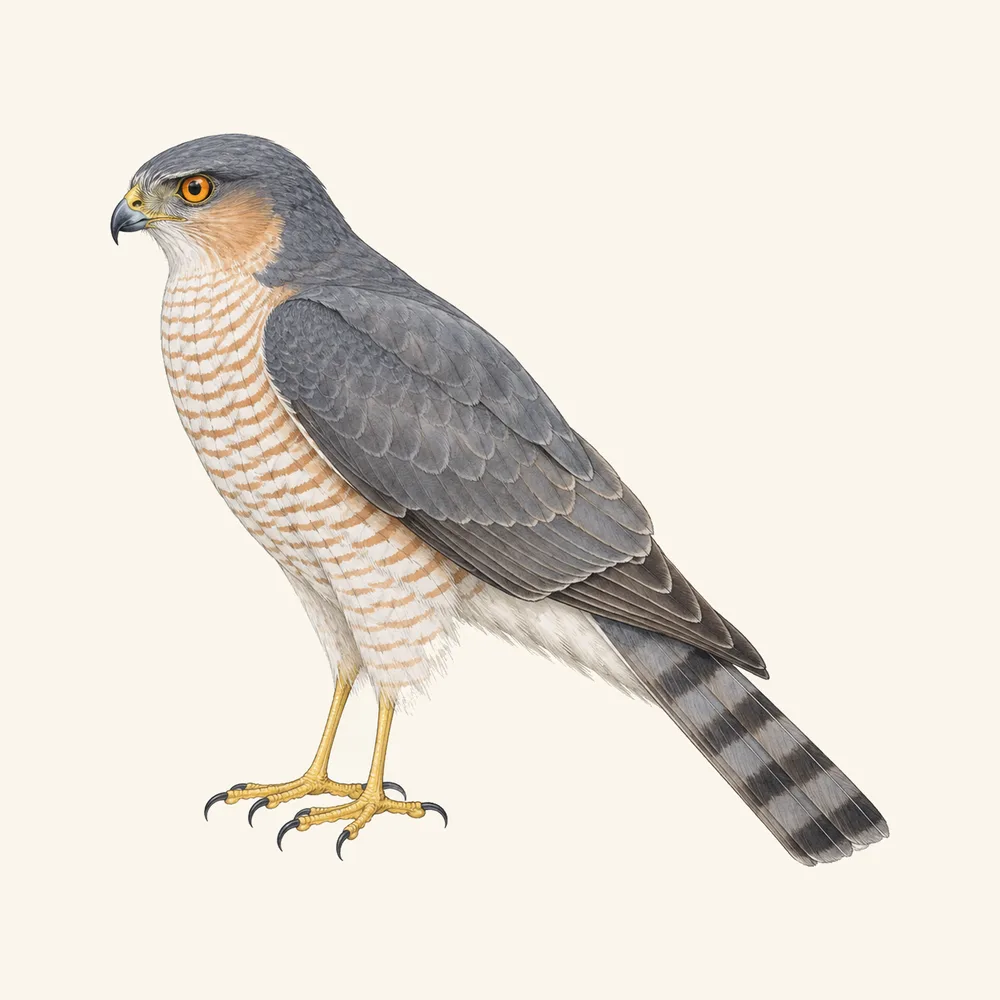
- Feeders. The RSPB says to hang them “high enough so they are out of reach of ground predators like cats”, and “a couple of metres away from thick cover like bushes”. The RSPB’s reason for the gap is so small birds can escape a sparrowhawk. It also means a cat has no hiding place right beside the feeder. Hang feeders only. The RSPB’s 2026 guidance advises against bird tables, window feeders and feeders with trays, because disease spreads on flat surfaces.
- Bird baths. The RSPB suggests “an open flat area, where there is no long grass or low bush for a cat to hide and pounce.” There’s more in bird baths in winter.
- Nest boxes. Keep them clear of fences, sheds and branches a cat could climb. See where to put a bird box.
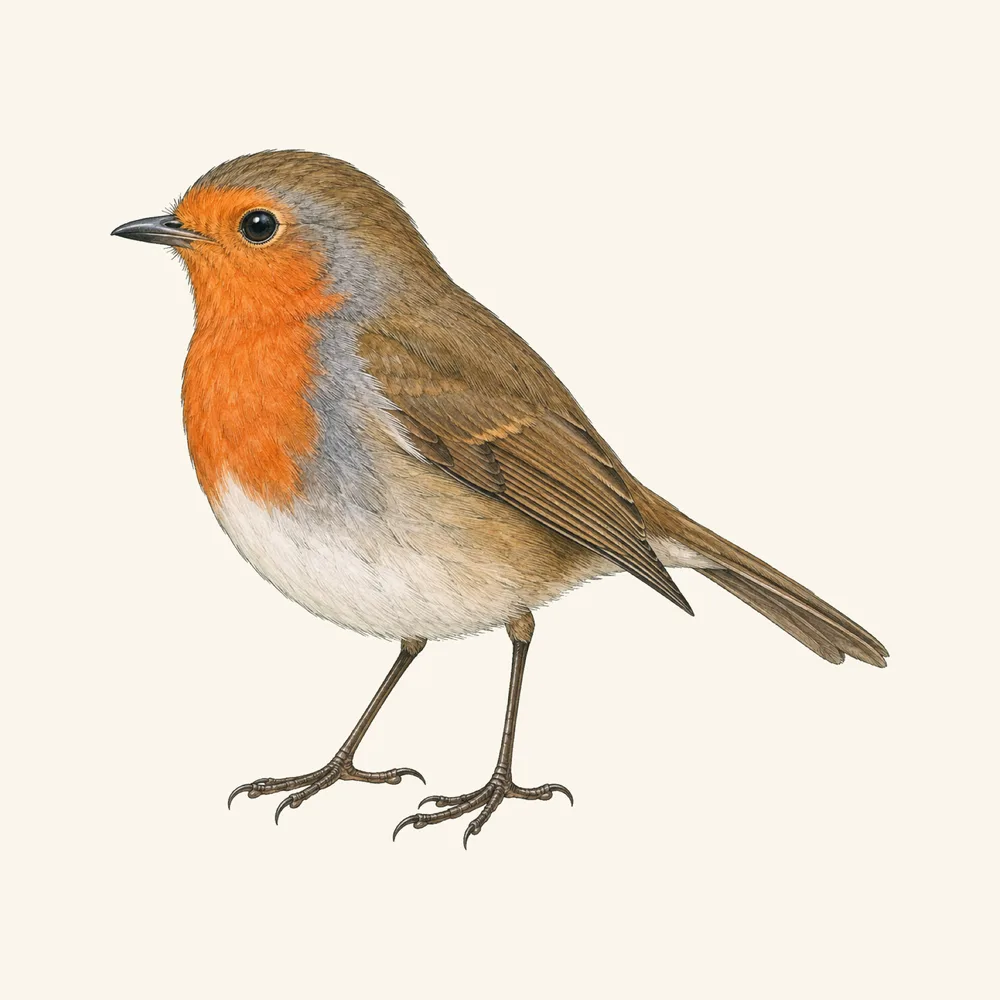
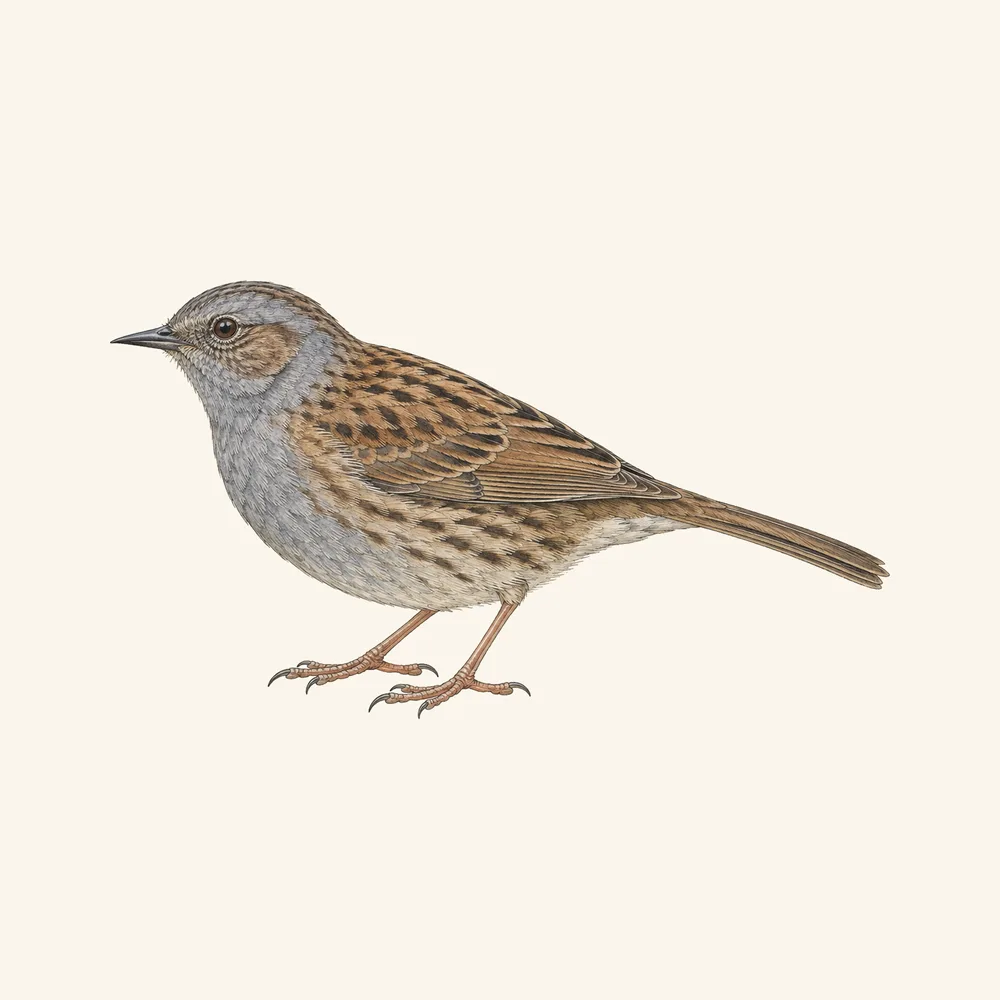
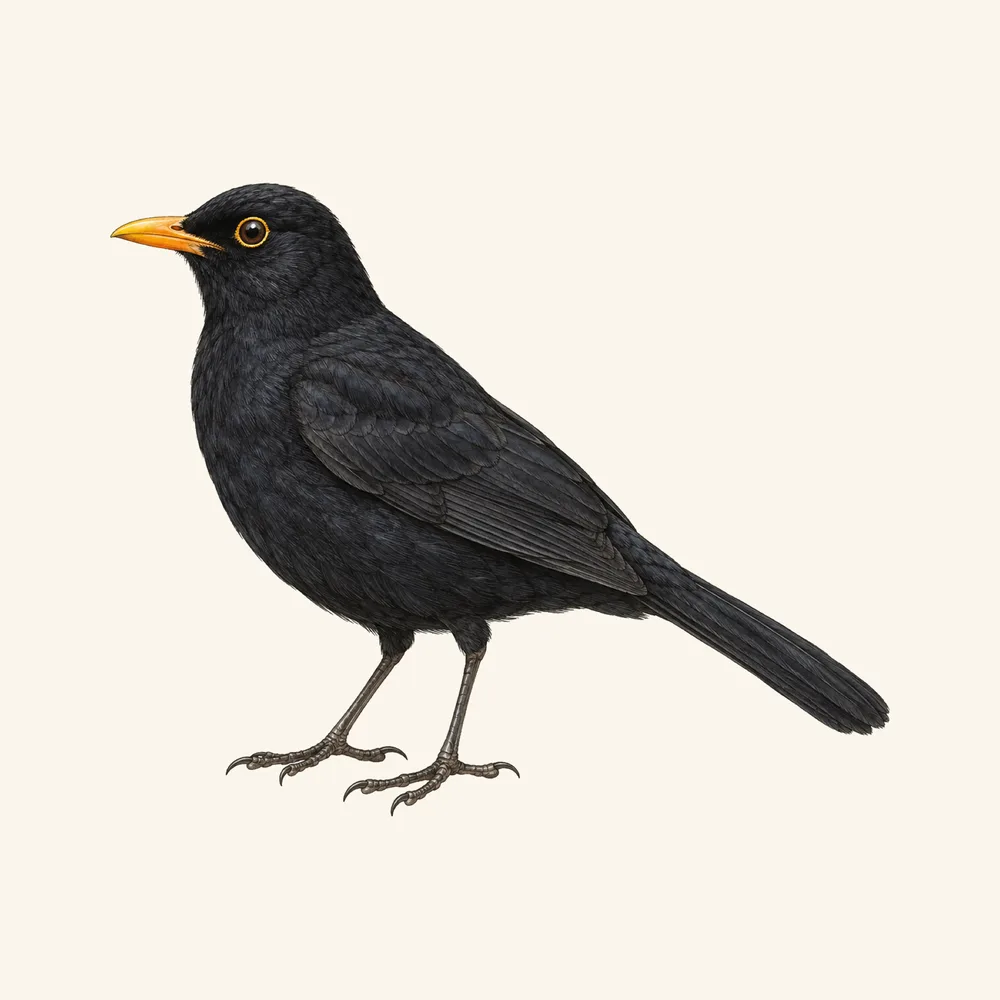
Our robin, dunnock and blackbird pages say where each one feeds and nests. For what to put in the feeders, and when seeds and peanuts are back on the menu, see what to feed garden birds in winter.
If a cat has caught a bird
If a cat brings in a live bird, or you take one from a cat, treat it as urgent even if it looks unhurt. The RSPCA says a bird caught by a cat “always need[s] to be taken for treatment, even if you can’t see any obvious wounds”, because there is a risk of infection.
Ring the RSPCA on 0300 1234 999 (England and Wales), or see rspca.org.uk to find a wildlife rescue. A local vet is another option. In Scotland, ring the SSPCA on 03000 999 999. In Northern Ireland, ring the USPCA on 028 3025 1000.
The honest bit
The counts are real, but they’re minimums, mostly from one 1997 spring-and-summer survey, and they measure deaths, not population change. We couldn’t open a current RSPB page setting out its view on whether cats cause declines, so we haven’t stated one for it. The RSPB pages we could read give practical advice only. The disagreement over bells is genuine, and we’ve reported it rather than picked a side. The steps everyone agrees on are curfews, quick-release collars and sensible siting. None of them needs you to settle the argument first.
How we checked this
- Mammal Society: Feline the pressure — domestic cats and wildlife (blog by the chief executive, 22 June; year not shown on the page)
- RSPB: Ask an RSPB expert — your July questions answered, 8 July 2026
- RSPB: How and what to feed your garden birds (Open a bird cafe)
- RSPB: Our latest guidance on feeding garden birds (Feed Safely, Feed Seasonally), dated 24 July 2026
- RSPB: Make the perfect bird bath
- RSPB: Who should I call if I am concerned about a bird?
- BTO: Garden BirdWatch research
- RSPCA: Understanding your cat's behaviour (preventing your cat from hunting wildlife)
- RSPCA: Found a sick or injured bird
Checked against the sources above and reviewed on 30 October 2026. We report what these organisations say; if our page and theirs ever disagree, believe them — and tell us.
On this site
More guides
- Feeders back on: what to put out from 1 NovemberFrom 1 November seeds and peanuts go back out. Start with sunflower hearts, add peanuts in steel mesh and fat in a cage, put out small amounts, clean weekly.
- Bird baths in winter: keeping water open in a freezeThaw it each morning with warm, never boiling, water poured slowly, then refill with fresh tap water. Never add salt or antifreeze. Scrub it weekly.
- Bird boxes: hole size, height and which way to face — and why autumn is the time to put one upFix it 1–3m up a trunk or wall, facing roughly north-east, tilted slightly forward, away from feeders. The hole size decides who moves in.
- Birds flying into windows: why it happens and what stops itBirds hit glass because they see sky or plants in it. Break up the whole pane, on the outside, with markings close enough together. One sticker won't do it.
- Foxes in the garden: what they're doing, what deters them, and what the law allowsFoxes come for food and shelter. Take away both and most move on. Repellents and ultrasonic gadgets rarely last, and harming a fox is a crime.