Wildlife · Guide · 30 October 2026
Birds flying into windows: why it happens and what stops it
Birds hit glass because they see sky or plants in it. Break up the whole pane, on the outside, with markings close enough together. One sticker won't do it.
Birds fly into windows because the glass shows them sky, trees or a clear route through, not a solid surface. What stops it is breaking up the whole pane so it reads as a barrier: markings or film across the outside, with gaps too narrow to fly through. A single sticker, even a hawk shape, won’t do it.
If a bird has just hit your window and is still on the ground, skip to what to do about a stunned bird. It may need help quickly.
Why it happens
There are two ways glass fools a bird.
Reflection. From outside, a window often looks like more garden: sky, a hedge, the tree behind you. The RSPB’s Belfast Local Group points out that trees and plants outside a window are a major hazard for exactly that reason. The bird sees a place to fly into.
See-through glass. Sometimes the bird sees through the glass to something beyond it. The same group warns that houseplants and flowers just inside a window can look like a safe place to land.
The RSPB calls flying into windows “a common problem”, and says it “can easily be solved with window stickers”. The detail is in how you use them.
What works
The principle the sources agree on is to make the glass visible to the bird across the whole pane, not just one spot on it.
Cover the pane, not a patch of it. The RSPB Belfast group puts it plainly: “any uncovered area of the window must be narrow enough that birds will not want to fly through it.” That’s why the effective products are rows of dots, lines or tape across the glass, rather than one or two decals in the middle.
Put it on the outside where you can. The BTO and RSPB both say to put anti-reflection material on the outside of the glass when birds attack their reflections, because the reflection forms on the outer surface. Our view is that the same logic applies to collisions. A marking on the inside can be hidden by the reflection it’s meant to break up. If you can only reach the inside, it’s still better than nothing.
Screens, netting, awnings and film. The RSPB group lists sun awnings, one-way transparent film and netting alongside stickers. Anything that sits in front of the glass and breaks the reflection does the same job. Netting should be taut and fixed a little out from the glass. That’s our practical view, not a sourced figure: loose netting can tangle birds.
Blinds and plants. During the day, the RSPB group suggests keeping blinds partly closed where you can, and closing curtains at night. Move houseplants back from the glass so the window doesn’t frame a landing spot.
How close should the markings be?
We looked for a UK figure for the spacing and didn’t find one from the RSPB, BTO, RSPCA or Wildlife Trusts. You’ll see precise spacings quoted online. We haven’t verified one against a UK body, so we won’t pass one on. Follow the principle: small, evenly spread markings across the whole pane, with no gap a bird would try to fly through.
What doesn’t work
- One sticker. “A single decal will not work, even if it’s of a predatory bird like a buzzard,” says the RSPB Belfast group, and the original stresses the not. A hawk silhouette on its own leaves most of the glass looking open.
- Fake owls. The same source: “Fake plastic owls do not work.”
- Stickers that have faded. The group says UV decals “do need to be replaced periodically” because they fade.
UV decals: what the sources say
UV stickers are sold as visible to birds but almost invisible to you. The RSPB Belfast group describes them as “less likely to obscure your view but which are fully visible to birds”, and adds that they fade and need replacing. That’s the only tier-1 comment we found. We found no RSPB or BTO page that tests how well UV decals work, or compares them with visible markings. Treat “invisible to you, visible to birds” as a claim, not a measurement. Whatever you buy, the coverage rule still applies.
A bird attacking its reflection is a different problem
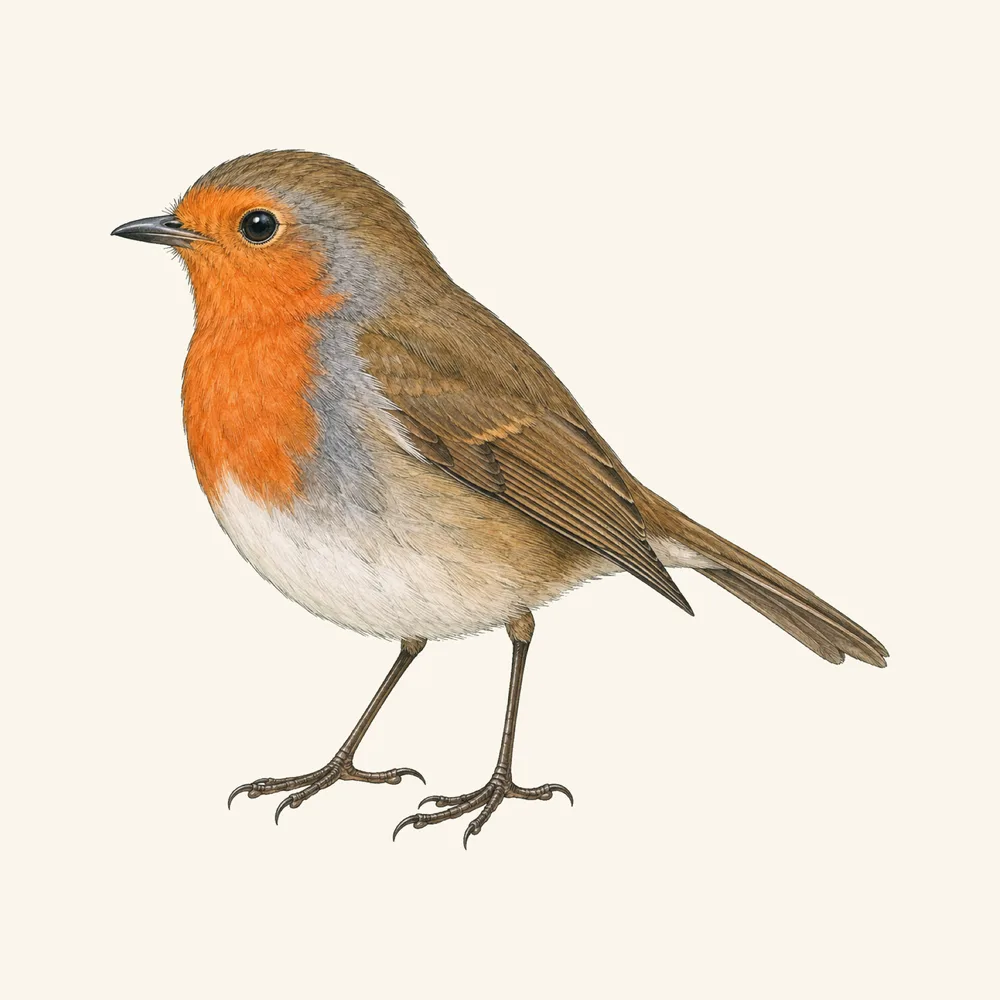
If a bird is repeatedly pecking or flying at the same window, that’s territorial behaviour, not an accident. The sources we used don’t name particular species. Fiercely territorial birds such as the robin, which will fight another robin in earnest, are the kind to watch for. The RSPB explains that it’s “most often spotted during the breeding season”, when the bird believes it is “fiercely protecting their territory” against the rival in the glass. The BTO says such birds can “become seemingly obsessed with their reflection.”
Both bodies give the same fix: remove the reflection. Put “cling film or non-reflective cellophane on the outside of the window”, in the RSPB’s words. The BTO also suggests:
- hanging foil strips or old CDs that move in the wind
- blocking the bird’s approach with plants or hanging baskets
- standing a mirror near the window so the bird has a different reflection to fight
If the bird works along several windows, start with the first one it targets. The RSPB adds that newspaper works but may get torn off, and that fluttering plastic strip curtains can help. The BTO says these attacks usually die down outside the breeding season.
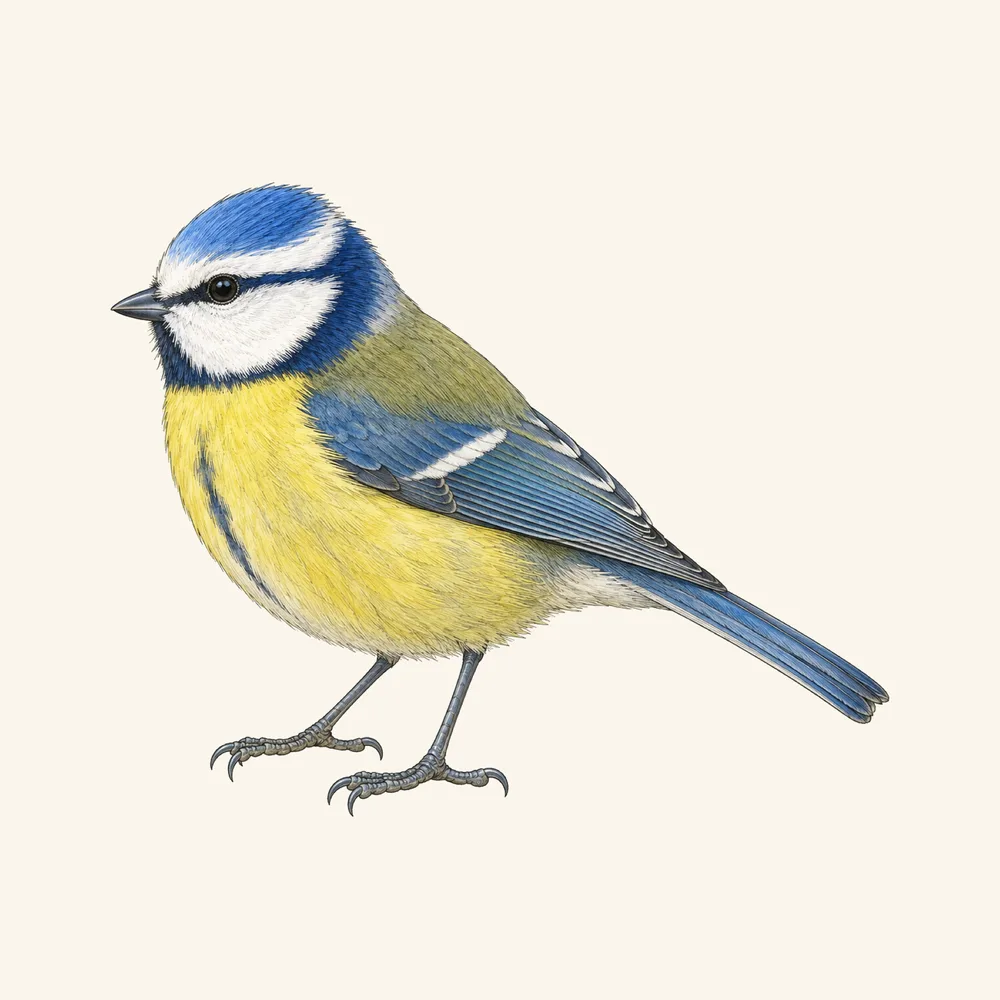
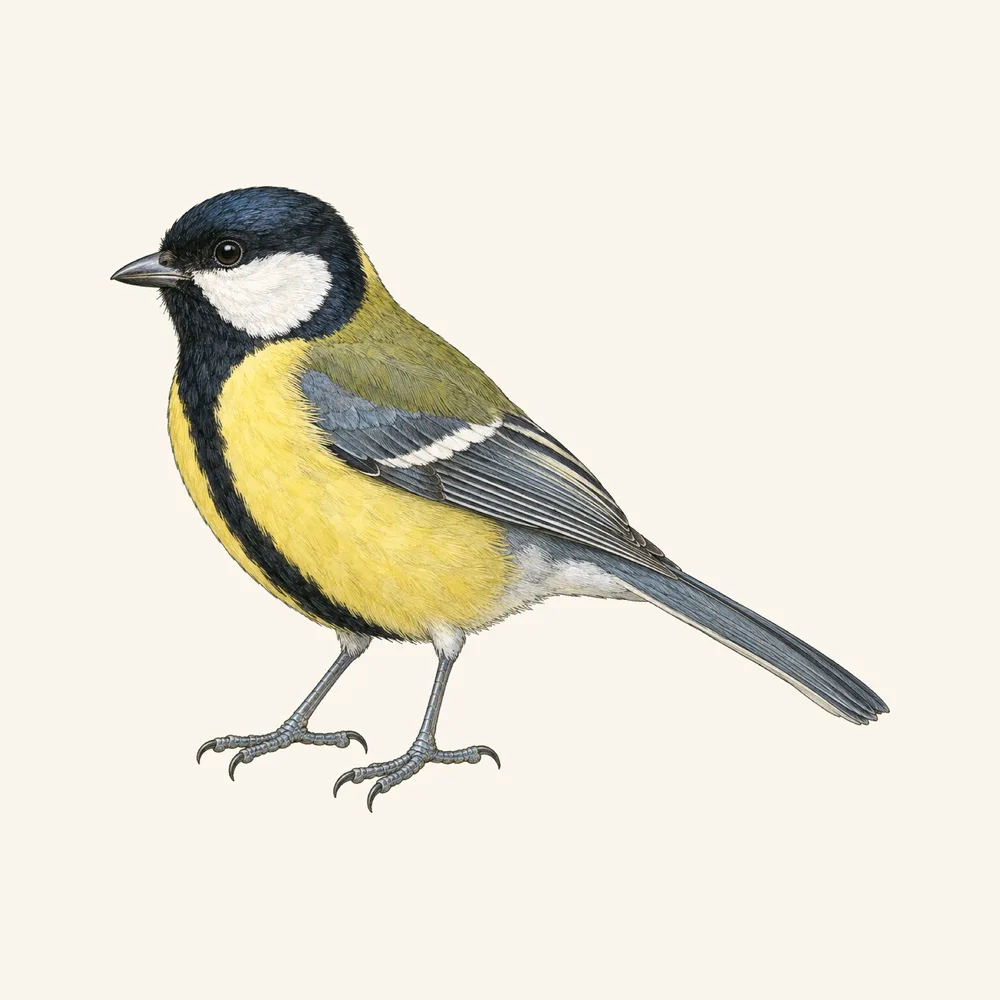
In autumn and winter you may instead see blue tits and great tits pecking at window frames. The BTO says tits peck window putty, possibly for the linseed or fish oils in some putties. It suggests synthetic putty, or masking tape over the old putty as a simple first step.
If a bird has just hit your window
A window strike can cause concussion or internal injuries even when the bird looks unhurt. The Wildlife Trusts say so, and the RSPB Belfast group warns that “even birds who fly away afterwards may be injured fatally.”
Get help straight away if the bird has any of the signs the RSPCA lists: visible wounds or bleeding, a twisted head or neck, trouble holding its head up or balancing, or no attempt to move away when you approach. Do the same if a cat has had it, even with no visible wound. The RSPCA also says that if a bird is still stunned and unable to fly two hours after a window strike, you should get in touch. A bird that’s injured after a window strike needs expert help urgently.
Who to contact:
- England and Wales: the RSPCA, on 0300 1234 999 or through rspca.org.uk
- Scotland: the SSPCA, 03000 999 999
- Northern Ireland: the USPCA, 028 3025 1000
- or a local vet, or a local wildlife rescue
The RSPB and BTO both point people to these organisations. Neither rescues birds itself. Do what the rescue tells you. The RSPCA also asks people not to touch sick or dead birds, because of bird flu. If you have to, wash your hands thoroughly afterwards.
The honest bit
The territorial-attack advice comes straight from the BTO and RSPB and is consistent. The collision advice is thinner than we’d like. The RSPB’s national pages say only that stickers solve the problem. The detail here (cover the whole pane, single decals and fake owls don’t work, UV decals fade) comes from an RSPB local group blog, not a national guidance page. It matches the principle, but it isn’t a study. We found no UK body giving a spacing figure for markings, or a safe distance between feeders and windows, so we’ve given neither. We also haven’t said markings must go outside for collisions on any source’s authority: that is our reading of the anti-reflection advice, and we’ve labelled it as ours.
Window markings that work
One sticker won't do it. You need markings across the whole pane, close enough that birds won't try to fly through the gaps.
What makes a good one
- Cover the whole pane: any unmarked gap must be too narrow for a bird to try to fly through. source
- Many markings, not one. A single decal won't work, even of a bird of prey. source
- Stickers on the glass are the RSPB's own suggested fix for collisions. source
- On the outside of the glass, where the reflection is (BTO advice for reflections). source
Products checked on Amazon UK on 30 October 2026. We show no prices because they change daily — check before you buy. Nothing in the "save your money" tier is linked. How our recommendations work
How we checked this
- RSPB: Who should I call if I am concerned about a bird?
- RSPB Belfast Local Group: A bird hit my window! How to prevent collisions (18 August 2022, updated 12 October 2025)
- RSPB: Ask an RSPB expert — June Q&A (Why are birds pecking at my windows?)
- BTO: Window strikes (attacking windows)
- BTO Garden BirdWatch: Window strikes
- BTO: Injured birds
- RSPCA: Found a sick or injured bird
- Wildlife Trusts: Injured bird advice
Checked against the sources above and reviewed on 30 October 2026. We report what these organisations say; if our page and theirs ever disagree, believe them — and tell us.
On this site
More guides
- Feeders back on: what to put out from 1 NovemberFrom 1 November seeds and peanuts go back out. Start with sunflower hearts, add peanuts in steel mesh and fat in a cage, put out small amounts, clean weekly.