Wildlife · Guide · 30 October 2026
How to make a wildlife pond, from a half-barrel to a small dug pond
Go small and shallow, give it a sloping beach, fill it with rainwater, add no fish, and plant a few natives in spring, or let plants arrive by themselves.
To make a wildlife pond, choose a spot with some sun, dig or sink something with at least one gently sloping side, line it, and fill it with rainwater, not tap water. Keep it mostly shallow. Add no fish. Plant a few native plants in spring, or simply wait: wildlife and plants will find it on their own.
A half-barrel on a patio counts. Shape, water and patience matter more than size.
Start small: a container pond
The RHS suggests a “reclaimed sink, half-barrel or large tub”. If it isn’t watertight, line it. The Wildlife Trusts say a container pond should be 20–30 cm deep, and that a washing-up bowl or old sink will do.
Two things make a container work for wildlife:
- A way in and out. The RHS builds a ramp from a stack of large stones, and says bricks, logs, or a plank of untreated wood covered in chicken wire work too. If the container stands above ground, the Wildlife Trusts add a ramp up the outside as well. Better still, sink it into the ground so its rim sits level with the soil.
- Some sun, not all day. Both the RHS and the Wildlife Trusts warn that a small volume of water in full sun overheats and evaporates in summer.
Place it before you fill it. A full barrel won’t move.
A small dug pond
If you have the space, dig. The Wildlife Trusts’ version is the standard one: mark out the shape, dig, lay about 5 cm of sand, add the liner, then fill. They prefer butyl rubber as “durable, flexible, moderately cheap and easy to work with”. The Freshwater Habitats Trust suggests a double layer of underlay under the liner, with stones picked out first. The RHS says pre-formed plastic or fibreglass ponds usually need a ramp adding, because their sides are steep.
Depth: the experts disagree, so here’s the detail. The Freshwater Habitats Trust, which studies ponds for a living, wants “roughly 50% shallows”, with the deep area “not more than 30 cm”. It says the usual advice to dig to 50 or 60 cm “applies only to fish ponds”. The RHS suggests a range of 20–60 cm. Froglife’s booklet wants a section at least 60 cm deep, to protect frogs from weather extremes. For a small garden pond we follow the Freshwater Habitats Trust. All three agree on what matters most: plenty of shallow water.
The beach. Every body we checked asks for at least one long, gentle slope. The RHS suggests a “beach” of gravel or pebbles round the edge. That gives frogs, toads and newts a way out, gives insects somewhere to stand, and lets birds and hedgehogs drink safely. The Wildlife Trusts warn that butyl degrades in sunlight, so cover exposed edges.
Siting. The RHS says at least part of the pond should be in full sun, so it warms in spring, while some shade over part of it helps keep algae down. Froglife says to avoid putting it under big trees, whose leaves clog a pond in autumn.
Don’t add soil, turf or sludge. The Freshwater Habitats Trust says turves “will almost certainly add a massive blast of polluting nutrients”, and it puts clean play sand on the base instead.
Fill it with rainwater
The Freshwater Habitats Trust says “most tapwater is not fit to use in a pond because it’s full of nutrients”. Froglife adds that tap water contains chlorine or chloramines, which harm amphibians. The RHS calls tap water “a last resort”. So be patient. Let the pond fill with rain, or use a water butt, and top it up the same way.
No fish
The RHS calls fish “top predators in a garden pond, reducing biodiversity”. Froglife says the best wildlife ponds “generally have no fish in them”, because fish eat much of the other pond life. A pond with fish is an ornamental pond. If you inherit one with fish, the RHS suggests rehoming them.
Plants: native, few, and in spring
You don’t have to plant at all. The Freshwater Habitats Trust says “there is no need to plant your pond: be patient and plants will naturally colonise your pond.”
If you do plant, the RHS says mid-spring to early summer is best, once the water has warmed. The Wildlife Trusts say to wait one to two weeks after filling. Froglife’s rule is “keep it local and keep it native”. The RHS plants most pond plants in aquatic baskets with loam-based or aquatic compost.
For a dug pond, the Wildlife Trusts list natives by zone. Their list includes water mint, which it warns can be invasive, plus water forget-me-not, marsh marigold, and for the damp edge ragged robin, lady’s smock or cuckooflower and meadowsweet. The RHS names yellow flag, our water iris, as a native for bare banks. It grows big, so keep it out of a barrel. For a container, the Wildlife Trusts say one or two plants are enough, and they suggest starwort and lesser spearwort.
Never move pond life between ponds. The RHS warns that frogspawn, sediment or pond water from elsewhere can bring in diseases or invasive species. Froglife says don’t donate your frogspawn to other gardeners. Our common frog page explains why: ranavirus.
Pond plants you must not buy
Some of the worst invasive plants in British waters started in garden ponds. In 2013 the government announced a ban on selling five of them: water fern, parrot’s feather, floating pennywort, Australian swamp stonecrop (also called New Zealand pigmyweed) and water primrose. The ban took effect in England in April 2014.
The law now works in two layers, in England and Wales:
- Schedule 9. Under section 14(2) of the Wildlife and Countryside Act 1981, it’s an offence to plant, or otherwise cause to grow in the wild, any plant in Part II of Schedule 9. Its aquatic plants include water fern, Australian swamp stonecrop, floating pennywort, parrot’s feather, the water primroses, curly waterweed, water lettuce, water hyacinth, fanwort and the Elodea waterweeds (except Nuttall’s waterweed, which the next rule covers). A pond plant that escapes down a ditch is growing in the wild.
- Species of special concern. gov.uk lists 36 invasive plants that you may not keep, grow, sell, transport or allow to reproduce. Floating pennywort, parrot’s feather, curly waterweed, Nuttall’s waterweed, water hyacinth, fanwort and water primrose are among them. If you find one in your pond, gov.uk says to “remove and dispose of any listed aquatic plant safely”.
Scientific names are what the law goes by, so check the label. If it doesn’t give one, don’t buy the plant.
If you have great crested newts
A great crested newt is a European Protected Species. gov.uk says deliberately capturing, injuring, killing or disturbing one, or damaging a breeding or resting place, can bring “an unlimited fine and up to 6 months in prison for each offence”. For an existing pond that may hold them, gov.uk says routine work is usually done in winter, “typically between early November to late January”. Work in summer will “almost certainly need a licence”. If you find a newt while working, stop. Most garden newts are smooth newts, so check the identification first.
Small children
The RHS says “even a mini pond can be a hazard for young children, so position it safely”. Froglife says never to leave young children unsupervised near any large container of water. For a pond they could reach, it suggests a fence at least 1.1 m high or a rigid mesh grille fixed across the pond. Gently sloping sides help anyone who does fall in, not just frogs.
The honest bit
The basics are well agreed: shallow edges, rainwater, no fish, natives, and nothing brought in from another pond. Depth is the real disagreement, so we’ve given all three positions. The great crested newt winter window comes from gov.uk guidance last updated in 2015, so check the live page before clearing a pond near a known population. The invasive-plant rules above are for England and Wales. Scotland’s section 14 is worded differently, and we haven’t covered Northern Ireland. The land around the pond matters as much as the water: see leave the leaves and do bug hotels work for log piles and long grass.
Pond kit worth buying
A wildlife pond needs very little shop-bought kit. Use rainwater, not tap water, and let plants arrive on their own if you're patient. These two things make the rest easier.
What makes a good one
- Fill and top up with rainwater. Most tap water carries nutrients a pond doesn't want. source
- Plant natives in aquatic baskets with loam-based or aquatic compost, not ordinary compost (the last point is our view). source
- For a dug pond, a butyl rubber liner over underlay or sand. The Wildlife Trusts prefer butyl. source
- If young children could reach the pond, a fence at least 1.1 m high or a rigid mesh grille fixed across it. source
Products checked on Amazon UK on 30 October 2026. We show no prices because they change daily — check before you buy. Nothing in the "save your money" tier is linked. How our recommendations work
How we checked this
- Freshwater Habitats Trust: Garden Pond Advice Hub
- Freshwater Habitats Trust: Make a garden pond
- Froglife: Just Add Water (7th edition), a guide to building wildlife ponds
- RHS: Wildlife ponds, how to make them
- RHS: How to make a wildlife container pond
- The Wildlife Trusts: How to build a pond
- The Wildlife Trusts: How to create a mini pond
- GOV.UK: Invasive non-native (alien) plant species, rules in England and Wales (updated 18 November 2024)
- GOV.UK: Sale of invasive water plants banned to protect wildlife (29 January 2013)
- Wildlife and Countryside Act 1981, section 14
- Wildlife and Countryside Act 1981, Schedule 9
- The Wildlife and Countryside Act 1981 (Prohibition on Sale etc. of Invasive Non-native Plants) (England) Order 2014
- GOV.UK: Great crested newts, protection, surveys and licences
Checked against the sources above and reviewed on 30 October 2026. We report what these organisations say; if our page and theirs ever disagree, believe them — and tell us.
On this site
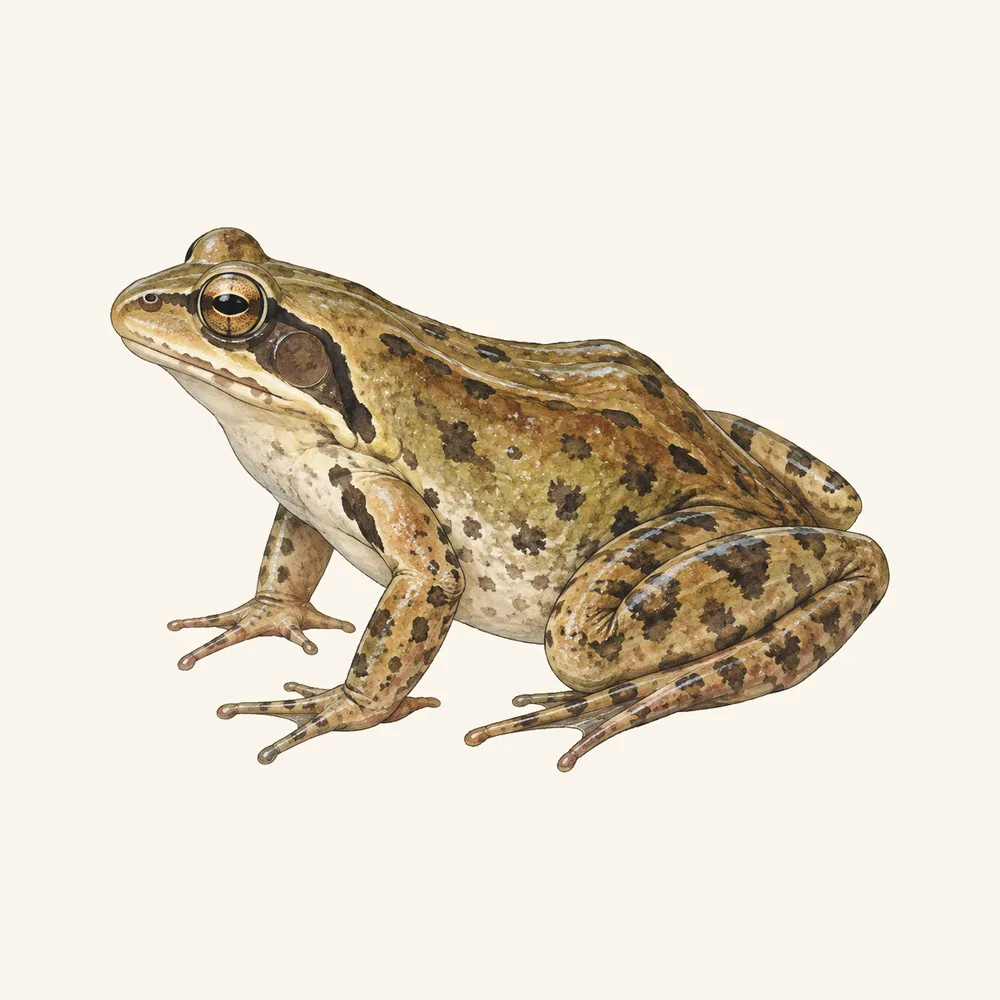 Common frogRana temporaria
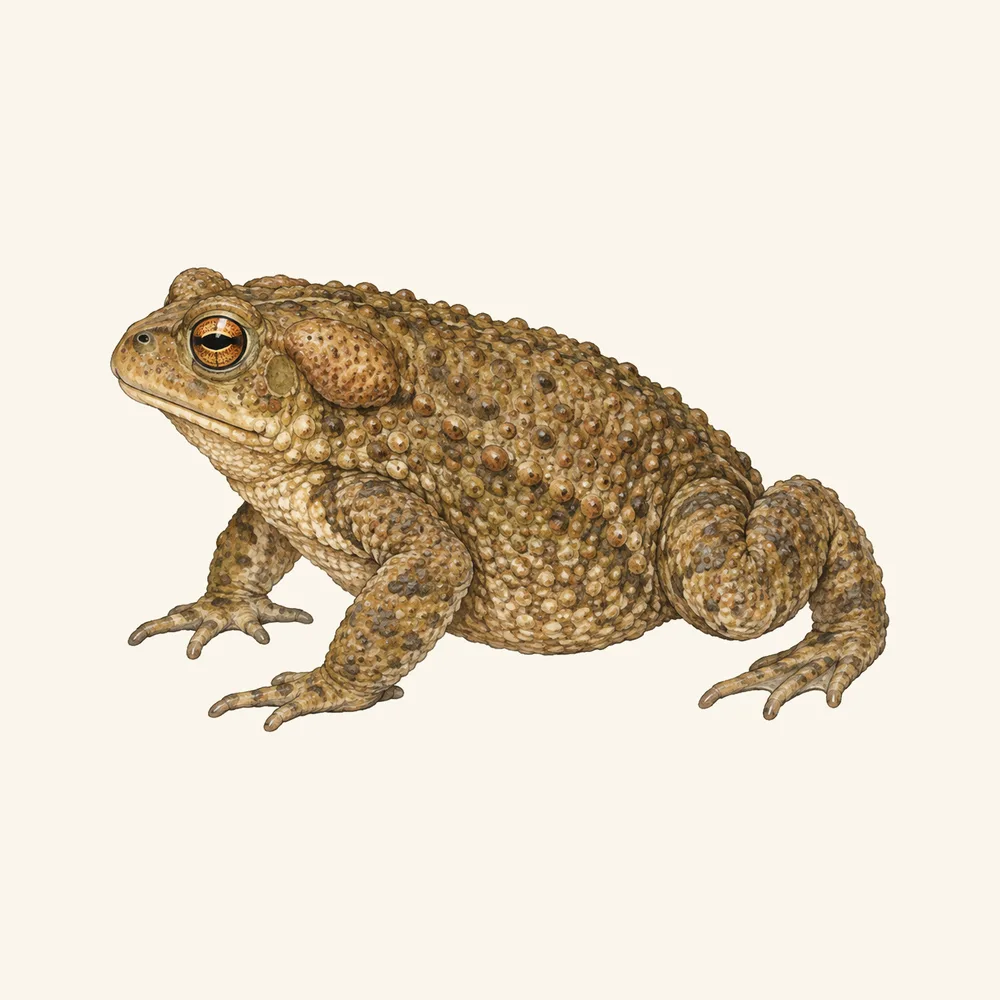 Common toadBufo bufo
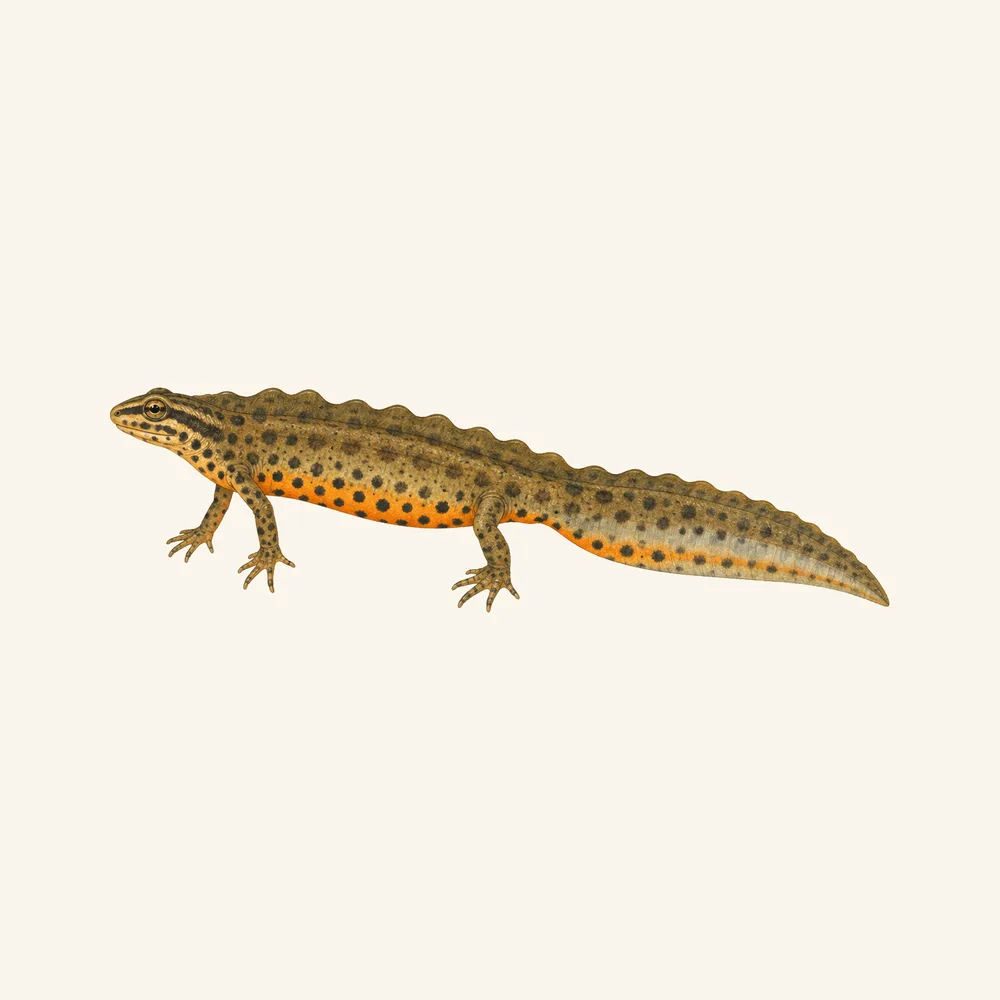 Smooth newtLissotriton vulgaris
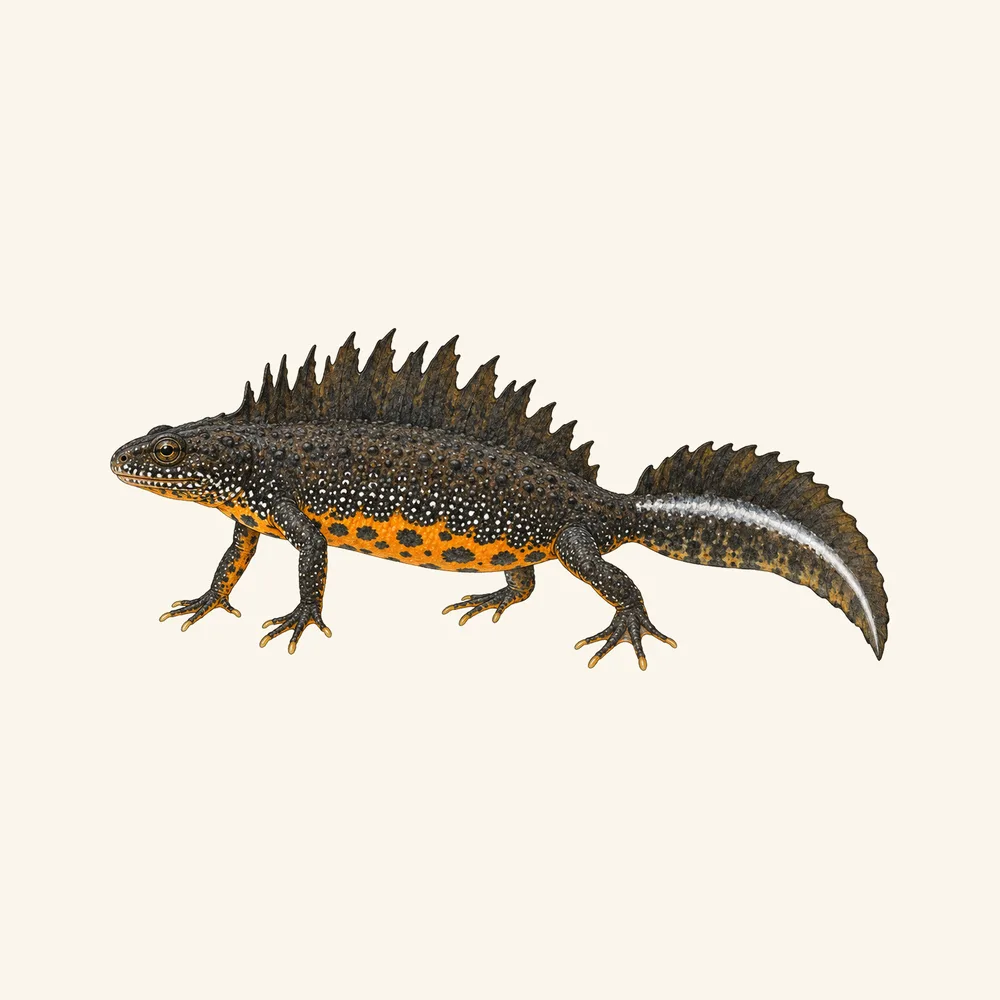 Great crested newtTriturus cristatus
Plants: Water Iris · Water Mint · Ragged Robin · Cuckooflower · Meadowsweet
More guides
- Do bug hotels work? An honest answer, and what to do insteadA few do. A bee hotel with 2–10 mm tubes you can replace will house mason and leafcutter bees. Most bees nest in the ground, and bumblebees nest elsewhere.
- Leave the leaves: what to tidy in autumn and what to leave for wildlifeYes, leave some. Clear lawns, paths and ponds, but pile the leaves under a hedge, and leave hollow stems, seed heads and log piles standing until spring.
- Bird baths in winter: keeping water open in a freezeThaw it each morning with warm, never boiling, water poured slowly, then refill with fresh tap water. Never add salt or antifreeze. Scrub it weekly.