Wildlife · Guide · 30 October 2026
Bat boxes: where to put one, what a good one looks like, and why you can't look inside
High up (4m if safe), sunny, near hedges and away from lights; several facing different ways. Rough, untreated or durable. Once bats use it, it's a legal roost.
Put a bat box as high as you safely can, ideally at least 4 metres up, close to the eaves. Give it some sun, shelter from wind, hedges or trees nearby and no outside lights. Put up several, facing different ways. Then leave it alone: once bats use it, it is a protected roost.
That last point shapes everything else, so it comes first.
The law, in plain terms
All UK bat species, their breeding sites and their resting places are “fully protected by law”, in the government’s words. In England and Wales, regulation 43 of the Conservation of Habitats and Species Regulations 2017 makes it an offence to deliberately capture, injure, kill or disturb a bat. It is also an offence to damage or destroy “a breeding site or resting place”. That last offence doesn’t need to be deliberate. The gov.uk guidance says you could face up to six months in prison or an unlimited fine.
A bat box that bats have used is a resting place. The Bat Conservation Trust (BCT) says: “Once bats have moved in, a bat box can only be opened, moved or disturbed by someone with the right licence.” It adds that this applies “all year round, even if the bats are only in residence for part of the year”. So you can’t peek inside, clean it out, or take it down to repaint it. If a box ever needs checking, the BCT says a suitably licensed bat worker must be present. Your local bat group may be able to help.
This is why a good bat box has no lid you can lift. More on that below.
Do bat boxes work?
They can, but slowly. The BCT says “it may be several months or even years before boxes have residents”. Once bats do settle, they “can return over and over again”. We found no national occupancy figures that we could check. A box is a long-term, low-cost addition to a garden. It isn’t a guaranteed result, and it isn’t a failure if it stays empty for a couple of years.
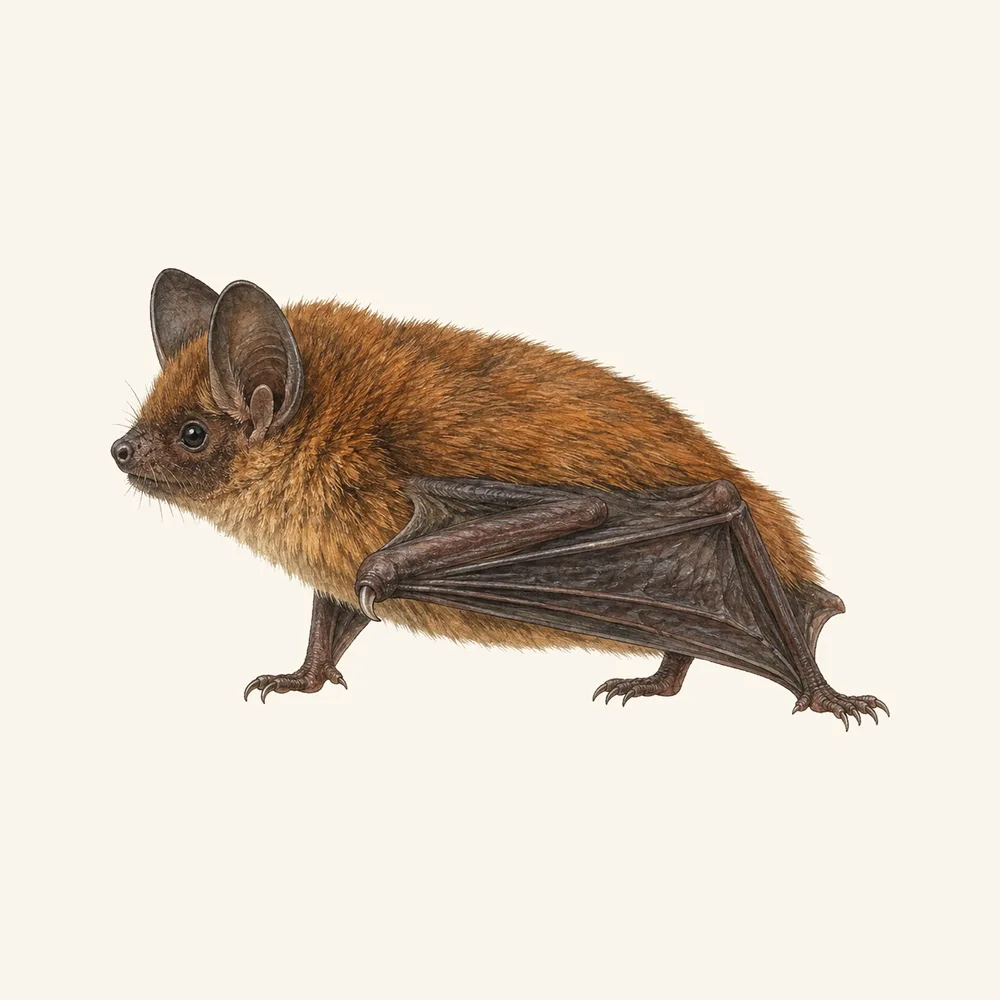
What decides whether bats find it is the garden around it. The BCT says boxes are “more likely to be used if they are located where bats are known to feed”. Bats feed on insects, along dark edges such as hedges, tree lines and water. A wildlife pond, an unclipped hedge and an unlit boundary will do as much as the box. Our common pipistrelle page explains why lighting matters so much.
Where to put it
All of this is from the BCT’s “Putting up your box” page unless we say otherwise.
- High. Put it “as high as possible to try and avoid predation from cats”, ideally “at least 4m above the ground (where safe installation is possible)”. PTES’s build guide gives at least 3 metres in one place and at least 4 metres in another. Aim for 4 metres and accept a little lower if that’s what is safe.
- On a house, close to the eaves. Both the BCT and PTES say this. A tree trunk also works. PTES suggests adjustable ties on trees, so you don’t damage the tree.
- Sun for part of the day. The BCT suggests facing south, south-east or south-west.
- Several boxes, facing different directions. The aim is “a range of warm conditions”, so bats can move between boxes as the weather changes. The BCT gives no exact number. Our suggestion, not the BCT’s, is three, on different faces.
- Sheltered from strong winds.
- Away from artificial light, which the BCT says protects bats from predation. Keep security lights well away from the box and its flight line.
- Near a hedge or tree line. Bats navigate along dark linear features, and the BCT says boxes near them “could help bats find the box”.
Four metres is ladder work. PTES says to have someone hold the ladder. If you can’t fix the box safely yourself, the BCT says your local bat group may be able to help, though its volunteers can’t always assist.
What a good bat box looks like
Wooden boxes. The BCT says the timber should be “rough sawn (unplaned) and untreated from sustainable sources”. It explains that “bats are very sensitive to chemicals” and that they need “a rough textured wood to cling to”. Inside, a grooved “bat ladder” or landing area leads up from the entrance. PTES’s DIY design uses 15 mm untreated wood, with 1 mm deep grooves every 10 mm where the timber is smooth.
The entrance. It is a narrow slit at the bottom, not a hole. The BCT gives “15–20 mm”: wide enough for bats, and narrow enough to keep predators out.
Draught-free. The BCT says bats “do not like draughts, and prefer well insulated boxes where temperature and humidity remain constant”. It advises well-sealed joints and no “large, loose-fitting front panels”.
No opening lid. The BCT is direct: “Removable lids should not be used and the box should not be opened.” A lid you can lift gives you nothing you’re allowed to use.
Durable boxes. The BCT says ready-made boxes “can be wooden, however there are an increasing number of more durable options”. The rounded grey boxes made from concrete-type composites, often sold as “woodcrete”, are what most people will find; that description is ours, not the BCT’s. If you’re building or re-cladding, integrated boxes can be built into the wall. The BCT says these give “a secure, permanent space for bats with little maintenance” and potentially better thermal properties. A durable box suits the law well, because you won’t be allowed to take it down to repair it once bats are using it.
If a wooden box has been painted or treated at all, the BCT says this must be done before it goes up, and fully dried. Untreated is simpler.
How to tell if it’s being used
You don’t open it. You look and listen. The BCT suggests:
- droppings on the landing area or below the entrance
- urine staining around the lower parts of the box
- “chittering” from inside on warm afternoons and evenings, from May to September
- watching the box for an hour either side of sunset, to see bats leave to feed
A trail camera pointed at the box from a distance is another hands-off way to find out.
If you find a bat on the ground
A bat on the ground, out in the open in daylight, inside your living space, or brought in by a cat needs help. That is true even if it looks unhurt. The BCT says such a bat “should not be left or released without advice”. It is urgent.
Ring the National Bat Helpline on 0345 1300 228. As of 30 October 2026, it’s open Monday to Friday, 9.30am to 4.30pm. From May to September a volunteer out-of-hours line takes emergency calls on weekday evenings (6pm to 10pm) and at weekends and bank holidays (10am to 10pm). The RSPCA sends people with grounded bats to the same helpline.
Don’t touch the bat. The BCT notes “a small risk of rabies transmission from bat bites and scratches in the UK”. Leave anything beyond a phone call to the helpline, and do what they tell you.
The honest bit
The siting and design advice here comes almost entirely from one source, the Bat Conservation Trust. Where PTES says something different, we’ve noted it, as with the 3 m and 4 m heights. The law is clear and well sourced. What we couldn’t find is good evidence on how often garden boxes are used, or which design does best. The BCT’s own fuller information pack wouldn’t open for us, so we haven’t given internal dimensions or crevice widths beyond the 15–20 mm entrance. Put up a box if you have a safe high wall. Spend as much effort keeping the garden dark and full of insects.
Bat boxes worth buying
Once bats use a box it can't legally be opened, so buy one you'll never need to open: no lid, untreated wood, a slit at the bottom.
What makes a good one
- An entrance slit of 15 to 20 mm at the bottom, not a round hole. source
- No removable lid. The Bat Conservation Trust says lids shouldn't be used and the box shouldn't be opened. source
- Rough-sawn, untreated timber from sustainable sources, well sealed against draughts. source
- Durable enough to last, because an occupied box can only be opened or moved under licence. source
- Fixings for a wall or tree at least 4 m up, where that's safe. source
Products checked on Amazon UK on 30 October 2026. We show no prices because they change daily — check before you buy. Nothing in the "save your money" tier is linked. How our recommendations work
How we checked this
- Bat Conservation Trust: Bat boxes
- Bat Conservation Trust: Putting up your box
- Bat Conservation Trust: Wooden bat boxes
- Bat Conservation Trust: External ready-made and integrated bat boxes
- Bat Conservation Trust: Maintaining your bat box
- Bat Conservation Trust: Bats in need of rescue
- Bat Conservation Trust: National Bat Helpline
- PTES: How to build a bat box
- RSPCA: Bats
- gov.uk: Bats — protection, surveys and licences
- legislation.gov.uk: Conservation of Habitats and Species Regulations 2017, regulation 43
Checked against the sources above and reviewed on 30 October 2026. We report what these organisations say; if our page and theirs ever disagree, believe them — and tell us.
On this site
More guides
- How to make a wildlife pond, from a half-barrel to a small dug pondGo small and shallow, give it a sloping beach, fill it with rainwater, add no fish, and plant a few natives in spring, or let plants arrive by themselves.
- Do bug hotels work? An honest answer, and what to do insteadA few do. A bee hotel with 2–10 mm tubes you can replace will house mason and leafcutter bees. Most bees nest in the ground, and bumblebees nest elsewhere.
- Leave the leaves: what to tidy in autumn and what to leave for wildlifeYes, leave some. Clear lawns, paths and ponds, but pile the leaves under a hedge, and leave hollow stems, seed heads and log piles standing until spring.
- Trail cameras: seeing what visits your garden at nightMount it low, aim it at a feeding dish or fence gap, keep it on your own ground, and you'll see your night visitors. A footprint tunnel is the cheap first step.