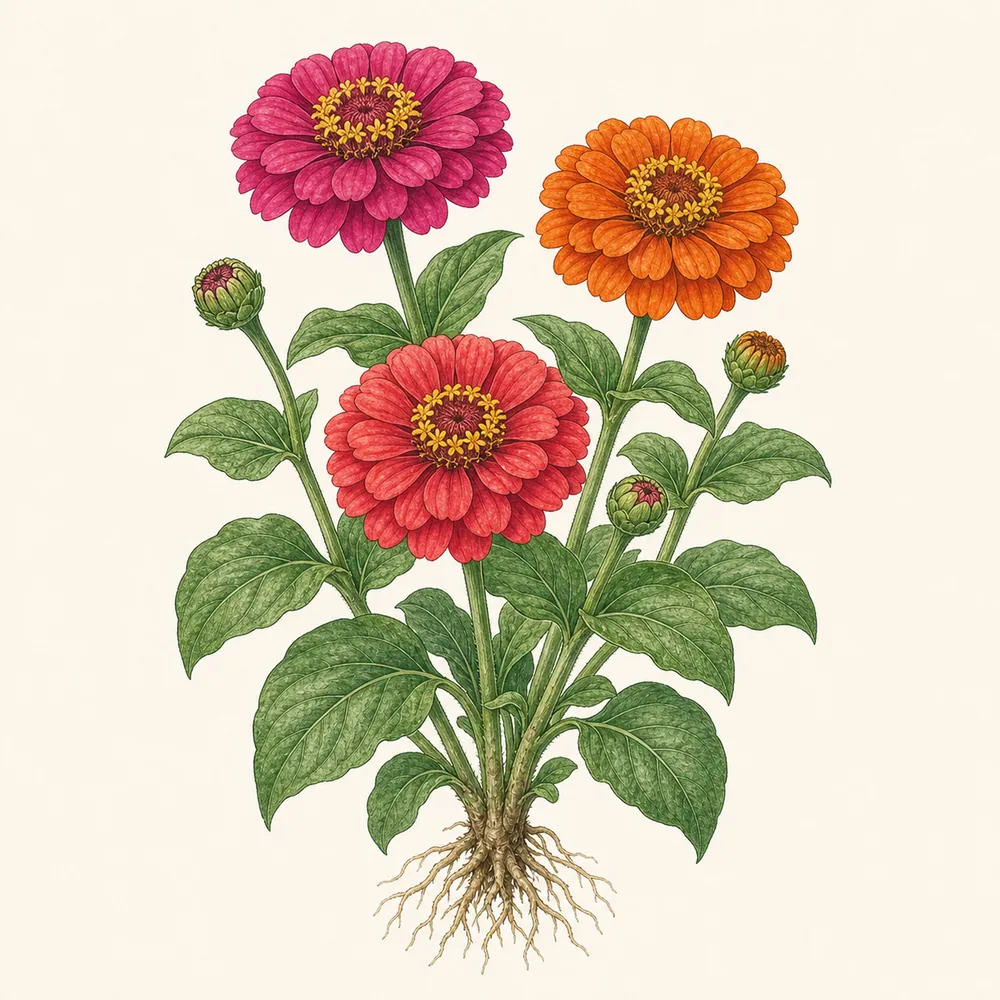
Zinnia
Big, bold, hot-coloured daisies on strong stems — one of the best cut flowers you can grow from a packet of seed. They thrive on heat and hate having their roots disturbed, so the trick is to sow them where they'll grow or into deep modules, and never let them check.
Non-toxic to cats, dogs & horses (ASPCA)
Zinnias are listed as non-toxic to cats, dogs and horses on the ASPCA database. A safe, easy annual for a cutting patch or a hot-coloured border.
Care at a glance
Everything that matters, in six lines. The detail is further down.
Light
Zinnias are heat-lovers — give them the hottest, sunniest spot you have. In shade or a cold summer they sulk and get mildew.
Water
Water the soil, keeping the leaves dry — wet foliage invites mildew. They cope with some dryness once their roots are down.
Temperature
Frost-tender and hungry for heat. Don't sow or plant out until the soil has warmed and frost has passed, from late May.
Sowing
Zinnias resent root disturbance. Sow straight where they'll grow, or into deep individual modules — never prick out or transplant bare-rooted.
Feeding
In decent ground they need little. In pots, a fortnightly high-potash feed keeps the flowers coming through the summer.
Soil
Rich but well-drained soil suits them best. They flower less on poor, dry ground and rot in anything cold and wet.
What to do, and when
Sow indoors in deep modules from April, or wait to sow direct once frost has passed. Keep young plants growing on without a check to their roots.
Plant out or sow direct from late May into warm soil. They flower from July — start cutting or deadheading to keep more blooms coming.
Flowering runs on into early autumn until the first frost blackens them. Collect seed from favourites, then pull the spent plants and compost them.
Nothing outdoors — zinnias are tender annuals here. Store any saved seed somewhere cool and dry, and plan next year's cutting patch.
Sow them where they'll grow
The single most important thing to know about zinnias is that they hate their roots disturbed. Pricked out and transplanted the usual way, they check badly and can take weeks to recover — or never really do.
So either sow them direct into warm soil where they're to flower, thinning to a hand's width apart, or start them in deep individual modules or root-trainers and plant the whole rootball out without breaking it up. Skip the seed tray and the pricking-out step entirely and they romp away.
One of the best cut flowers going
If you want flowers for the house, zinnias are hard to beat — strong stems, brilliant colours, and the more you cut the more they produce. A short row in the veg patch will keep a vase filled from July to the frosts.
Cut in the cool of the morning, and do the 'wobble test': give the stem a gentle shake, and if it stays firm and upright it's ready to pick; if it bends, leave it a day or two. Picked at the right stage they last a good week in water.
Pinch, cut and keep them coming
Pinch out the growing tip when a young plant is about 30 cm tall. It feels counterintuitive to remove the first bud, but it makes the plant branch low down and gives you far more, longer stems than a single tall one.
After that, keep picking or deadheading. Every flower you cut or every faded bloom you remove pushes the plant to make more — leave them to set seed and flowering slows right down.
Common problems
Powdery mildew
White dusty coating on the leaves in humid or crowded conditions. Space plants for airflow, water the soil not the foliage, and grow more mildew-resistant types.
Checked, stunted plants
Almost always root disturbance or a cold start. Sow direct or into deep modules, plant out without breaking the rootball, and wait for warm soil.
Leggy, few flowers
Too little sun, or the tip was never pinched. Grow in full sun and pinch out the growing point early to build a branching, floriferous plant.
Grey mould on flowers
Wet summers rot the dense double blooms. Improve airflow, avoid overhead watering, and remove any spoiled flowers promptly before it spreads.
Everything zinnias need
Warmth, full sun, and roots left undisturbed.
We take no commission on anything in the "save your money" tier — if we don't think you should buy it, we don't link it. How our recommendations work
If you like this, try
Other plants with a similar temperament.
How we checked this
Care cross-checked against the RHS. Non-toxicity taken from the ASPCA database, which lists Zinnia as non-toxic. If our page and these sources ever disagree, believe them — and tell us.
Sources: RHS · ASPCA — toxic & non-toxic plants
Last reviewed · August 2026