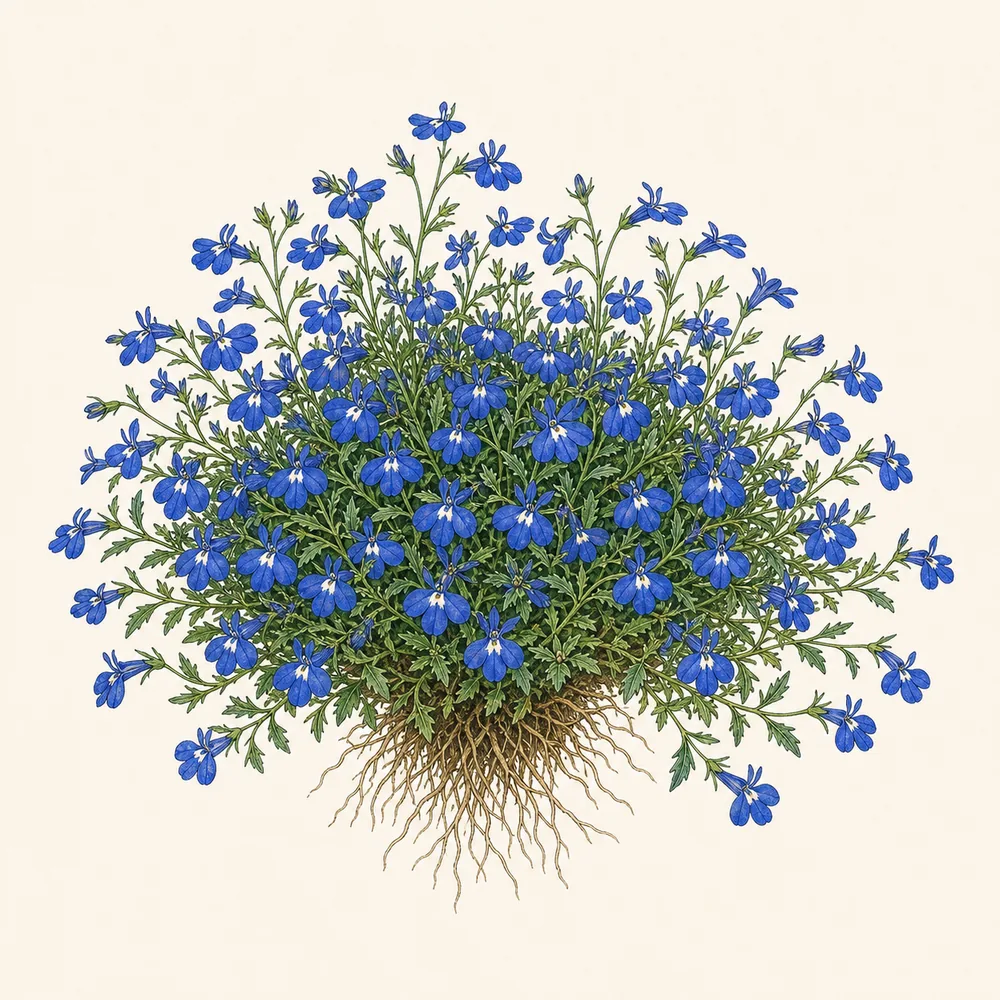
Lobelia
A hard-working summer annual smothered in tiny flowers of intense blue, violet or white for months on end. Trailing types spill from baskets, bushy ones edge borders and pots — either way the secret is simply never letting it dry out, and keeping it fed.
Toxic if eaten (alkaloids)
Bedding lobelia (Lobelia) is on the RHS list of potentially harmful plants. It contains piperidine alkaloids (lobeline) that can cause drooling, vomiting and, in quantity, more serious effects. Worth siting away from pets that like to graze on foliage.
Care at a glance
Everything that matters, in six lines. The detail is further down.
Light
Flowers best in full sun but tolerates a little afternoon shade — useful, as light shade helps it keep going through the hottest weeks.
Water
The one non-negotiable. Lobelia hates drying out and sulks or browns off if it does. Water baskets and pots daily in hot weather.
Temperature
It's a tender annual killed by frost. Don't plant out until all danger of frost has passed, from late May in most of the UK.
Habit
Trailing types cascade from hanging baskets and window boxes; compact bushy types edge borders and containers neatly.
Feeding
In pots and baskets it's hungry — a weekly high-potash liquid feed through summer keeps the flowers coming right into autumn.
Soil
A good moisture-retentive multipurpose compost in containers, or fertile soil that doesn't bake dry in the ground.
What to do, and when
Sow indoors from February to March in warmth on the surface of the compost — the seed is dust-fine and needs light to germinate. Grow on frost-free, and harden off before planting out.
Plant out once frosts have passed, then it flowers non-stop all summer. Water daily in hot spells, feed weekly in containers, and trim any straggly plants to freshen them up.
Flowering carries on until the first frosts, which then kill it — it's an annual, so pull it up and compost the plants once they're over.
Nothing to grow outdoors. Plan next year's baskets and order fresh seed or plug plants; sowing starts again in late winter under cover.
A long-flowering filler for pots and baskets
Lobelia earns its place as the classic hanging-basket and container filler. Trailing varieties like the 'Cascade' and 'Fountain' types tumble in a haze of blue, violet, wine-red or white, while compact bushy forms such as 'Crystal Palace' make a tidy edge to borders and pots.
It's an annual, so it does its whole life in one season — sown or bought in spring, flowering from early summer, then finished by the first frost. For months of colour from a small plant, little beats it.
Keeping it going all summer
Two things keep lobelia flowering: water and feed. In a basket or pot it dries out fast, and a lobelia that dries out browns off and can be slow to recover — so water daily, sometimes twice a day, in hot weather.
It's also a hungry plant in a container, where nutrients wash through quickly. A weekly high-potash liquid feed — the sort sold for tomatoes — keeps it flowering hard right through the summer rather than fizzling out by August.
Sowing your own, or buying plugs
Lobelia seed is famously tiny — like dust. Sow it on the surface of moist compost from late winter, don't cover it (it needs light to germinate), and keep it warm and humid. Prick out in small clumps rather than fiddling with single seedlings.
Honestly, for most people plug plants or ready-grown trays from the garden centre in spring are the easier route, and no less rewarding. Whichever way you start, don't plant out until the frosts are safely past.
Common problems
Goes leggy and stops flowering
Often mid-season exhaustion or lack of feed. Trim straggly growth back by a third, water well and start a weekly high-potash feed to bring on a fresh flush.
Browning and wilting
Nearly always drying out — the classic lobelia failing. Never let baskets or pots dry out; water daily in heat and add water-retaining compost or gel to help.
Seedlings collapse (damping off)
Sowing too wet and warm invites this fungal rot. Use fresh compost, water from below, sow thinly and give good airflow once seedlings are up.
Killed overnight by frost
It's frost-tender, so a late spring or early autumn frost finishes it. Don't plant out until frosts have passed, and accept that autumn frost ends the season.
Everything a lobelia display needs
Good compost, reliable watering, and a feed to keep the flowers coming.
We take no commission on anything in the "save your money" tier — if we don't think you should buy it, we don't link it. How our recommendations work
If you like this, try
Other plants with a similar temperament.
How we checked this
Care cross-checked against the RHS, which lists Lobelia as a potentially harmful plant — piperidine alkaloids (lobeline). If our page and these sources ever disagree, believe them — and tell us.
Sources: RHS · ASPCA — toxic & non-toxic plants
Last reviewed · August 2026