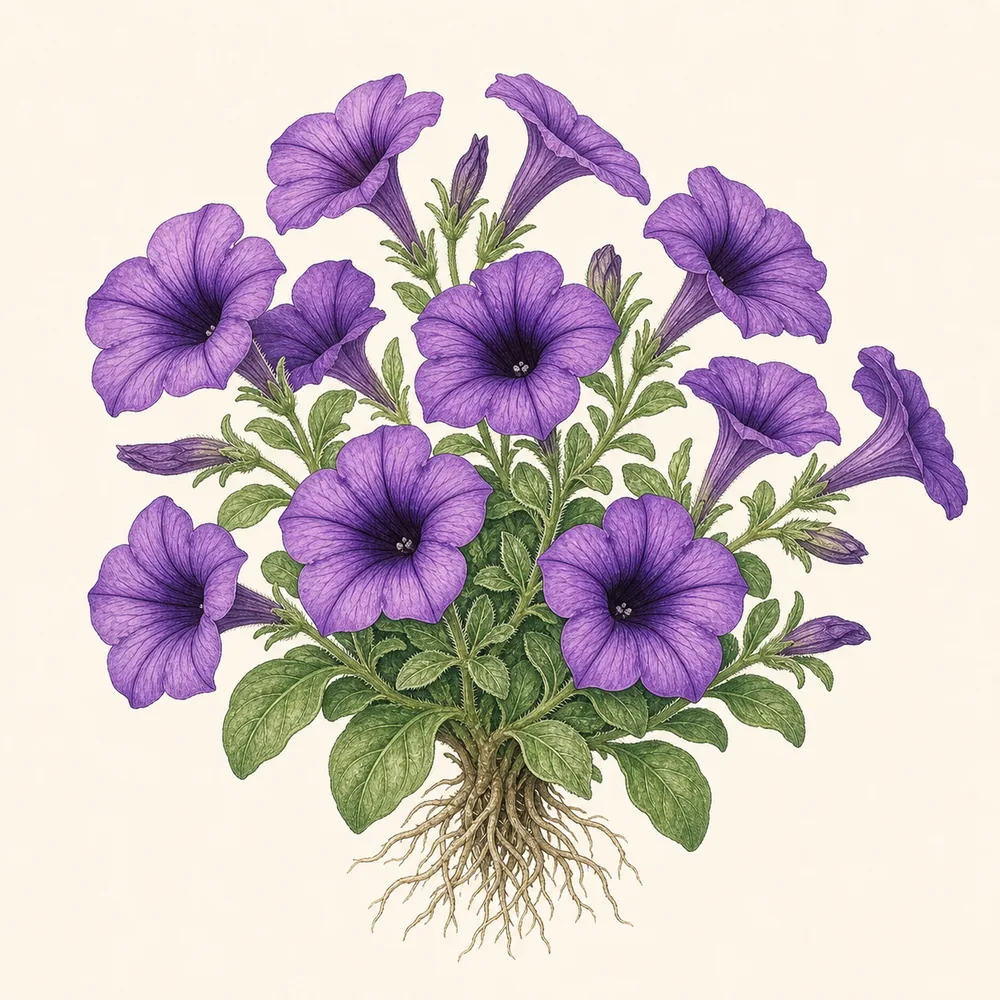
Petunia
The workhorse of the summer container, throwing out trumpet flowers non-stop from June until the first frosts. Give them sun, keep them fed and watered, and pinch out the odd faded bloom — do that and they'll flower harder than almost anything else you can plant.
Non-toxic to cats, dogs & horses (ASPCA)
Petunias are listed as non-toxic to cats, dogs and horses on the ASPCA database. A safe, cheerful choice for pots and borders in a pet garden.
Care at a glance
Everything that matters, in six lines. The detail is further down.
Light
Give them the sunniest spot you have — at least six hours a day. In shade they go leggy and sulk, throwing far fewer flowers.
Water
Keep the compost evenly moist, especially in pots and baskets, which dry out fast. Water at the base — wet flowers turn to mush.
Temperature
Frost kills them outright. Don't plant out until all risk of frost has passed, from late May, once nights are reliably mild.
Deadheading
Regular deadheading keeps them flowering and stops energy going into seed. Pinch out leggy stems too to keep plants bushy.
Feeding
Hungry plants, especially in containers. Feed weekly with a tomato-type high-potash feed from midsummer for a solid wall of flower.
Soil
Fertile, well-drained soil or good multipurpose compost. They flower less on poor ground and rot in anything that stays soggy.
What to do, and when
Sow indoors from March in warmth, or wait and buy young plants. Harden off and pot on, but keep everything under cover — frost is still a killer.
The main event — plant out once frost has passed and they flower flat out. Water, deadhead and feed weekly to keep the display going.
Flowering carries on until the first real frost cuts them down. Once they collapse, pull them out and compost them; they won't come back.
Nothing to grow outdoors — petunias are treated as annuals here. Plan next year's colours and clean out pots and baskets ready for spring.
Sun, and plenty of it
Petunias are sun-worshippers. Six hours of direct sun a day is the difference between a plant smothered in flower and a straggly, sulking one with a bloom or two at the tips. Save your shadier spots for something else.
They come in two broad camps: upright bedding petunias for borders and pots, and the trailing, weather-tough Surfinia and 'Tumbelina' types bred for hanging baskets. For a basket that pours over the sides all summer, choose a trailing variety — the uprights won't give you the same cascade.
Feed them like you mean it
That non-stop flowering comes at a cost — petunias are hungry, and the ones in pots and baskets are relying entirely on you. From midsummer, a weekly high-potash feed (the same tomato food you'd use on your tomatoes) keeps the flowers coming instead of the plant running out of steam by August.
Yellowing leaves usually mean they're hungry, especially in the confined compost of a basket. Step up the feeding and they'll green up and flower on.
Deadhead and pinch to keep them going
Left to themselves, petunias set seed and grow leggy, and the display tails off. A few minutes pinching out the faded, slimy old flowers keeps the plant putting its energy into new blooms rather than seed.
If plants get long and bare at the base by midsummer, be brave and cut the straggly stems back by a third. They'll bush out and flower again within a couple of weeks — a tired basket can be completely rejuvenated this way.
Common problems
Leggy, few flowers
Too much shade or no deadheading. Move to full sun, pinch out spent blooms regularly, and cut straggly stems back by a third to force bushy new growth.
Flowers spoiled by rain
Large-flowered grandiflora types turn to mush in wet summers. Grow tougher trailing Surfinia-type petunias, and site baskets under a little shelter if you can.
Yellowing leaves
Usually hunger, especially in containers. Feed weekly with a high-potash tomato feed; pale new growth on limy soils can also mean iron shortage.
Tobacco / petunia budworm
Green caterpillars that bore into buds and leave ragged holes. Pick them off by hand in the evening and squash any you find on the developing buds.
Everything petunias need
Full sun, rich compost, and a weekly feed.
We take no commission on anything in the "save your money" tier — if we don't think you should buy it, we don't link it. How our recommendations work
If you like this, try
Other plants with a similar temperament.
How we checked this
Care cross-checked against the RHS. Non-toxicity taken from the ASPCA database, which lists Petunia as non-toxic. If our page and these sources ever disagree, believe them — and tell us.
Sources: RHS · ASPCA — toxic & non-toxic plants
Last reviewed · August 2026