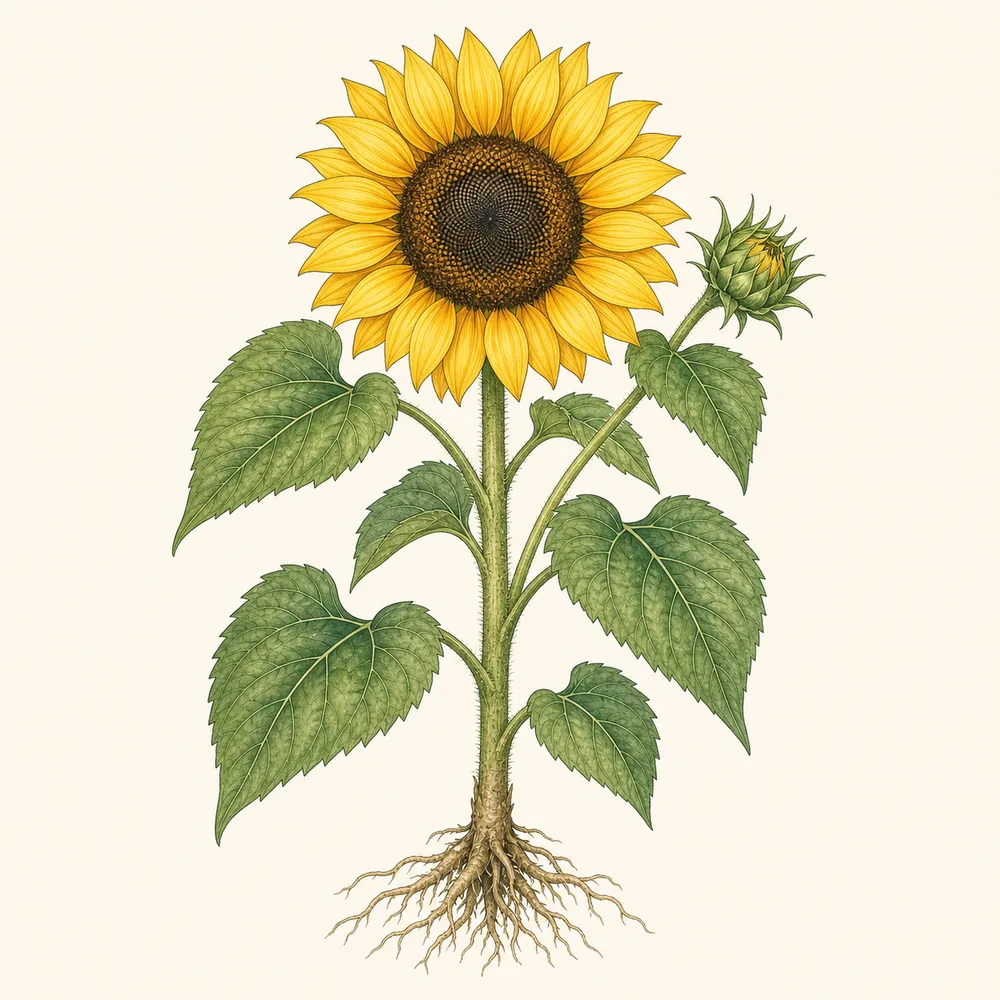
Sunflower
The most rewarding seed a beginner can sow — big, fast, cheerful, and forgiving. Give it sun and a little slug defence and it does the rest, ending the season as a bird feeder on a stem.
Safe around cats & dogs
The sunflower (Helianthus annuus) is listed as non-toxic to cats, dogs and horses on the ASPCA database — a genuinely pet-safe flower for beds and cutting, and a magnet for bees and birds.
Care at a glance
Everything that matters, in six lines. The detail is further down.
Position
The sunnier and more sheltered the spot, the better — they need warmth and light to bulk up and flower.
Water
Keep well watered while growing; big plants drink a surprising amount in summer heat.
Hardiness
Grown fresh from seed each year; sow once the worst frosts have passed and they romp away.
Soil
Any decent soil will do; richer ground and full sun grow the biggest heads.
Feeding
A general feed helps the giant varieties along, though sunflowers aren't remotely fussy.
Flowering
Leave a few spent heads standing to seed and the birds will thank you through autumn.
What to do, and when
Sow seed from April under cover, or outdoors where they're to flower once the frost risk has passed.
Water well and stake tall varieties; keep an eye out for slugs picking off young seedlings.
Leave the seed heads standing for the birds, or cut and dry a few to save seed for next year.
Nothing to do out there — clear old stems and plan where the giants go next season.
The easiest flower anyone can grow
Big seeds, fast results and near-total reliability make sunflowers the classic first plant — sow them direct into warm soil from late spring, or start a few in pots to plant out. Either way they're up and away within days.
The single real threat is slugs and snails, which can level a fresh seedling overnight. Protect young plants with your chosen deterrent until they're a hand's-height tall, and after that very little troubles them.
Going for height, or going for the birds
For record-breaking giants, feed generously, water well and stake early — a tall head is heavy and a summer gust will snap an unsupported stem.
For wildlife, leave the spent heads on the plant into autumn. Goldfinches and tits will work over the ripening seeds for weeks, which is reason enough to resist tidying up too soon.
Common problems
Seedlings vanish overnight
Slugs and snails; protect young plants with your chosen deterrent until they're well established.
Toppling in wind
Tall varieties need a stake — push one in early and tie the stem in loosely as it grows.
Grey fuzzy mould on the head
Heavy heads naturally nod, but persistent grey mould signals a wet season; improve airflow and space plants out.
Yellowing lower leaves
Usually age or dryness; keep them watered through hot spells and the newer growth stays green.
Everything a sunflower needs
Full sun, a packet of seed, and a bit of slug defence.
We take no commission on anything in the "save your money" tier — if we don't think you should buy it, we don't link it. How our recommendations work
If you like this, try
Other plants with a similar temperament.
How we checked this
Care cross-checked against the RHS. Toxicity confirmed against the ASPCA database, which lists Helianthus annuus (common sunflower) as non-toxic to cats, dogs and horses. If our page and these sources ever disagree, believe them — and tell us.
Sources: RHS · ASPCA — toxic & non-toxic plants
Last reviewed · July 2026