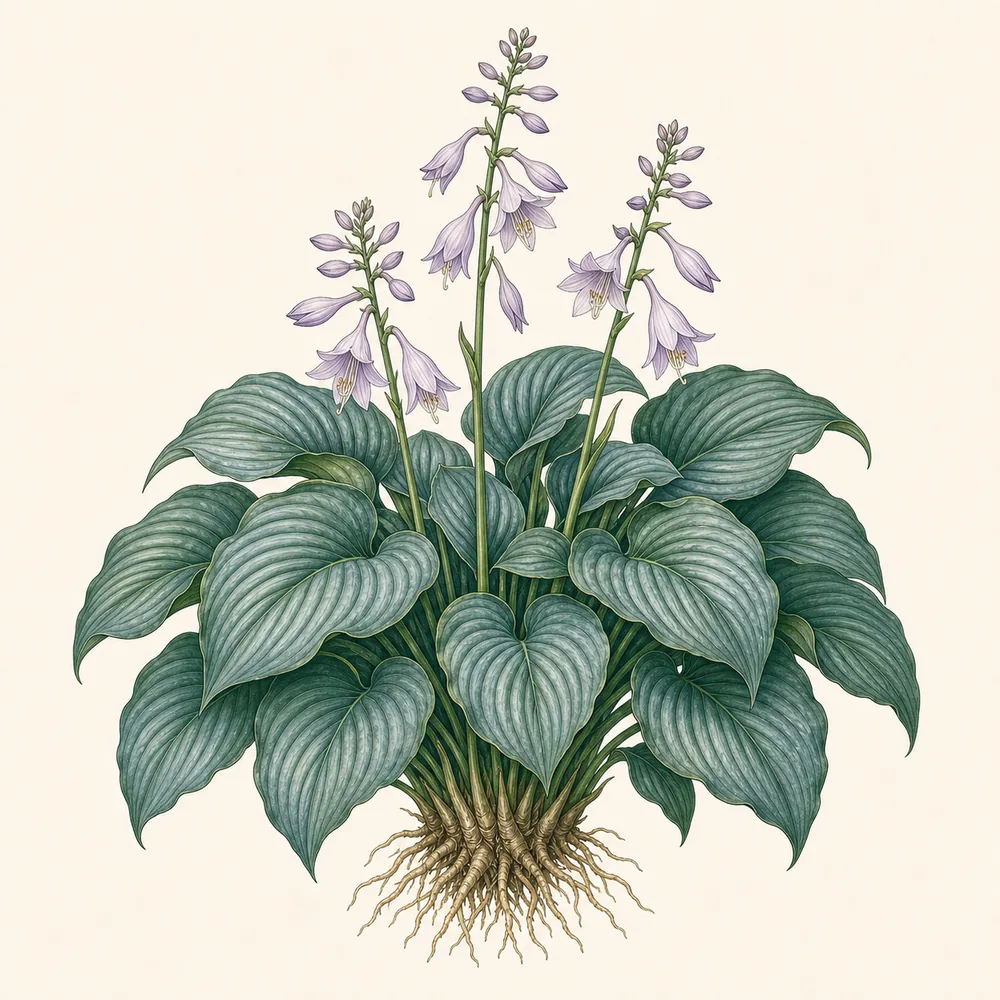
Hosta
The best foliage plant for shade that Britain grows — ribbed, architectural leaves from acid lime to blue-grey. The plant itself is indestructible; the entire craft of hosta-growing is keeping the slugs from eating it before you enjoy it.
Toxic to cats, dogs & horses if eaten
Leaves, stems and flowers contain saponins. Eating them causes vomiting, diarrhoea and lethargy — miserable rather than dangerous for most pets, but worth a vet call if a dog has demolished a clump. Source: ASPCA.
Care at a glance
Everything that matters, in six lines. The detail is further down.
Position
Blue-leaved kinds want the most shade; gold ones colour best with a little morning sun. None want hot afternoons.
Water
Big leaves transpire hard. Water deeply in dry spells — a stressed hosta shows scorched edges fast.
Soil
Dig in organic matter at planting. They'll take clay happily.
Feeding
A spring mulch of compost does everything a bottle would, and holds moisture too.
Pots
A pot lifts the leaves away from ground-level slugs and shows the plant off. Water more often.
Hardiness
Dies to nothing in November, returns bigger in April. Frost is irrelevant.
What to do, and when
The danger window: slugs destroy the emerging shoots before you notice them. Get defences in place before the spears unfurl.
Water in dry spells and enjoy. Flower spikes appear in July — some are genuinely scented; cut them off if you grow for leaves alone.
Foliage collapses with the frosts. Clear it away — dead hosta leaves are a slug hotel.
Nothing above ground, nothing to do. Divide congested clumps in late winter every few years.
The slug problem, solved honestly
Every hosta question is really a slug question. What actually works, in rough order: a pot (physical distance beats every product), thick-leaved varieties (breeders grade for 'slug resistance' — the blue, waxy, corrugated kinds), tidiness (no leaf litter or long grass at the base), and going out with a torch after rain in April, which clears more slugs in a week than most products manage in a season.
If you use pellets, use ferric phosphate ones (the metaldehyde type is banned in the UK) — sparingly, early, around the emerging shoots. A ring of pellets in June is shutting the door after the horse.
Right plant, right shade
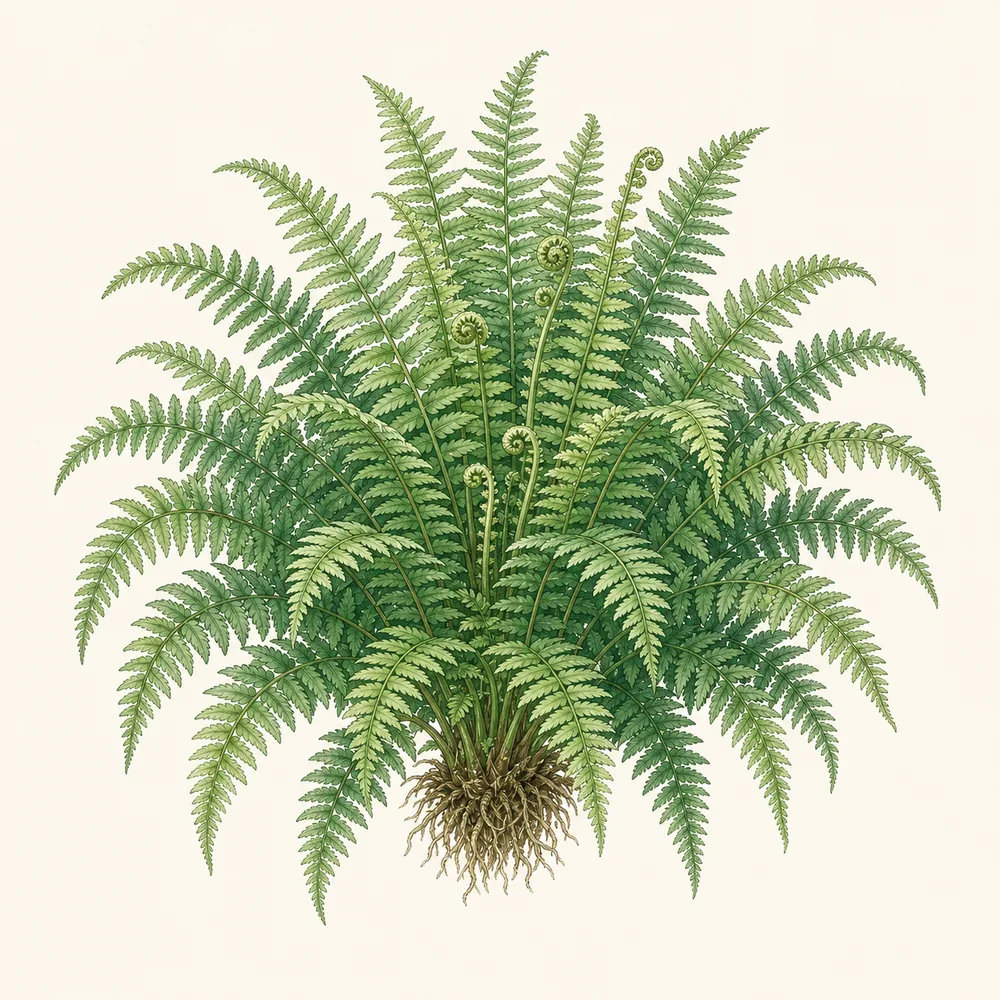
Hostas are why 'nothing grows in shade' is wrong. The classic combination — hostas with ferns and hardy geraniums under trees — gives three textures that cover for each other all season.
They're also among the easiest plants to multiply: in late winter, dig up a mature clump, split it with a spade into fist-sized pieces, and replant. Every piece grows. A single good hosta becomes a border edging in three years, for free.
Common problems
Leaves full of holes
Slugs and snails, almost never anything else. Defend the emerging shoots in early spring; consider a pot.
Scorched, browning edges
Too much sun or too little water — usually both. More shade, more mulch, deeper soaks.
Clump flowering less, congested
Time to divide: late winter, spade through the crown, replant the pieces.
Pale, bleached leaves
A blue or dark-green variety getting too much direct sun. The wax that makes the colour melts off in heat.
Everything a hosta needs
One good plant, one pot, and a realistic slug plan.
We take no commission on anything in the "save your money" tier — if we don't think you should buy it, we don't link it. How our recommendations work
If you like this, try
Other plants with a similar temperament.
How we checked this
Care guidance cross-checked against the Royal Horticultural Society and NC State Extension. Toxicity confirmed against the ASPCA database (saponins — vomiting, diarrhoea, depression). If our page and these sources ever disagree, believe them — and tell us.
Sources: RHS · NC State Extension · ASPCA
Last reviewed · July 2026