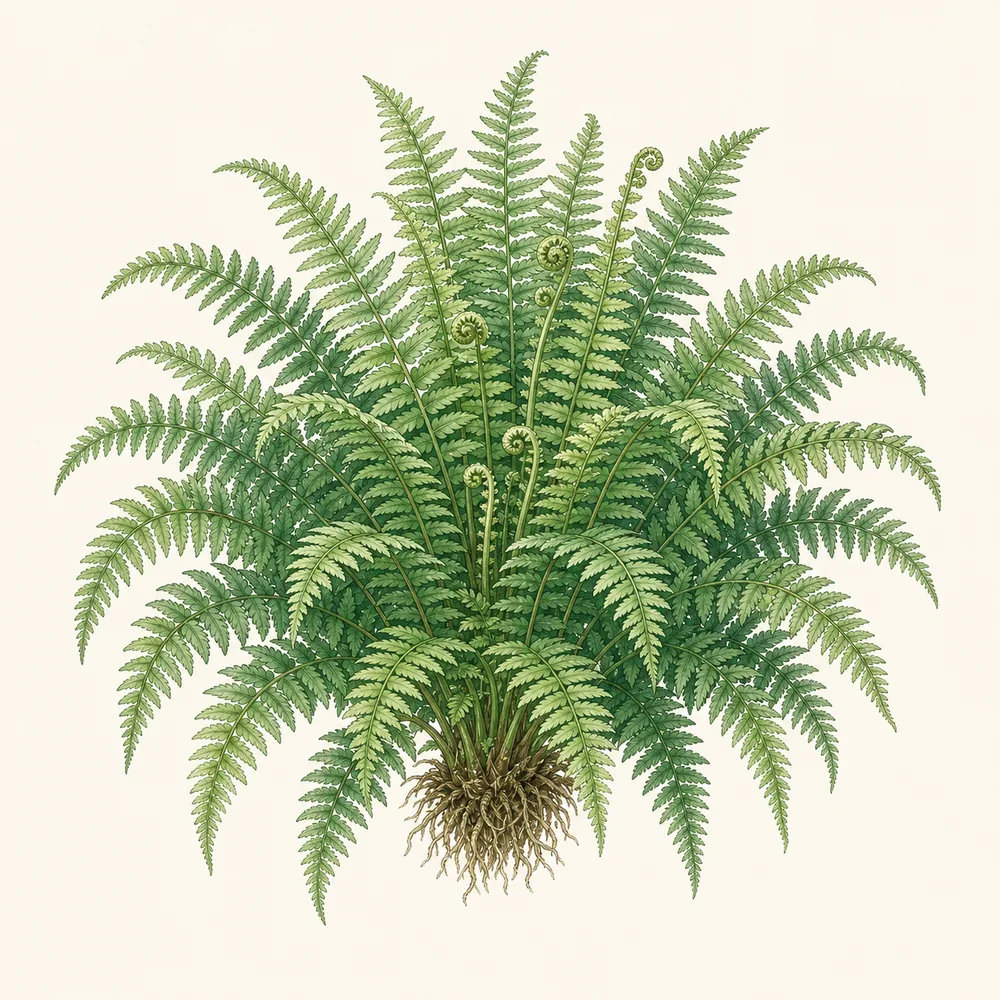
Boston Fern
A lush fountain of soft, arching fronds — and pet-safe into the bargain. It asks for one thing in return: it must not dry out or sit in bone-dry air. Give it a humid, bright spot and it is spectacular.
Safe around cats & dogs
Listed <strong>non-toxic to cats and dogs</strong> by the ASPCA. A genuinely pet-friendly way to get a big, leafy, jungle look — no toxicity concerns if a curious pet has a nibble. Source: ASPCA.
Care at a glance
Everything that matters, in six lines. The detail is further down.
Light
Good light out of direct sun. Too dark and the fronds thin and drop.
Water
Never let it dry out fully, never leave it waterlogged. This is the plant’s whole demand.
Temperature
Steady warmth. Dislikes sudden cold and hot dry draughts alike.
Humidity
The make-or-break factor. A bathroom, kitchen or a humidity tray keeps the fronds soft and green.
Feeding
A dilute feed spring to summer. It is a light feeder — do not overdo it.
Soil
Peat-free compost that holds moisture but still drains.
What to do, and when
New fronds unfurl. Repot if congested, resume feeding, and step up humidity as heating goes off.
Lush growth. Keep it consistently moist, feed monthly, and mist or use a tray in warm spells.
Growth slows. Ease off feed; watch humidity as central heating comes back on.
Trickiest season — dry heated air. Keep it humid, away from radiators, and evenly moist.
Humidity is everything
A Boston fern lives or dies by moisture in the air. In a dry, centrally-heated room the fronds crisp up and shed everywhere; in a humid bathroom or over a pebble tray it stays full and soft. If you have one damp, bright room, that is where it wants to be.
Pair that with compost that never dries out completely, and most of the plant’s reputation for being "difficult" simply disappears.
Watering rhythm and grooming
Check it every few days and water when the surface is just starting to dry — more often in summer, less in winter, but never letting it go bone dry. Stand the pot on a tray of damp gravel so it drains but sits in a humid microclimate.
Snip out any fully brown fronds at the base to keep it tidy and encourage fresh growth from the centre.
Common problems
Crispy, browning fronds
Air too dry — the classic fern complaint. Raise humidity and keep it evenly moist.
Yellowing fronds
Overwatering or, occasionally, hunger. Check drainage; feed weakly in summer.
Heavy leaf drop
Dry air or a cold draught. Move it somewhere humid and stable.
Pale, thin growth
Too little light. Give it a brighter spot out of direct sun.
Everything a Boston fern needs
The one plant here where a humidity aid is genuinely worth buying.
We take no commission on anything in the "save your money" tier — if we don't think you should buy it, we don't link it. How our recommendations work
If you like this, try
Other plants with a similar temperament.
From the Notebook
Seasonal notes and guides that mention the boston fern.
How we checked this
Care cross-checked against the RHS and NC State Extension. Non-toxic status confirmed directly against the ASPCA Boston fern entry (non-toxic to cats and dogs). If our page and these sources ever disagree, believe them — and tell us.
Sources: RHS · NC State Extension · ASPCA — Boston Fern
Last reviewed · July 2026