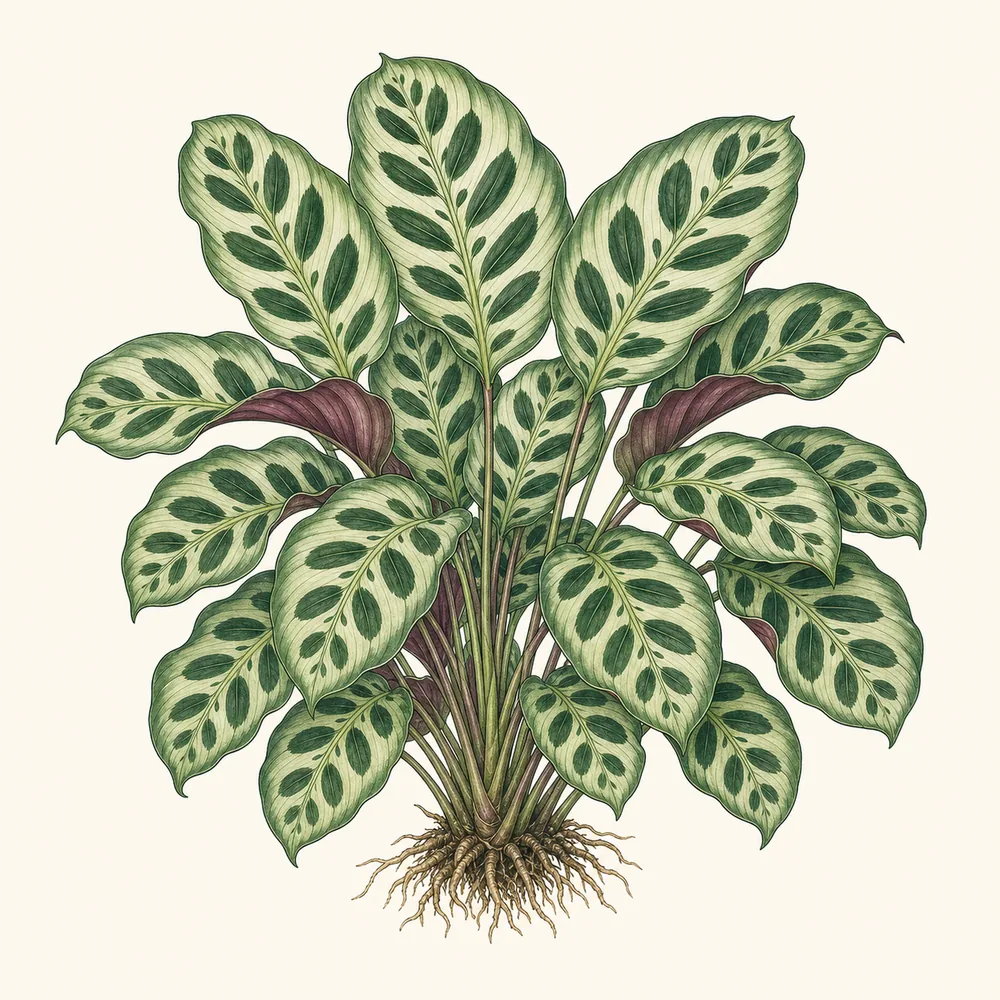
Calathea
Extraordinary patterned leaves that fold up at night like praying hands — and completely pet-safe. In return it is honestly a diva: it wants warmth, soft water and humidity, and it will tell you loudly when it is unhappy.
Safe around cats & dogs
Listed <strong>non-toxic to cats, dogs and horses</strong> by the ASPCA. One of the few genuinely showy, patterned houseplants you can keep with total confidence in a pet home. Source: ASPCA.
Care at a glance
Everything that matters, in six lines. The detail is further down.
Light
Bright but never direct — strong sun fades the markings. Too dark and the patterns dull.
Water
Keep lightly moist with rainwater or filtered water. Tap water causes crispy edges.
Temperature
Warmth-loving and draught-hating — keep it steady and away from cold windows and doors.
Humidity
The big one. Dry air browns the edges fast. A humidifier or steamy room keeps it happy.
Feeding
A dilute feed spring to summer. It is easily scorched by too much.
Soil
Peat-free compost that stays moist but drains — a little perlite helps.
What to do, and when
Growth resumes. Repot if congested, resume feeding, and increase humidity as heating goes off.
Main growth. Keep evenly moist with soft water, feed monthly, and hold humidity high.
Ease off feed. Watch for edge-browning as central heating returns and the air dries.
Its hardest season. Keep it warm, humid, out of draughts, and only lightly moist.
The praying leaves
Calatheas are "prayer plants": each evening the leaves lift and fold together, and each morning they open again — a daily movement called nyctinasty, driven by a little hinge at the base of each leaf. It is oddly lovely to watch, and a sign of a healthy, happy plant.
That drama is part of the appeal, but it comes with a fussy temperament. It is worth being honest: this is not a beginner’s "plant it and forget it" — it rewards attention.
Water quality and warmth
More than almost any houseplant, a calathea reacts to water quality. The fluoride and salts in tap water scorch the delicate leaf margins, so rainwater, filtered or distilled water makes a visible difference. Keep the compost evenly moist — never soggy, never bone dry.
Add steady warmth and humidity and no cold draughts, and the fussiness becomes manageable. Group it with other plants, or stand it over a tray of damp gravel, to build a humid pocket around it.
Common problems
Crispy brown edges
Hard water and dry air — the classic calathea issue. Use rainwater; raise humidity.
Curling leaves
Thirsty or too dry in the air. Water and increase humidity.
Fading patterns
Too much light. Move it out of direct sun to a medium spot.
Yellowing leaves
Overwatering or cold. Ease off water; keep it warm and draught-free.
Everything a calathea needs
Be honest with yourself about humidity before you buy one.
We take no commission on anything in the "save your money" tier — if we don't think you should buy it, we don't link it. How our recommendations work
If you like this, try
Other plants with a similar temperament.
From the Notebook
Seasonal notes and guides that mention the calathea.
How we checked this
Care cross-checked against the RHS and NC State Extension. Non-toxic status confirmed directly against the ASPCA calathea entry (non-toxic to cats, dogs and horses). Genus recently reclassified from Calathea to Goeppertia. If our page and these sources ever disagree, believe them — and tell us.
Sources: RHS · NC State Extension · ASPCA — Calathea
Last reviewed · July 2026