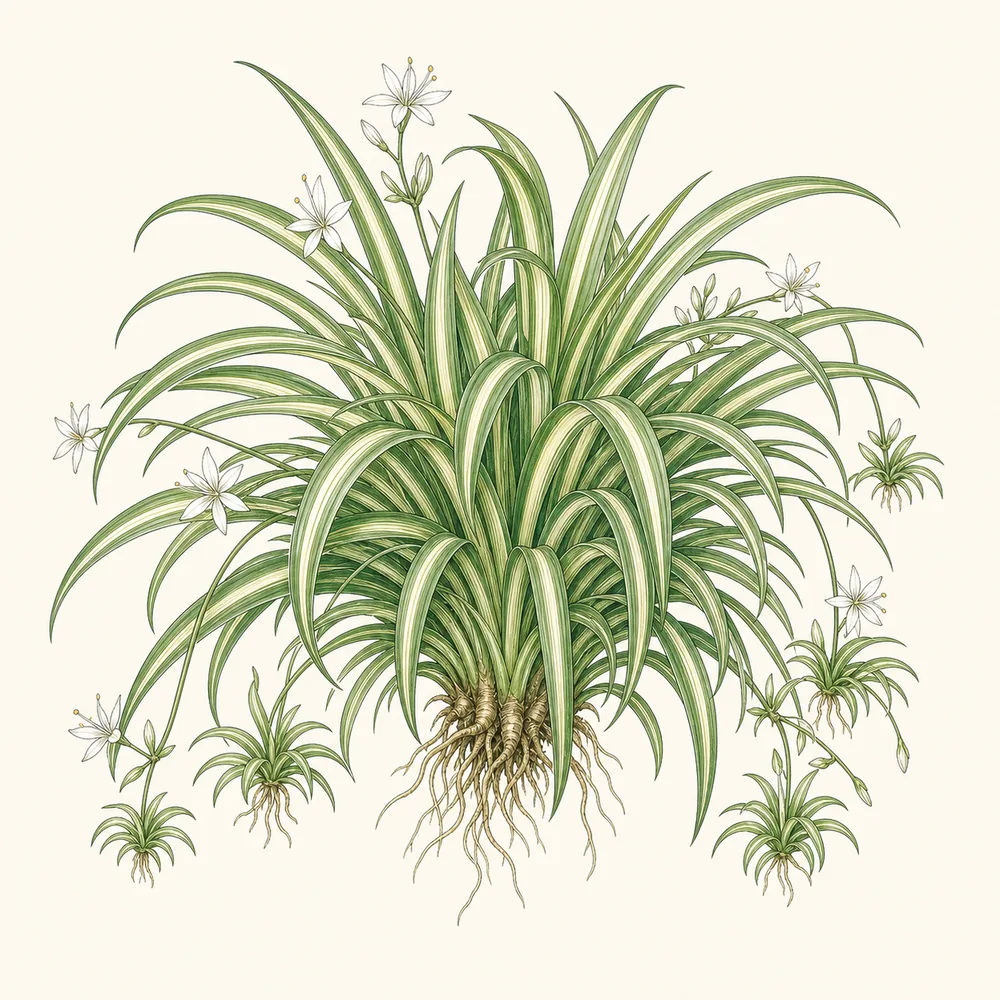
Spider Plant
Arching, striped leaves and a habit of dangling baby plants on long stems — cheerful, near-indestructible, and genuinely safe around cats and dogs. One of the best first houseplants for a pet household.
Safe around cats & dogs
Listed <strong>non-toxic to cats and dogs</strong> by the ASPCA. Cats are often drawn to batting and chewing the dangling leaves; that is harmless, though a lot of nibbling can cause a mild tummy upset as with any plant. A reassuring, genuinely pet-friendly choice. Source: ASPCA.
Care at a glance
Everything that matters, in six lines. The detail is further down.
Light
Tolerates medium light; brighter keeps the cream stripes bold. Avoid harsh direct sun.
Water
Let the top dry between drinks. Sensitive to fluoride in tap water — rainwater reduces brown tips.
Temperature
Very adaptable and tolerant of cooler rooms than most houseplants.
Humidity
Normal room humidity is fine; very dry air can brown the tips.
Feeding
A weak feed spring to summer. Easy to overdo — brown tips can be too much feed.
Soil
Any good peat-free houseplant compost.
What to do, and when
Growth restarts. Pot up any babies, repot if roots are bulging out, and resume feeding.
Fast growth and the main season for producing plantlets. Keep lightly moist and feed monthly.
Ease off water and feed. Shorter days often trigger a flush of babies.
Slow down. Water less and keep it away from cold draughts.
The babies (and how to use them)
A mature, happy spider plant sends out long stems tipped with miniature plants — "spiderettes". You can leave them as a fountain of dangling babies, or peg one down onto a pot of compost until it roots, then snip it free. Instant new plant.
Shorter autumn days and a slightly pot-bound plant both encourage more babies, so resist rushing it into a huge pot.
Those brown tips
Brown leaf tips are the one common gripe, and they are almost always down to fluoride and salts in tap water, occasional dryness, or a touch too much feed. Spider plants are unusually sensitive to it.
Watering with rainwater or filtered water, letting the pot drain fully, and going easy on the fertiliser keeps the foliage clean and green.
Common problems
Brown leaf tips
Tap-water fluoride, dryness or overfeeding. Use rainwater and feed less.
Pale, washed-out leaves
Too little light, or needs a feed. Move brighter; feed weakly in summer.
No babies
Often too young or too dark. Give it maturity, brighter light and snug roots.
Limp, soft leaves
Usually overwatering. Let the top dry out more between waterings.
Everything a spider plant needs
Cheap, easy, and safe to put anywhere the cat goes.
We take no commission on anything in the "save your money" tier — if we don't think you should buy it, we don't link it. How our recommendations work
If you like this, try
Other plants with a similar temperament.
From the Notebook
Seasonal notes and guides that mention the spider plant.
How we checked this
Care cross-checked against the RHS and NC State Extension. Non-toxic status confirmed directly against the ASPCA spider plant entry (non-toxic to cats and dogs). If our page and these sources ever disagree, believe them — and tell us.
Sources: RHS · NC State Extension · ASPCA — Spider Plant
Last reviewed · July 2026