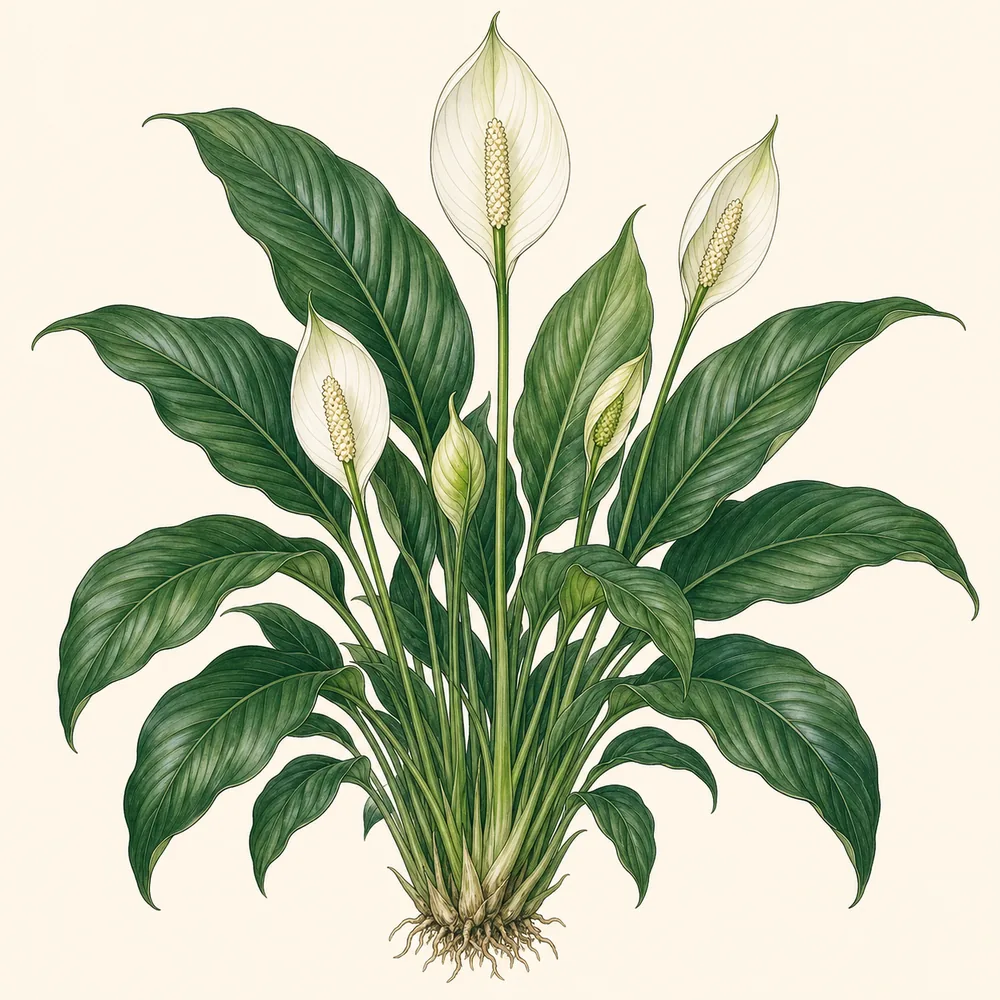
Peace Lily
Glossy dark leaves, elegant white flowers, and a very honest way of telling you when it is thirsty — it faints, then springs back after a drink. A genuinely rewarding first flowering houseplant.
Mildly toxic if chewed — but not a true lily
Despite the name, a peace lily is <strong>not</strong> a true lily (Lilium) and does not carry that lethal risk to cats. It contains insoluble calcium oxalates like other aroids: chewing causes mouth irritation and drooling — unpleasant, self-limiting. Worth knowing, because the name causes needless panic. Source: ASPCA.
Care at a glance
Everything that matters, in six lines. The detail is further down.
Light
Tolerates lower light but flowers far less. No direct sun — it scorches the leaves.
Water
It droops dramatically when dry, then recovers within hours of watering. Do not let it sit soggy.
Temperature
Warm rooms, no cold draughts. It hates a chilly windowsill.
Humidity
Brown leaf tips are usually dry air. A humidity tray or grouping with other plants helps.
Feeding
A balanced feed spring to late summer encourages the white spathes.
Soil
Peat-free compost that holds some moisture but still drains freely.
What to do, and when
Growth and flowering begin. Repot if pot-bound, resume feeding, and deadhead spent flowers.
Main flowering season. Keep evenly moist, feed monthly, and keep it out of direct sun.
Ease back on water and feed. A second flush of flowers is common in a warm room.
Resting. Water less, stop feeding, and keep it well away from cold draughts.
The famous droop
A peace lily is the most communicative houseplant there is: when it needs water, the whole plant wilts and collapses over the pot rim. Water it thoroughly and within a few hours it stands back up as if nothing happened.
It is a handy signal, but do not use it as your only cue — repeated wilting stresses the plant and browns the leaf edges. Aim to water just before it flops, when the top of the compost feels dry.
Why it won’t flower
No flowers almost always comes down to too little light — a peace lily will survive in a dim corner but only blooms with decent indirect light. A regular feed in the growing season and a plant that is mature and slightly pot-bound also help.
The white "flower" is actually a leaf-like bract called a spathe. Once it fades to green and browns, cut the whole stalk back to the base.
Common problems
Dramatic wilting
Thirsty. Water thoroughly; it recovers within hours. Try to water before it collapses.
Brown leaf tips
Dry air or tap-water minerals. Use rainwater and raise humidity a little.
No flowers
Usually too dark, or needs feeding. Move it brighter and feed in summer.
Yellowing leaves
Older leaves yellow naturally; lots at once suggests overwatering.
Everything a peace lily needs
Light, the right water, and a monthly summer feed — that is most of it.
We take no commission on anything in the "save your money" tier — if we don't think you should buy it, we don't link it. How our recommendations work
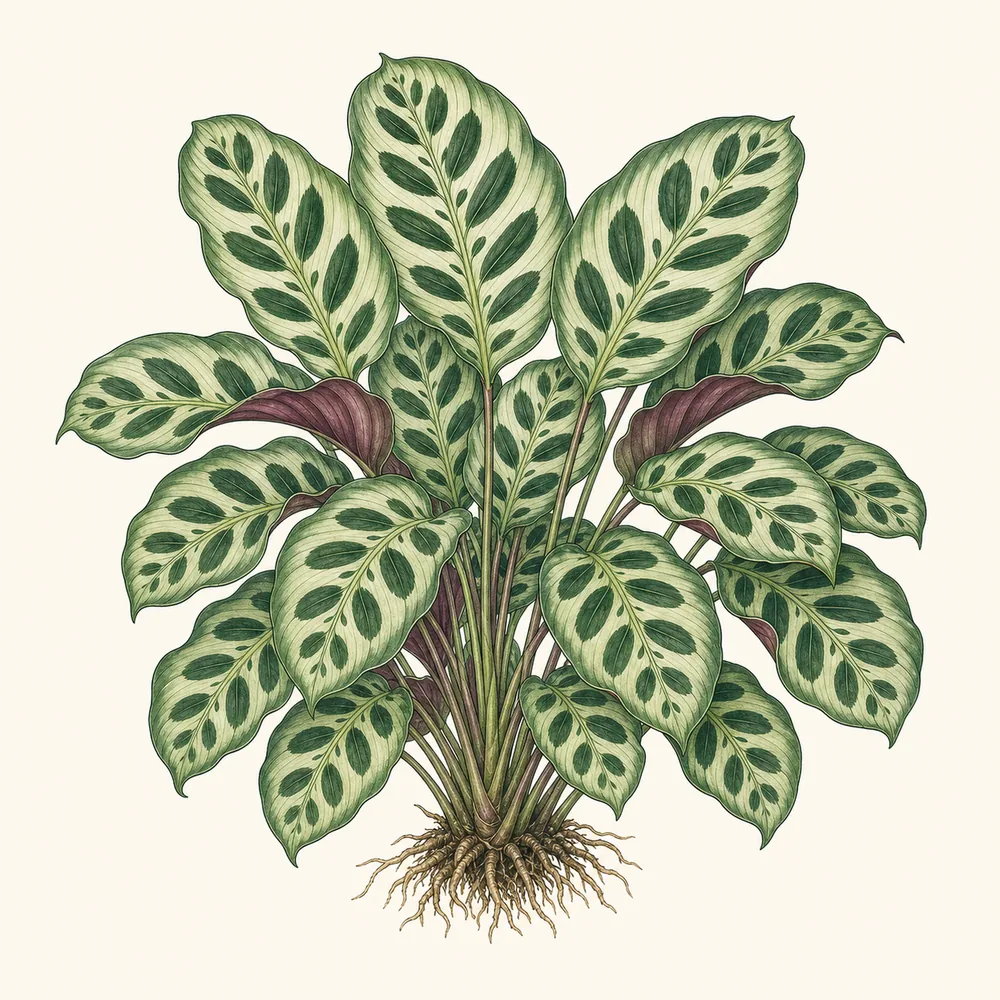
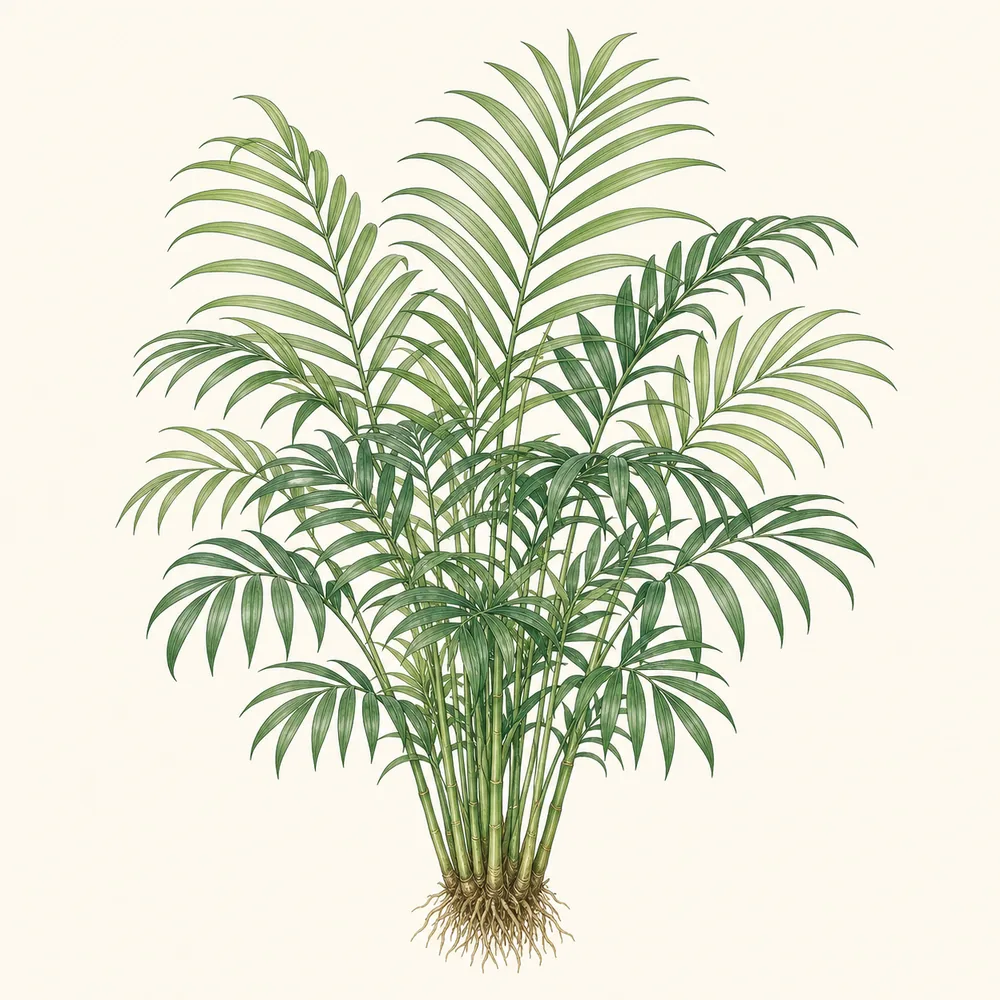
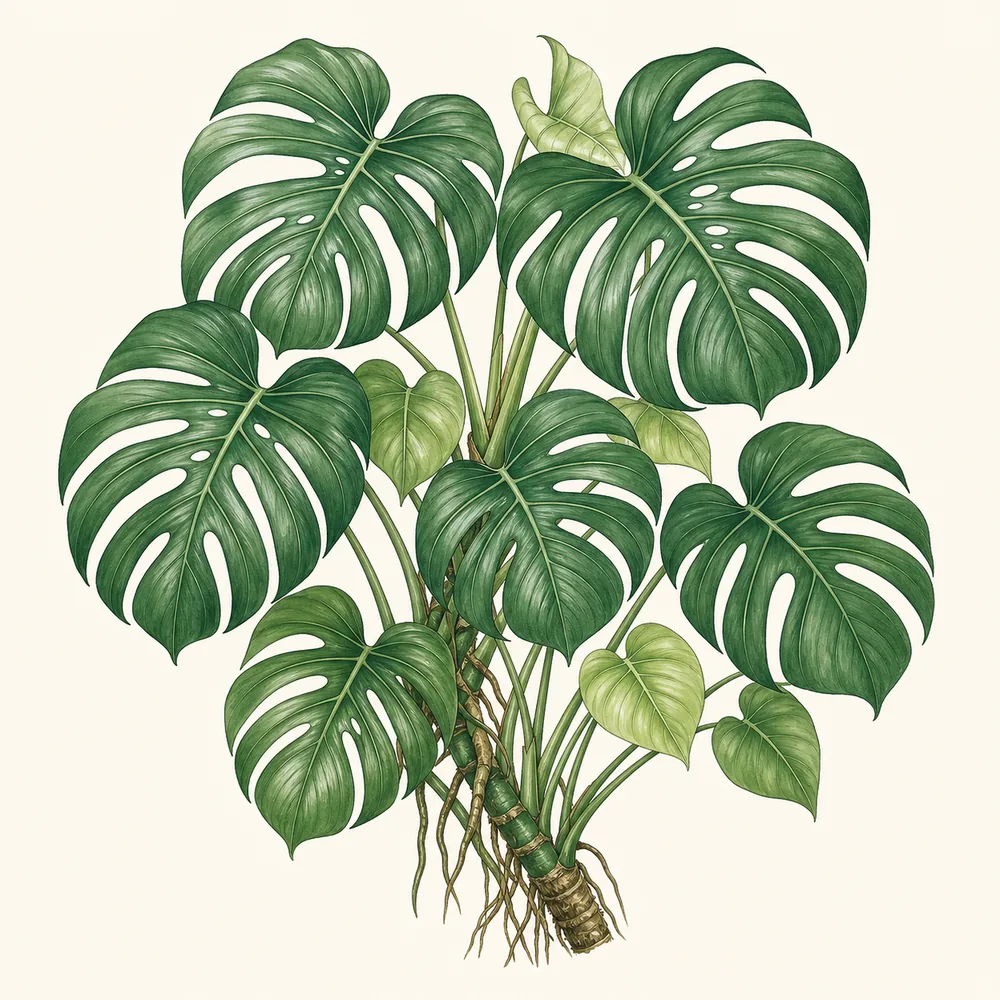
If you like this, try
Other plants with a similar temperament.
From the Notebook
Seasonal notes and guides that mention the peace lily.
How we checked this
Care cross-checked against the RHS and NC State Extension. Toxicity confirmed against the ASPCA database. Important distinction: Spathiphyllum is not a true lily (Lilium/Hemerocallis) and does not carry the lethal-to-cats risk those genera do. If our page and these sources ever disagree, believe them — and tell us.
Sources: RHS · NC State Extension · ASPCA
Last reviewed · July 2026