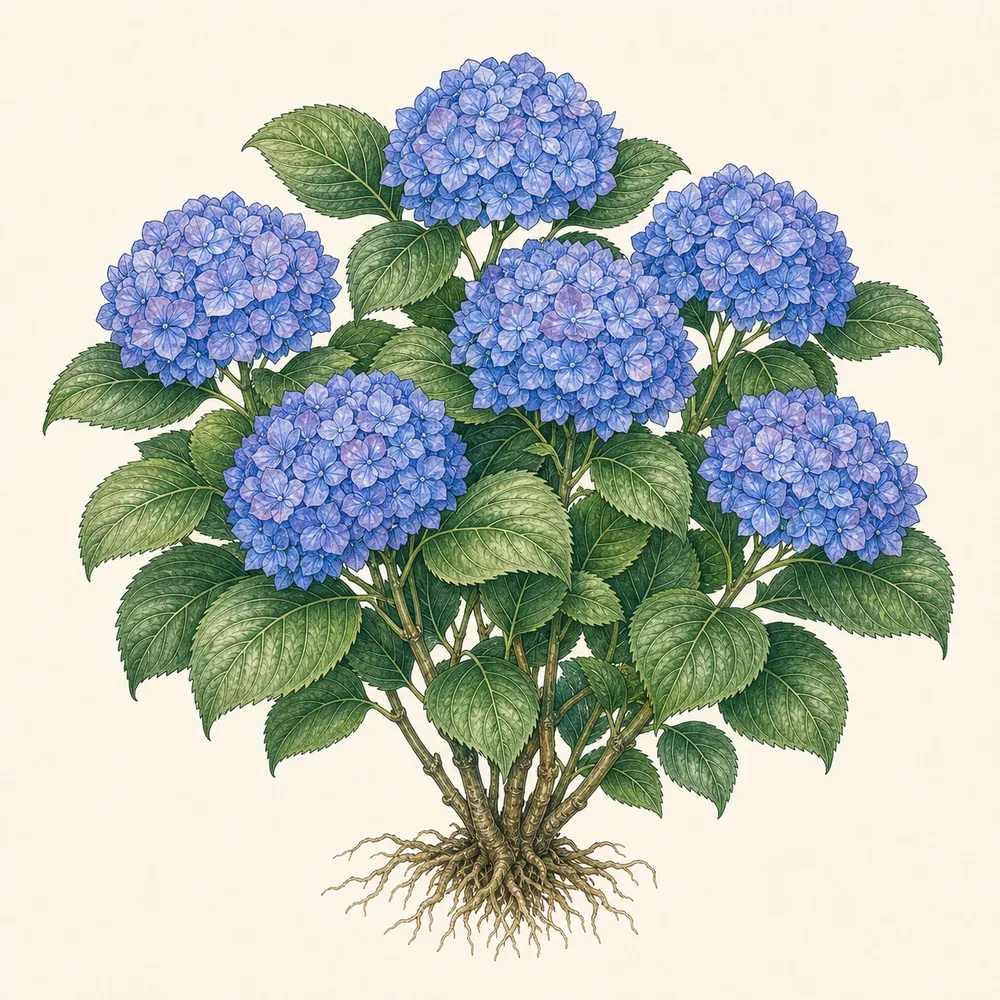
Hydrangea
Huge, generous flowerheads from midsummer to autumn on a shrub that mostly wants two things: moisture and to be left unpruned at the wrong time. The famous blue-or-pink trick is real — but it's the soil's decision, not yours.
Toxic to cats, dogs & horses if eaten
Leaves and flowerheads contain a cyanogenic glycoside. Eating them usually causes vomiting, diarrhoea and lethargy — unpleasant rather than life-threatening, as the ASPCA notes true cyanide poisoning is rare. Keep chewed-off flowerheads away from puppies that shred things. Source: ASPCA.
Care at a glance
Everything that matters, in six lines. The detail is further down.
Position
Morning sun and afternoon shade is ideal. Full sun scorches the leaves unless the soil stays reliably moist.
Water
The name means 'water vessel'. Soak deeply in dry spells, especially in pots — wilting flowerheads are the plant begging.
Soil
Acid soil (below ~pH 6) gives blue flowers; alkaline gives pink. White varieties stay white regardless.
Feeding
A general slow-release feed in spring is plenty. Overfeeding gives leaves at the expense of flowers.
Pruning
Most flower on old wood: just remove spent heads down to the first fat buds, and a few oldest stems at the base.
Hardiness
The plant is hardy; the flower buds are not. Leave old flowerheads on over winter — they're frost protection.
What to do, and when
Prune once the worst frosts pass: spent heads back to healthy buds, a couple of old stems to the base. Feed and mulch.
Water is the whole job now — deep soaks in dry spells, daily checks for pots. Flowers arrive from July.
Stop feeding, keep watering until the rain takes over. Resist deadheading — the browning heads are next year's bud insurance.
Do nothing. The dead flowerheads protect the buds beneath from frost; they come off in spring, not now.
Blue or pink is chemistry, not luck
Mophead and lacecap hydrangeas read your soil's pH like litmus paper. In acid soil, aluminium is available to the roots and the flowers come out blue; in neutral to alkaline soil they come out pink. The plant is healthy either way — it is not a deficiency, and fighting it is mostly a waste of money.
If you're on alkaline soil and your heart is set on blue, the honest route is a pot of ericaceous (acid) compost, watered with rainwater — tap water in hard-water areas slowly undoes the acidity. Blueing compounds poured onto chalky garden soil are a subscription, not a solution.
The pruning mistake everyone makes
Most hydrangeas flower on last year's wood. Cut the whole shrub down in autumn or early spring and you've pruned off every flower for the coming summer — the commonest reason a healthy hydrangea refuses to bloom.
The routine is gentler: in mid-to-late spring, take each spent flowerhead back to the first pair of plump buds below it, and cut one or two of the oldest, woodiest stems right to the base to keep the shrub young. That's it. (Paniculata and arborescens types are the exception — they flower on new wood and take a hard spring prune happily.)
Common problems
No flowers
Almost always pruned at the wrong time, or a late frost killed the buds. Prune in late spring only, and leave old heads on over winter.
Wilting despite watering
Pot-grown plants dry out faster than the surface suggests. Plunge the pot in a bucket until bubbles stop, then mulch.
Scorched, crispy leaf edges
Too much afternoon sun for the moisture available. Move it (autumn) or improve mulching and watering.
Flowers turned green
Normal ageing late in the season — nothing is wrong. Some varieties are sold specifically for it.
Everything a hydrangea needs
Moisture management is most of the job — spend there, not on colour chemistry.
We take no commission on anything in the "save your money" tier — if we don't think you should buy it, we don't link it. How our recommendations work
If you like this, try
Other plants with a similar temperament.
How we checked this
Care guidance cross-checked against the Royal Horticultural Society and NC State Extension. Toxicity confirmed against the ASPCA database (cyanogenic glycoside — vomiting, diarrhoea, depression; cyanide intoxication rare). If our page and these sources ever disagree, believe them — and tell us.
Sources: RHS · NC State Extension · ASPCA
Last reviewed · July 2026