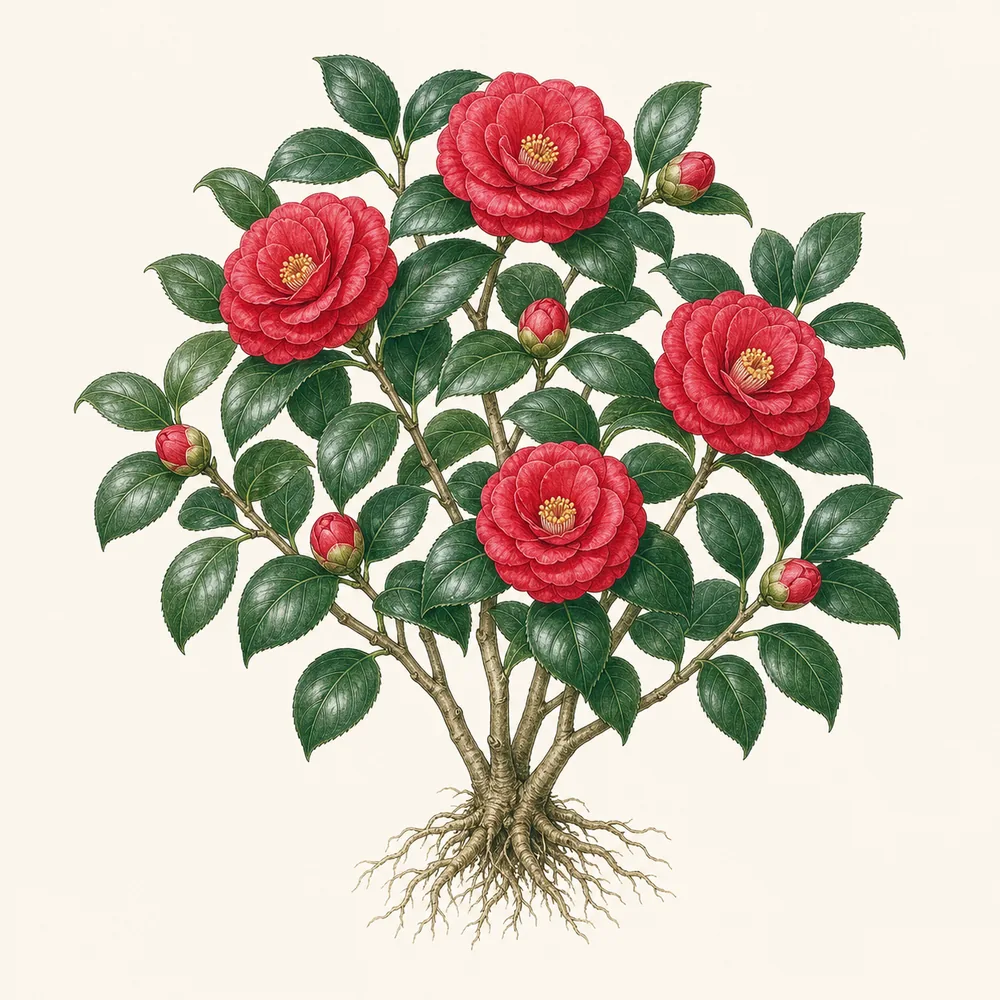
Camellia
Rose-like flowers in February when the garden has nothing else, on glossy evergreen leaves that look good all year. Camellias have exactly three demands — acid soil, rainwater, and no morning sun on frozen buds — and meeting them is the whole craft.
Safe around cats & dogs
Camellia japonica is listed as non-toxic to cats, dogs and horses on the ASPCA database — a rare thing among evergreen shrubs, and worth knowing when so many winter-flowering plants aren't. (Its cousin is the tea plant, after all.)
Care at a glance
Everything that matters, in six lines. The detail is further down.
Position
Sheltered and out of early morning sun — frozen buds thawed fast by sunrise turn brown. West or north walls are classic.
Soil
Needs pH below ~6.5. On chalky soil, grow it in a pot of ericaceous compost instead of fighting the ground.
Water
Tap water in hard-water areas slowly turns the soil alkaline. A water butt is practically camellia kit.
Feeding
A spring feed after flowering. Stop by July — late feeding pushes soft growth instead of next year's buds.
Pruning
Barely needs it. Shorten straggly shoots right after the flowers finish, before new buds set in summer.
Hardiness
The shrub takes -10°C; open flowers and thawing buds are what frost ruins. Position is the protection.
What to do, and when
Peak flower February–April. Deadhead the browned blooms, then feed with ericaceous fertiliser and mulch as flowering ends.
Next spring's buds are forming now — this is when drought does its damage. Keep watering, especially pots, with rainwater.
Buds are visibly fat by October. Don't panic when a few drop; do keep pots from sitting waterlogged.
Flowers open from late winter. If hard frost is forecast overnight, open flowers can be sacrificed — the queue of buds behind them is what matters.
August decides February
The commonest camellia complaint — buds that formed, sat all winter, then dropped without opening — is nearly always about the previous summer. Camellias set their flower buds in late summer, and a plant that went short of water in July and August sets few, or sets buds it later jettisons.
The fix is unglamorous: water steadily through late summer, mulch to hold the moisture in, and use rainwater wherever you can. Pot-grown camellias are most vulnerable — the rootball dries invisibly below a damp-looking surface.
The acid-soil question, answered honestly
On naturally acid soil, camellias are genuinely low-effort shrubs. On chalk or limestone, no amount of sequestered iron and sulphur chips makes the ground truly camellia-friendly for long — you'd be medicating the soil forever.
The honest answer on alkaline ground is a generous pot (they flower brilliantly in containers), ericaceous compost, rainwater, and an ericaceous feed each spring. Cheaper than the chemical treadmill, and it actually works.
Common problems
Buds drop unopened
Water stress the previous late summer, or waterlogged winter pots. Water steadily July–September.
Flowers turn brown and mushy
Frost caught the open blooms or fast-thawed buds. Shelter from morning sun; the plant itself is fine.
Leaves yellowing between veins
Soil too alkaline (lime-induced chlorosis). Switch to rainwater and ericaceous feed, or move it to a pot.
Sooty black film on leaves
Sooty mould growing on scale-insect honeydew. Wipe leaves; treat the scale insects underneath.
Everything a camellia needs
Get the soil chemistry right once, and this is an easy shrub.
We take no commission on anything in the "save your money" tier — if we don't think you should buy it, we don't link it. How our recommendations work
If you like this, try
Other plants with a similar temperament.
How we checked this
Care guidance cross-checked against the Royal Horticultural Society and NC State Extension. Pet-safety confirmed against the ASPCA database, which lists Camellia japonica as non-toxic to cats, dogs and horses. If our page and these sources ever disagree, believe them — and tell us.
Sources: RHS · NC State Extension · ASPCA
Last reviewed · July 2026