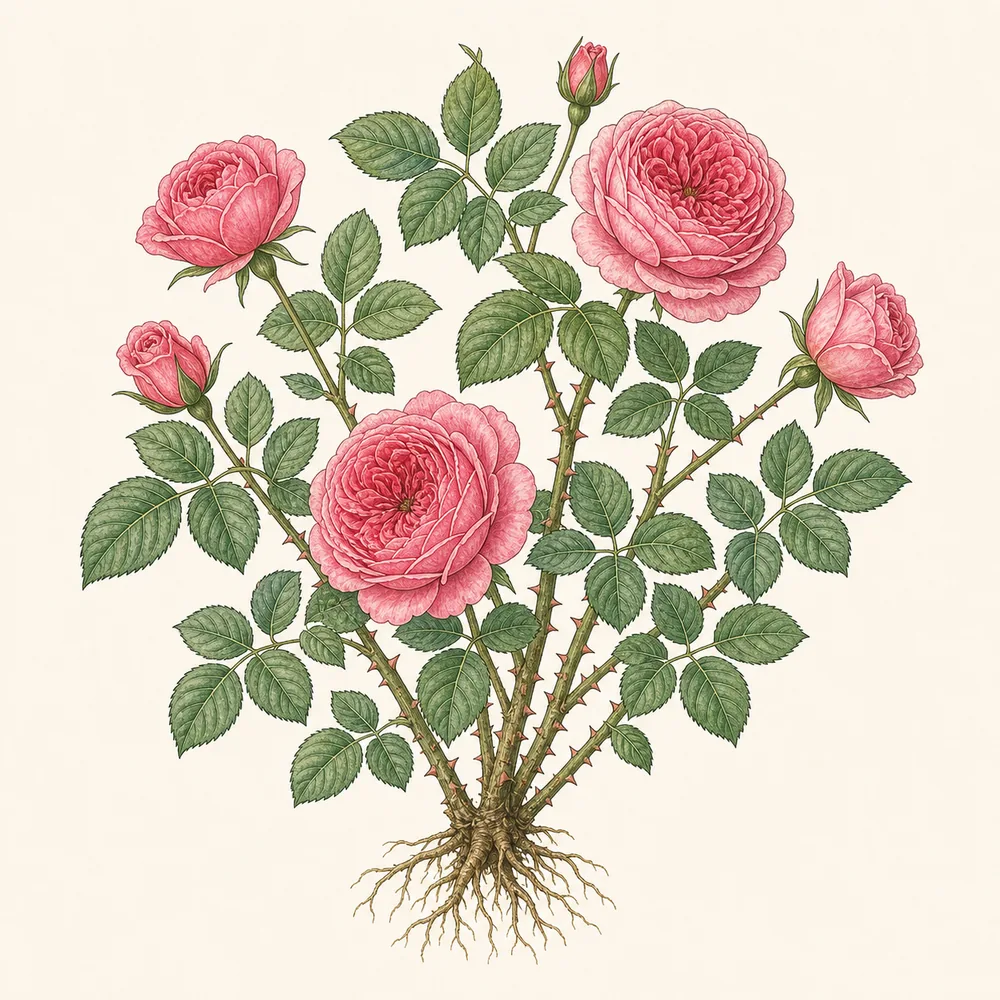
Rose
The most-grown flower in Britain, and less of a diva than its reputation. Modern varieties shrug off most disease; what roses actually want is sun, food, and a gardener who isn't afraid to prune hard.
Safe around cats & dogs
Roses (Rosa species) are listed as non-toxic to cats, dogs and horses on the ASPCA database — petals and hips included. The real hazard is mechanical: thorny prunings puncture paws, so clear up after pruning and keep dogs from chewing stems.
Care at a glance
Everything that matters, in six lines. The detail is further down.
Position
Six hours of direct sun for the best flowering. Some shrub roses tolerate light shade; none enjoy deep shade.
Soil
Roses love clay improved with organic matter. Avoid replanting a new rose in an old rose's exact spot.
Water
A good soak once or twice a week in dry spells beats frequent splashes — and dry leaves mean less blackspot.
Feeding
A high-potash rose or tomato feed in spring and again after the first flush keeps repeat-flowerers repeating.
Pruning
February–March: cut to outward-facing buds, remove dead and crossing stems. Roses forgive hard pruning; they sulk at timid pruning.
Hardiness
Frost isn't the enemy in Britain. Wind-rock in winter is — shorten tall shrubs by a third in autumn.
What to do, and when
Main prune in late winter/early spring, then feed and mulch generously. Watch the first aphid colonies — squish early.
Deadhead constantly to keep the flowers coming, feed again after the first flush, water deeply in drought.
Stop feeding by September. Shorten tall stems by a third against wind-rock, and rake up blackspot leaves — don't compost them.
Bare-root season: the cheapest, best way to plant new roses is November–March. Prune established ones at the season's end.
Deadheading is the difference between June and September
A repeat-flowering rose left to form hips decides its work is done. Snap or cut spent blooms back to the first full leaf and it keeps producing new flowering shoots into autumn. This one habit — thirty seconds on the way past — does more for a rose than any product you can buy.
The exception is roses grown for hips (rugosas and many ramblers): stop deadheading those from August and take the autumn display instead.
Blackspot honesty
Blackspot overwinters on fallen leaves and infects upwards in rain-splash. Hygiene does more than chemistry: rake up and bin infected leaves, mulch in spring to bury spores, water at the base, and prune for open, airy growth.
If a variety defoliates every single year despite all that, the honest fix is brutal: replace it with a modern disease-resistant variety. Breeders have spent forty years solving this problem — let them.
Common problems
Black spots, yellowing leaves
Blackspot. Bin (don't compost) fallen leaves, mulch in spring, water at the base, and favour resistant varieties.
Aphids clustering on buds
Squish by hand or blast with water early. Ladybirds usually catch up by midsummer if you don't spray them away.
Flowers ball and rot in bud
Rain-soaked buds in cool weather, mostly on full-petalled varieties. Remove affected buds; nothing is diseased.
Suckers from below the graft
Shoots with different leaves from ground level: pull (don't cut) them off at the root.
Everything a rose needs
Spend on the plant and the feed. Skip most of the shelf.
We take no commission on anything in the "save your money" tier — if we don't think you should buy it, we don't link it. How our recommendations work
If you like this, try
Other plants with a similar temperament.


How we checked this
Care guidance cross-checked against the Royal Horticultural Society and NC State Extension. Pet-safety confirmed against the ASPCA database, which lists Rosa species as non-toxic to cats, dogs and horses. If our page and these sources ever disagree, believe them — and tell us.
Sources: RHS · NC State Extension · ASPCA
Last reviewed · July 2026