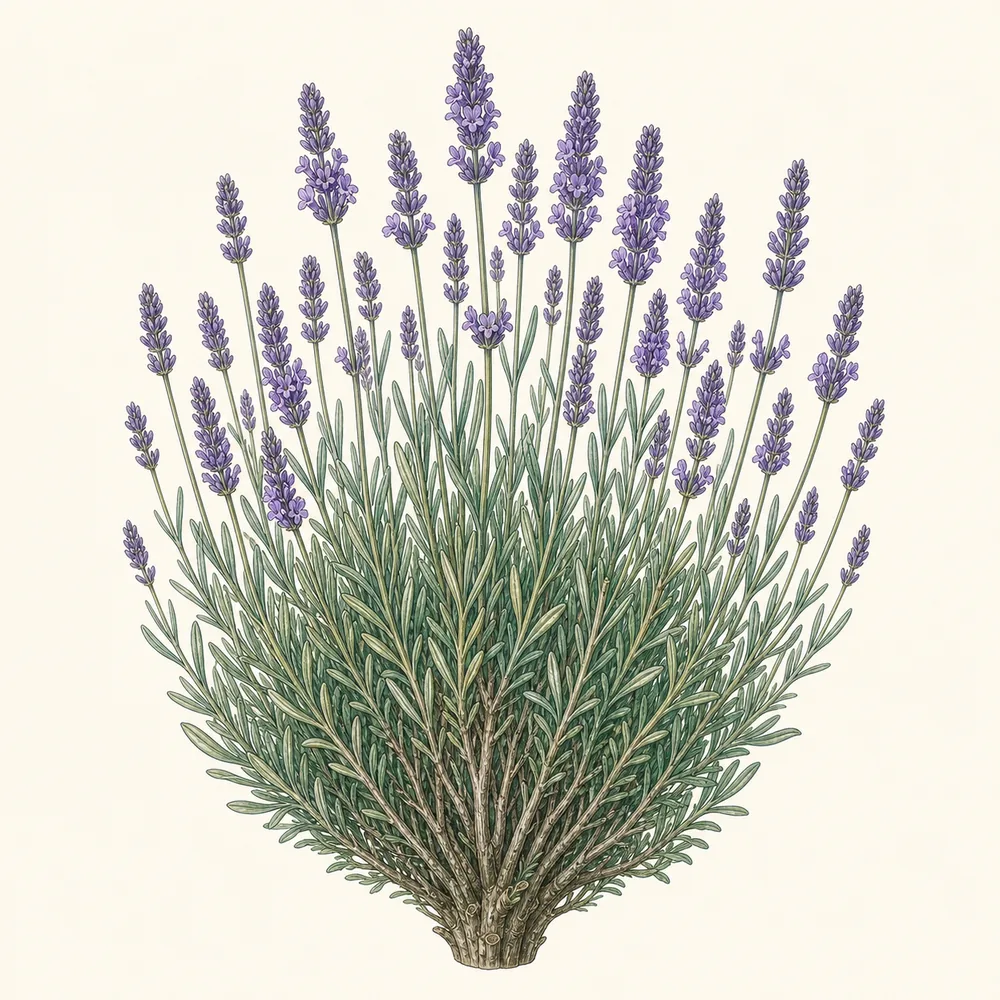
Lavender
Silver foliage, purple flower spikes and a scent that pulls in bees all summer. Get two things right — full sun and sharp drainage — and English lavender is tough, drought-proof and long-lived. Get the drainage wrong and no amount of care saves it.
Mildly toxic to pets — the oil is the real risk
The ASPCA lists lavender as toxic to cats, dogs and horses (compounds linalool and linalyl acetate); a nibble of the growing plant usually causes no more than mild nausea or loss of appetite. The concentrated <strong>essential oil</strong> is the genuine hazard — cats in particular cannot process it. Growing lavender near pets is low-risk; a lavender oil diffuser around a cat is not. Source: ASPCA.
Care at a glance
Everything that matters, in six lines. The detail is further down.
Position
The more sun the better — at least six hours. Shade means few flowers and weak, leggy growth.
Water
Water new plants their first summer; established lavender rarely needs it. It hates wet roots.
Soil
Poor, stony, neutral-to-alkaline soil is ideal. Add grit; in heavy clay, plant in a raised bed or pot.
Feeding
Do not feed. Rich soil and fertiliser give soft, floppy growth and fewer flowers.
Hardiness
L. angustifolia shrugs off UK winters. French and Spanish lavenders are tender — protect or pot those.
Pruning
Trim back each year — but never cut into old, bare wood, which rarely reshoots.
What to do, and when
Plant new lavender now. Give established plants a light tidy as growth starts — not into old wood.
Flowering and the bees arrive. Harvest spikes as they open; deadhead to keep it neat.
Prune after the last flowers, cutting back to just above the woody base. Ensure winter drainage.
Mostly hardy but hates wet, cold feet. Keep soil sharp; protect tender French/Spanish types.
Sun and drainage — the whole game
Almost every dead lavender in Britain died of wet feet, not cold. English lavender is perfectly hardy, but sitting in cold, soggy winter soil rots it. Plant it in the sunniest, sharpest-draining spot you have, work in plenty of grit, and on heavy clay grow it in a raised bed or a pot of gritty compost.
Get that right and it is genuinely low-maintenance: no feeding, little watering, and years of flowers.
Pruning (and the one rule)
Lavender goes woody and leggy if left unpruned, splaying open with a bare, twiggy middle. A yearly trim after flowering keeps it tight and floriferous — take off the spent flower stalks and a few centimetres of leafy growth to shape a neat mound.
The one unbreakable rule: never cut back into the old brown wood. Unlike many shrubs, lavender rarely reshoots from bare wood, so always leave some green growth below your cut.
English vs French — and pets
English lavender (Lavandula angustifolia, e.g. "Hidcote", "Munstead") is the hardy, best-scented one for UK gardens. French and Spanish lavenders, with their showy "rabbit-ear" bracts, flower earlier but are tender — treat them as pot plants to shelter over winter.
On pets: the growing plant is only mildly toxic and rarely a problem outdoors. The caution is really about concentrated lavender essential oil indoors, especially around cats — a useful, honest distinction rather than a reason to avoid the plant.
Common problems
Woody, leggy, bare middle
Not pruned, or old. Trim yearly after flowering — never into old wood.
Dying over winter
Wet soil, not cold. Improve drainage and grit; consider a raised bed or pot.
Few or no flowers
Too little sun, or soil too rich. Move to full sun; never feed.
Grey mould / soft growth
Too damp and crowded. Improve airflow and drainage; avoid overhead watering.
Everything lavender needs
The rare plant where the biggest favour you can do it is buy it less.
We take no commission on anything in the "save your money" tier — if we don't think you should buy it, we don't link it. How our recommendations work
If you like this, try
Other plants with a similar temperament.
From the Notebook
Seasonal notes and guides that mention the lavender.
How we checked this
Care cross-checked against the RHS. Toxicity confirmed directly against the ASPCA lavender entry: toxic to dogs, cats and horses; toxic principles linalool and linalyl acetate; concentrated essential oil is the greater hazard, especially to cats. If our page and these sources ever disagree, believe them — and tell us.
Sources: RHS · ASPCA — Lavender
Last reviewed · July 2026