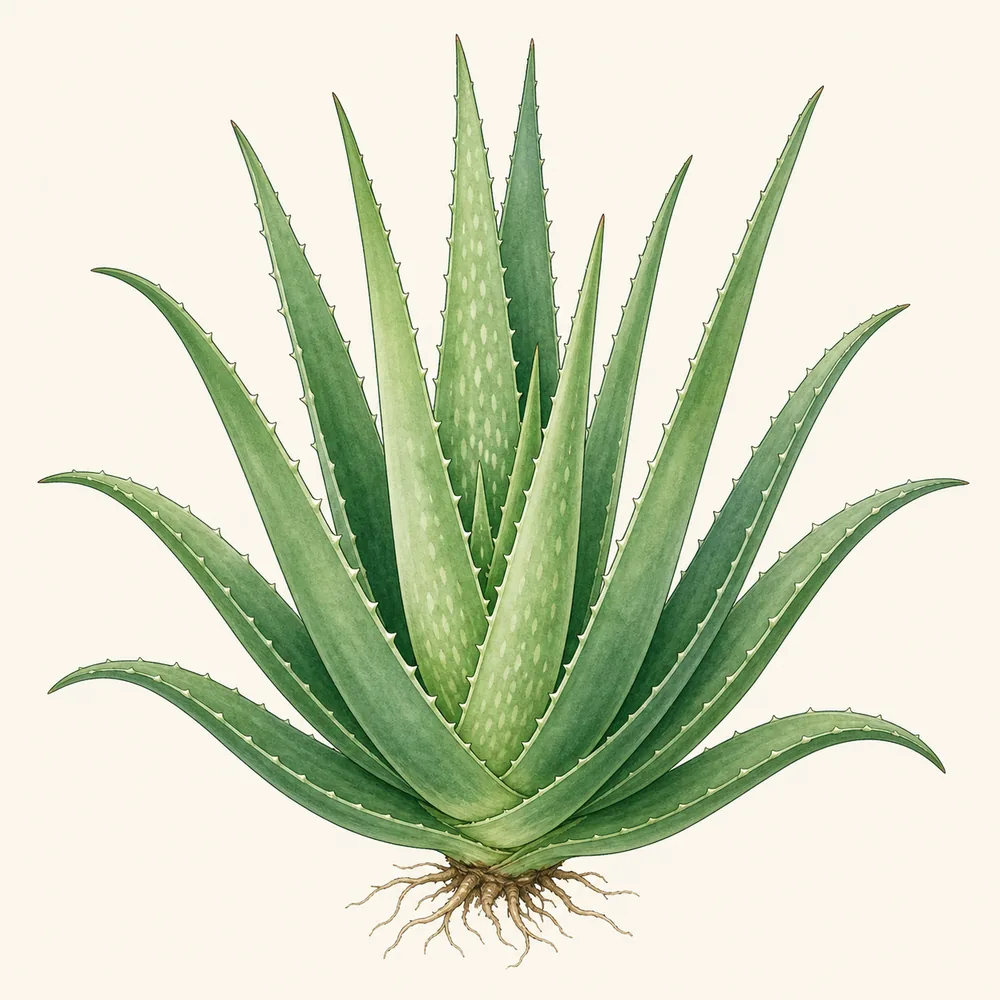
Aloe Vera
A sculptural rosette of fleshy, toothed leaves that thrives on a sunny windowsill and thorough neglect. Treat it as a succulent — lots of light, very little water — and it is close to unkillable.
Toxic to cats, dogs & horses if eaten
The leaf contains saponins and anthraquinones. Eating it can cause vomiting, lethargy and diarrhoea in pets (horses do not vomit). The inner gel is considered edible, but the whole leaf and outer latex are the problem — keep it out of reach of pets that chew. Source: ASPCA.
Care at a glance
Everything that matters, in six lines. The detail is further down.
Light
The sunniest windowsill you have. Too little light and it grows pale and floppy.
Water
Every 2–3 weeks in summer, monthly or less in winter. Wrinkled leaves mean thirsty; always err dry.
Temperature
Room warmth. Not frost-hardy — bring it in well before cold nights.
Humidity
Loves dry air. Humidity and stagnant damp are what cause rot.
Feeding
A weak succulent feed once or twice in summer, if at all.
Soil
Fast-draining cactus and succulent compost, ideally in a terracotta pot.
What to do, and when
Growth resumes. Start watering again as it dries, and pot up any offsets ("pups") around the base.
Give it the most sun you can. Water only when bone dry; feed once, weakly.
Cut right back on water and move it to the brightest spot as light fades.
Near-dormant. Water monthly at most, keep it cool and bright, and never let it sit wet.
Sun and the soak-and-dry rhythm
Aloe is a desert succulent, so its two needs are simple: as much light as possible and water only when the soil has dried out completely. Give it a thorough soak, let every drop drain, then leave it alone until the compost is bone dry again.
Starved of light it stretches, pales and flops open; too much water and the base turns soft and translucent. Between the two, err firmly on the side of dry and bright.
Pups, and the gel-versus-latex point
A happy aloe throws out offsets around its base. Separate these "pups" with a bit of root when you repot in spring and pot them up individually — it is the easiest way to make more.
On the leaf: the clear inner gel is what people use on skin, but the yellow latex just under the skin is a strong irritant and laxative, and the whole leaf is toxic to pets. Useful to know, and a good honest detail rather than a scare.
Common problems
Pale, stretched, floppy
Too little light. Move it to your sunniest window.
Soft, mushy base
Overwatering and rot. Let it dry hard; repot into gritty mix and cut away any soft roots.
Red or brown tinge
Sun or cold stress. Usually cosmetic — ease it into strong sun and keep it warm.
Thin, curling leaves
Under-watered and drawing on reserves. Give it a proper soak.
Everything an aloe needs
Sun, grit, and the discipline not to overwater.
We take no commission on anything in the "save your money" tier — if we don't think you should buy it, we don't link it. How our recommendations work
If you like this, try
Other plants with a similar temperament.
From the Notebook
Seasonal notes and guides that mention the aloe vera.
How we checked this
Care cross-checked against the RHS and NC State Extension. Toxicity confirmed directly against the ASPCA aloe entry: toxic to dogs, cats and horses; toxic principles saponins and anthraquinones; gel considered edible. If our page and these sources ever disagree, believe them — and tell us.
Sources: RHS · NC State Extension · ASPCA — Aloe
Last reviewed · July 2026