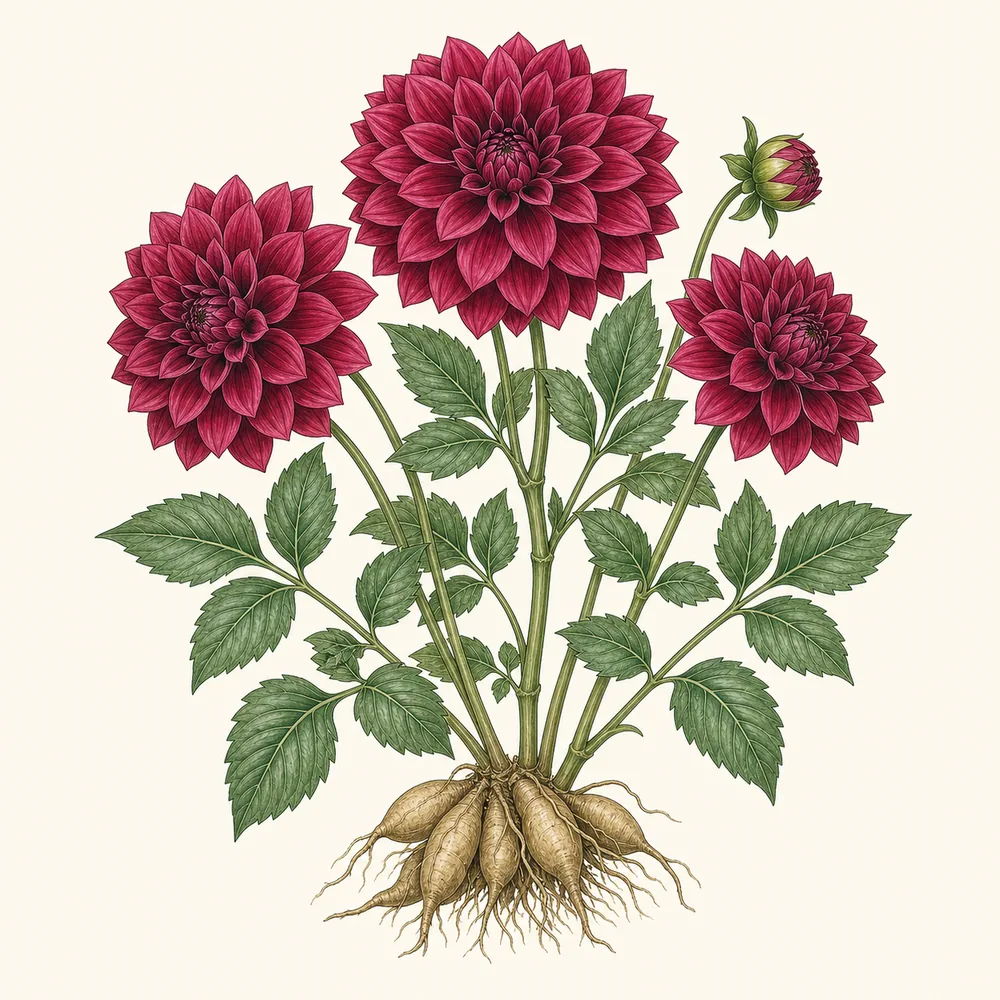
Dahlia
The workhorse of the late-summer border — endless flowers from midsummer until the first frost, in colours from soft blush to electric. Generous if you feed, water and deadhead; the catch is keeping the tubers alive over winter.
Mildly toxic to cats & dogs
Dahlias are listed as toxic to cats and dogs on the ASPCA database. Eating them causes mild stomach upset, and the sap can irritate skin. Unpleasant rather than dangerous, but best kept away from grazing pets.
Care at a glance
Everything that matters, in six lines. The detail is further down.
Position
A warm, sunny spot with shelter from strong wind gives the strongest, longest flowering.
Water
Water deeply through the season, especially once buds form — they're thirsty in a dry spell.
Hardiness
Hard frost kills the tubers, so in cold areas lift them for winter or mulch very deeply.
Soil
Fertile soil that holds moisture but never waterlogs; dig in compost before planting.
Feeding
Switch to a high-potash feed (tomato food is ideal) as buds appear to fuel the flowers.
Flowering
Deadhead relentlessly and they'll keep going right up until the frosts blacken them.
What to do, and when
Start tubers into growth under cover from April; plant out only once all frost has passed, usually late May.
Stake, feed and deadhead constantly; pinch out the growing tip early for bushier, more floriferous plants.
After the first frost blackens the foliage, cut back and lift the tubers to store — or mulch deeply if leaving them in.
Keep lifted tubers somewhere cool, dry and frost-free, and check them now and then for rot.
Lift them, or lose them
Dahlias are half-hardy: the top growth dies at the first frost, and a hard freeze into the soil will turn the tubers to mush. In mild parts of the country you can leave them in the ground under a thick, dry mulch, but in cold or wet gardens the safe route is to lift, dry and store them over winter.
Lift after the first frost, shake off the soil, trim the stems and let the tubers dry upside down for a few days. Store them in a box of dry compost or sand somewhere cool and frost-free, and start them back into growth under cover in spring.
Pinch, stake and deadhead
Two jobs earn you far more flowers. Pinch out the main growing tip when the plant is young to force bushy side-shoots, and stake taller varieties at planting so a summer storm doesn't snap them off.
Then deadhead often. A spent dahlia bud is pointed and conical, while a fresh unopened bud is round — learn that difference and you'll never accidentally snip off tomorrow's flower.
Common problems
Shoots shredded in spring
Slugs and snails love the soft new growth; protect young plants until they're well established.
Ragged holes in the petals
Earwigs feeding at night; an upturned pot stuffed with straw on a cane traps and moves them on.
Powdery white coating on leaves
Mildew, worse in dry soil late in the season; water deeply at the base and give plants room to breathe.
Tubers rotting in store
Lifted or stored too damp; dry them off thoroughly first and keep somewhere cool, dry and frost-free.
Everything a dahlia needs
Full sun, rich soil, and frost protection for the tubers.
We take no commission on anything in the "save your money" tier — if we don't think you should buy it, we don't link it. How our recommendations work
If you like this, try
Other plants with a similar temperament.
How we checked this
Care cross-checked against the RHS. Toxicity taken from the ASPCA database, which lists Dahlia as toxic to cats and dogs — mild stomach upset if eaten, with sap that can irritate skin. If our page and these sources ever disagree, believe them — and tell us.
Sources: RHS · ASPCA — toxic & non-toxic plants
Last reviewed · July 2026