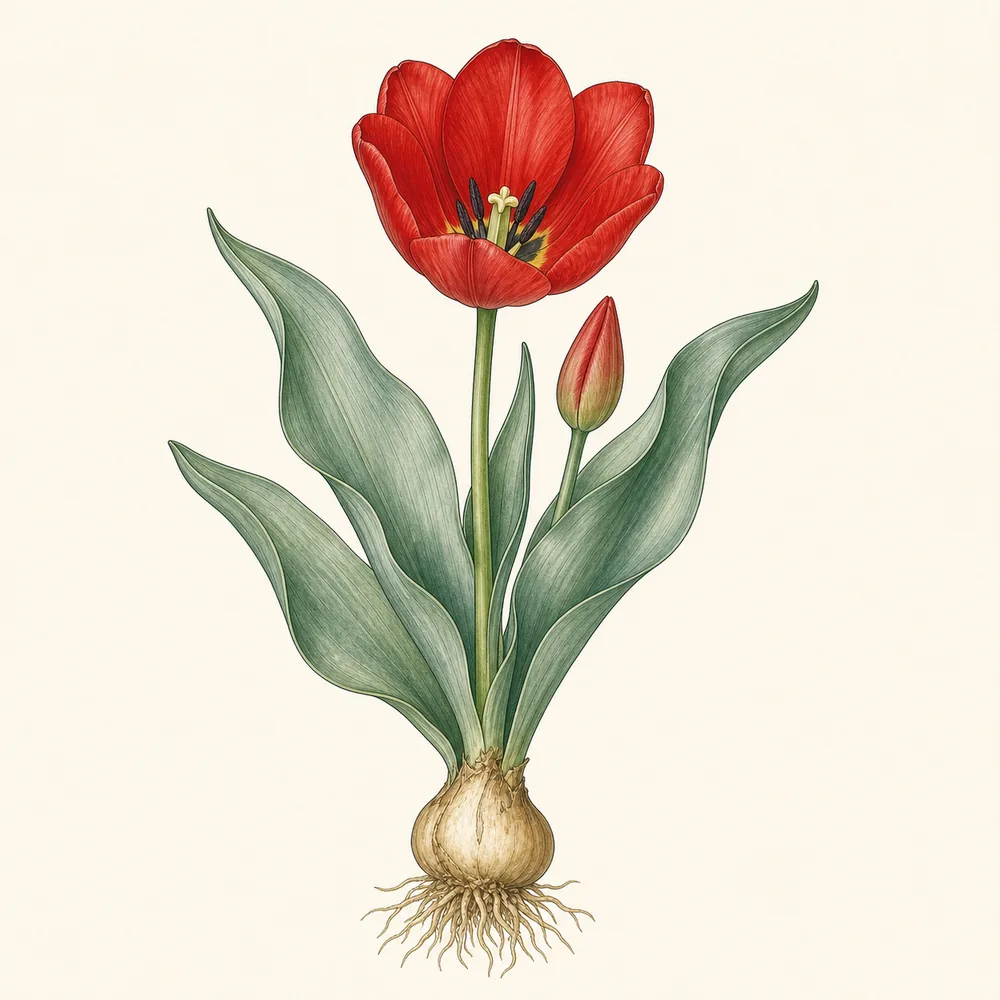
Tulip
The big, bold splash of mid-spring — goblet flowers in every colour going, on strong stems. Easy to grow, but honest gardeners treat most of them as one-year wonders.
Toxic to cats & dogs if eaten
Tulips (Tulipa) are listed as toxic to cats and dogs on the ASPCA database. The bulb holds the most of the irritant compounds (tulipalin); chewing leaves or flowers causes drooling, vomiting and diarrhoea, and eating bulbs is worse. Keep pets from digging up or chewing them.
Care at a glance
Everything that matters, in six lines. The detail is further down.
Position
An open, sunny spot. Too much shade gives floppy stems and disappointing flowers.
Water
Autumn and winter rain usually does the job; only water in a genuinely dry spring while they are in growth.
Hardiness
The bulbs need a proper cold winter to flower well, so plant them out rather than mollycoddling them.
Soil
Sharp drainage is everything. Bulbs sitting in cold, wet soil over winter simply rot.
Feeding
Feed as the leaves show if you want to try for a second year — though most tulips fade regardless.
Flowering
Deadhead as blooms fade, but leave the foliage to die down naturally to feed the bulb.
What to do, and when
Enjoy the flowers; deadhead as they go over but leave the leaves to yellow and die back.
Once the foliage has withered, lift and dry the bulbs to store, or leave them and expect fewer flowers next year.
Plant fresh bulbs from late October into November — deep, and in the best-drained soil you have.
Little to do; the cold spell is quietly doing its job of triggering next spring's flowers.
Treat them as annuals and you'll never be let down
Tulips put on their finest show in their first spring and then, in most gardens, tail off — coming up smaller, weaker, or all leaf and no flower in year two. It isn't your fault; it's simply what most highly-bred tulips do in the cool, damp UK.
The reliable approach is to plant fresh bulbs each autumn for the display you actually want, and treat any that return as a bonus. If you'd rather try to keep them, lift and dry the bulbs once the leaves die back and replant the biggest in autumn.
Plant deep, and plant late
Plant bulbs at two to three times their own depth — deeper than feels right — for sturdy stems and better return. Shallow planting is a common cause of floppy, short-lived clumps.
Leave tulips until November, after the first cold snap. Late planting into cool soil helps dodge tulip fire, the fungal disease that scorches and streaks the leaves.
Common problems
All leaves, no flowers
Second-year 'blindness' is normal — tulips weaken after year one, so replant with fresh bulbs each autumn.
Bulbs rotted over winter
Wet soil is almost always the culprit; add grit and plant in the sharpest-draining spot you have.
Scorched, streaked, distorted leaves
Tulip fire, a fungal disease; lift and bin affected bulbs and don't replant tulips there for a few years.
Weak, flopping stems
Too much shade, shallow planting or a soggy season; give full sun, plant deep and improve drainage.
Everything a tulip needs
Full sun, sharp drainage, and fresh bulbs each autumn.
We take no commission on anything in the "save your money" tier — if we don't think you should buy it, we don't link it. How our recommendations work
If you like this, try
Other plants with a similar temperament.
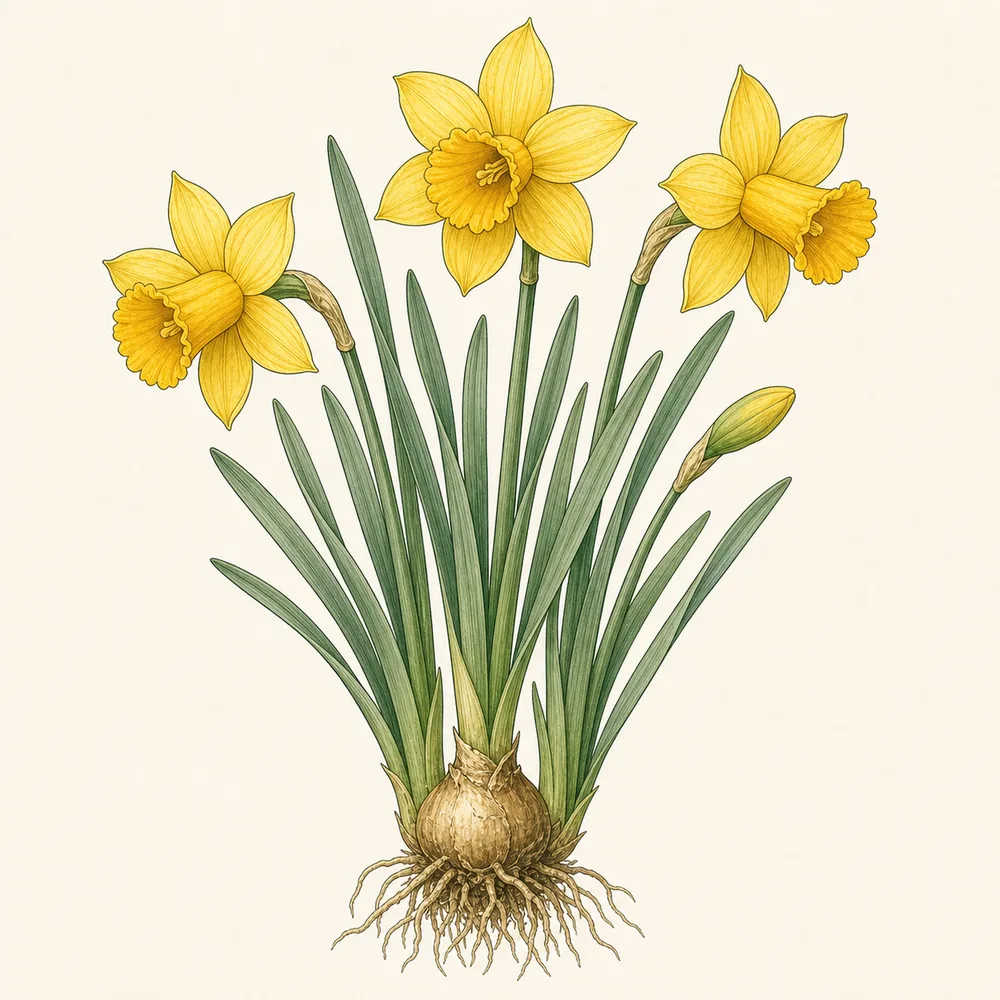


How we checked this
Care cross-checked against the RHS. Toxicity taken from the ASPCA database, which lists Tulipa (tulip) as toxic to cats and dogs — the bulbs hold the most of the irritant tulipalin. If our page and these sources ever disagree, believe them — and tell us.
Sources: RHS · ASPCA — toxic & non-toxic plants
Last reviewed · July 2026