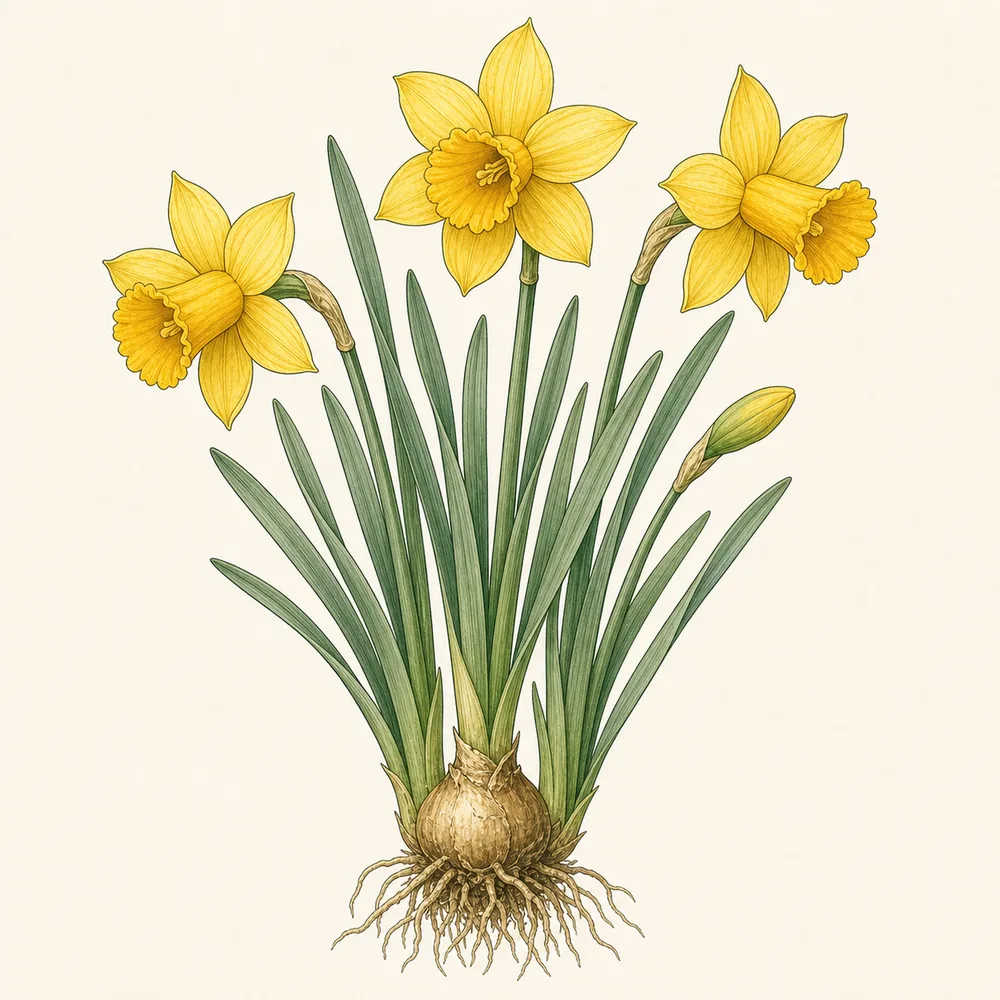
Daffodil
The sound of spring in Britain: plant the bulbs in autumn, forget them, and they return brighter every year. Close to foolproof — but the bulbs are toxic to pets and people alike, and every year a few end up mistaken for onions.
Toxic to pets and people — the bulb most of all
All parts contain lycorine and other alkaloids, and the bulb is the most poisonous part. In pets the ASPCA lists vomiting, drooling and diarrhoea, with tremors, low blood pressure and heart-rhythm problems after large amounts — dogs that dig up and chew bulbs are the usual casualties. People are poisoned too, most often when bulbs are mistaken for onions or shallots in the kitchen. Keep stored bulbs away from pets and clearly separate from food. Sources: ASPCA, RHS.
Care at a glance
Everything that matters, in six lines. The detail is further down.
Position
Happy in borders, grass and under deciduous trees — they flower before the canopy closes over.
Soil
Almost anywhere with drainage. Waterlogged ground is the only thing that rots the bulbs.
Planting
Plant bulbs September–November at two to three times their own depth, pointy end up.
Feeding
A high-potash feed as flowers fade helps build next year's bloom, especially for bulbs in grass.
Aftercare
Deadhead spent flowers, but leave foliage to die down for six weeks — don't tie or cut it early.
Hardiness
Completely hardy. Bulbs naturalise and multiply, coming back for decades untouched.
What to do, and when
The main event — weeks of flower. Deadhead as blooms fade and feed, but leave every leaf to yellow and feed the bulb.
Foliage dies back and the bulbs rest underground. Mark where clumps are so you don't dig them up.
Planting season: get new bulbs in from September. Lift and split congested clumps that have stopped flowering well.
Nothing to do. The first noses push through in late winter, earliest in mild spots.
Don't knot the leaves — the one mistake that costs you next year
The old habit of tying daffodil foliage into neat knots after flowering is actively harmful. For about six weeks after the flowers fade, those untidy leaves are pouring energy back into the bulb for next year's bloom. Knot them, fold them, or cut them off early and you starve the bulb — the classic reason a clump flowers well one year and blindly the next.
The tidy answer is planning, not pruning: put daffodils where the dying leaves are hidden by later perennials, or naturalise them in grass you simply don't mow until midsummer. Let the leaves go fully yellow before you touch them.
The onion mix-up, and other real risks
Every year hospitals see people poisoned by daffodil bulbs eaten in mistake for onions — the resemblance is genuinely close, and it's why stored bulbs should never be kept with food. The cut flowers are a milder hazard: the sap that oozes from cut stems irritates skin and shortens the life of other flowers in the vase, so condition daffodils on their own for a few hours first.
For pets, the digging dog is the classic case — newly planted bulbs are irresistible to some dogs. Plant them where the dog doesn't roam, and store spare bulbs out of reach.
Common problems
Leaves but no flowers ('blind')
Congested clump or foliage cut too early. Divide in autumn; let leaves die down fully in future.
Bulbs rotting
Waterlogged soil or basal rot. Lift, discard soft bulbs, replant the firm ones somewhere better-drained.
Holes in the bulbs
Narcissus bulb fly larvae. Firm soil around the necks as leaves die back to deter the egg-laying flies.
Streaked, distorted leaves
Possible virus — no cure. Remove badly affected plants to protect the rest of the clump.
Everything a daffodil needs
Possibly the best-value plant in the garden. Buy bulbs in bulk and stop there.
We take no commission on anything in the "save your money" tier — if we don't think you should buy it, we don't link it. How our recommendations work
If you like this, try
Other plants with a similar temperament.
From the Notebook
Seasonal notes and guides that mention the daffodil.
How we checked this
Care guidance cross-checked against the Royal Horticultural Society and NC State Extension. Toxicity confirmed against the ASPCA database (Narcissus — lycorine and other alkaloids; vomiting, diarrhoea, and with large ingestions convulsions, low blood pressure, tremors and cardiac arrhythmias; bulbs the most poisonous part); the human onion-confusion risk is documented by the RHS. If our page and the ASPCA or RHS ever disagree, believe them and tell us. If our page and these sources ever disagree, believe them — and tell us.
Sources: RHS · NC State Extension · ASPCA
Last reviewed · July 2026