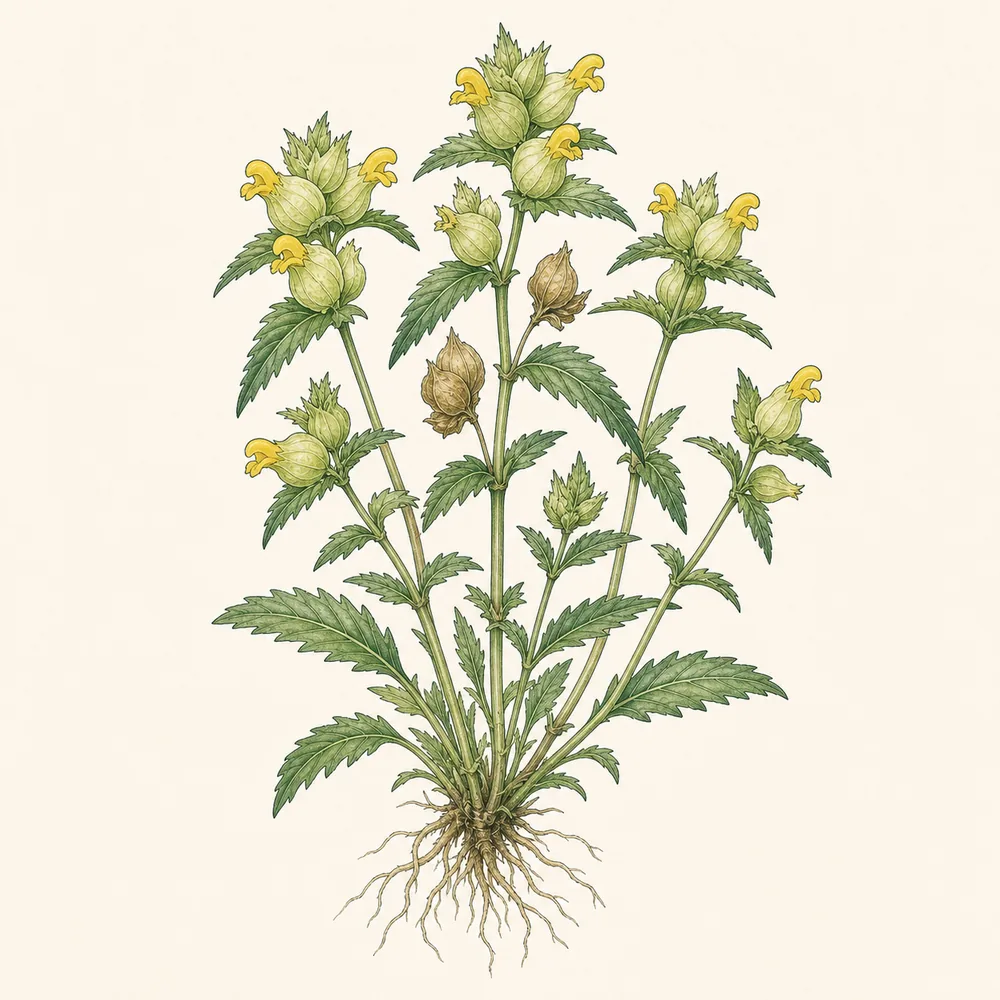
Yellow Rattle
The single most important plant for making a wildflower meadow. This modest yellow annual is a hemi-parasite — it feeds partly off the roots of grasses, weakening the vigorous grass so that other wildflowers can move in. Sow fresh seed in autumn and it does the hard work of taming your meadow for you.
Not listed by ASPCA
The ASPCA doesn't list yellow rattle, so we don't stamp it safe. It's a UK native wildflower with no recorded serious toxicity to pets, but with no database entry we flag the gap honestly rather than guess.
Care at a glance
Everything that matters, in six lines. The detail is further down.
Light
An open, sunny meadow plant. It needs plenty of light and won't thrive in shade or under a dense grass canopy.
Water
As a wild annual it lives entirely on rainfall — no watering needed. Autumn and winter moisture triggers germination in spring.
Temperature
The seed must go through a spell of winter cold before it will germinate. That's why it has to be sown in autumn, not spring.
Habit
An annual that grows, flowers, sets seed and dies in a single season — it must self-sow each year to persist in the meadow.
Feeding
Never feed the meadow. Yellow rattle and the flowers it makes room for only work on lean, unimproved ground.
Soil
Wants poor grassland with grasses to parasitise. It grows on most soils but fails on rich ground where the grass is too vigorous.
What to do, and when
Seed germinates as the ground warms and latches onto grass roots. Slender plants grow fast and yellow flowers open from late spring.
Flowering peaks, then the seed pods ripen and rattle in the wind — the sign to cut. Take a hay cut once the seed has dropped.
The sowing season. Scatter fresh seed onto short, scarified turf with plenty of bare soil showing, so it can reach the ground.
Seed lies on the cold, bare ground getting the chilling it needs. Keep the sward short over winter so seedlings aren't shaded out.
Why yellow rattle is the meadow-maker
A wildflower meadow fails for one reason more than any other: vigorous grass swamps the flowers. Yellow rattle solves this. It's a hemi-parasite — its roots tap into the roots of grasses and draw off water and nutrients, cutting grass growth by anywhere from a quarter to a half.
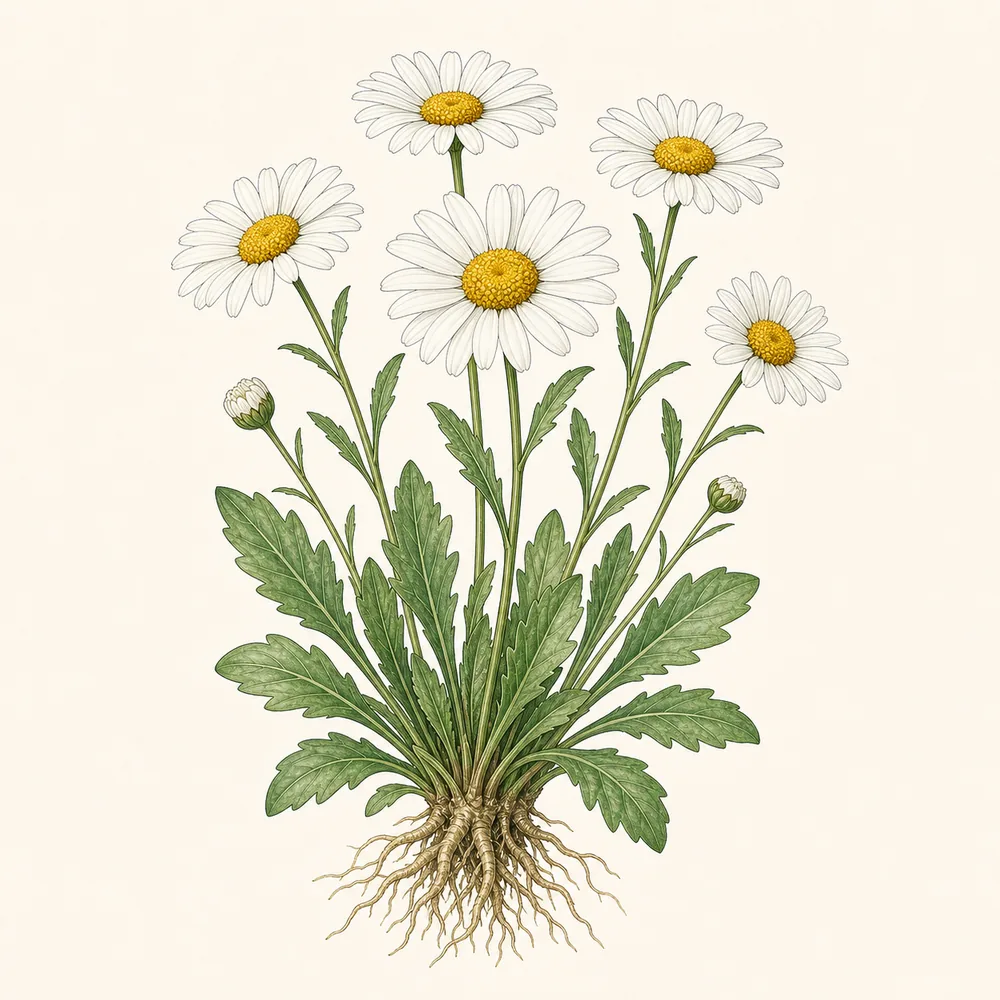
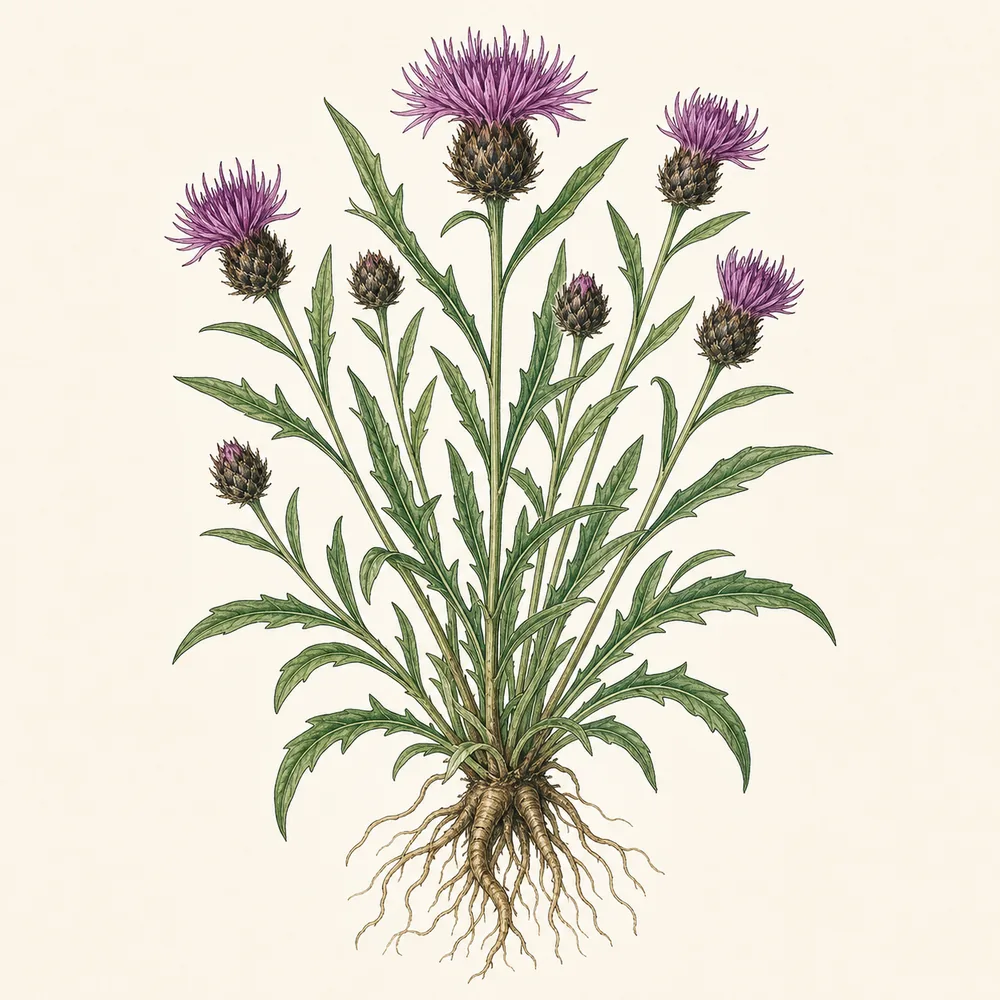
That weakened grass opens up gaps and lowers the competition, letting ox-eye daisy, knapweed, scabious and the rest establish where they'd otherwise be crowded out. Get yellow rattle going first, and the whole meadow becomes possible. This is why it earns its nickname, the meadow-maker.
Sowing: fresh seed, in autumn, onto bare soil
The details matter here, because yellow rattle is fussy in exactly three ways. First, the seed must be fresh — it's short-lived and old seed simply won't come up, so buy for autumn sowing and sow it straight away. Second, it must be sown in autumn (August to November), because it needs a spell of winter cold to break dormancy. Spring sowing almost always fails.
Third, the seed must reach bare soil. Mow the grass hard and rake or scarify it until roughly half the ground shows bare earth, then scatter seed at about 1 gram per square metre and tread or roll it in. Don't cover it — just get it in contact with soil, keep the sward short over winter, and wait for spring.
Keeping it self-sowing year after year
Because it's an annual, yellow rattle has to set and drop seed every single year or it vanishes. The whole regime hinges on timing your cut. Let the plants flower and the pods ripen until they rattle when you shake them — that dry rattle is the seed telling you it's ready.
Only then take a hay cut, and leave the cuttings lying for a day or two so the last seed shakes out before you rake them off. Cut too early and you get no seed for next year; leave the cuttings on and you raise fertility and feed the grass. Cut on time, clear the hay, and the meadow renews itself.
Common problems
No germination in spring
Nearly always old seed or a spring sowing. Use only fresh seed, sow in autumn, and let it sit through winter cold to break dormancy.
Seed sat on top of the grass and failed
It must reach bare soil. Mow hard and scarify until half the ground is bare earth before sowing, then tread the seed in.
It fizzles out after a good first year
It was cut before the seed ripened, so nothing re-sowed. Wait until the pods rattle, then cut and leave the hay to shed seed.
Barely dents the grass
Too rich a soil, or too few plants. Stop all feeding, remove every hay cut, and sow more seed; it builds up over several seasons.
Everything yellow rattle needs
Fresh seed, short scarified turf, and an autumn sowing.
We take no commission on anything in the "save your money" tier — if we don't think you should buy it, we don't link it. How our recommendations work
If you like this, try
Other plants with a similar temperament.
How we checked this
Care cross-checked against the RHS. The ASPCA does not list yellow rattle, so its pet-safety is unconfirmed and we have not stamped it safe. If our page and these sources ever disagree, believe them — and tell us.
Sources: RHS · ASPCA — toxic & non-toxic plants
Last reviewed · July 2026