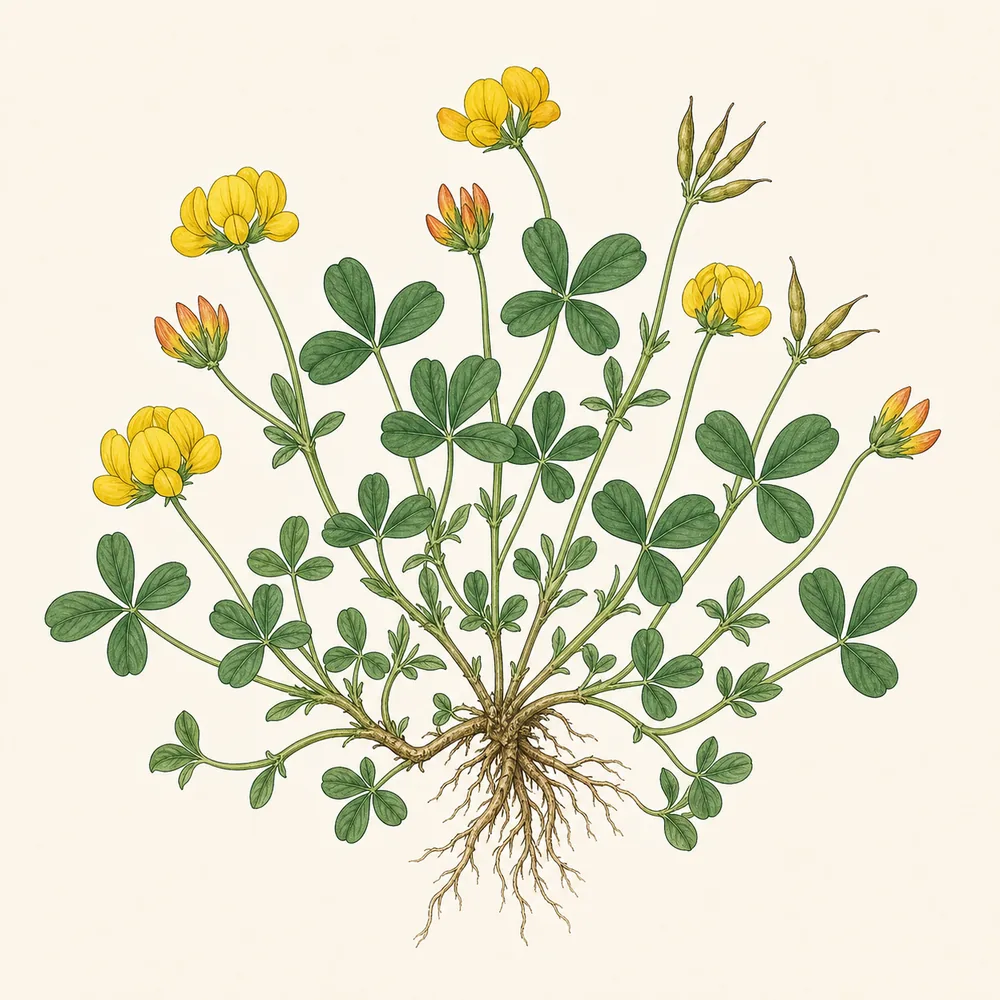
Bird's-foot Trefoil
A low, sprawling native legume with cheerful yellow pea-flowers streaked orange-red — the 'eggs and bacon' of old country names. It thrives on the poor, thin soil most plants sulk on, and it's one of the most important caterpillar food plants you can grow for the common blue butterfly.
Not listed by ASPCA
The ASPCA doesn't list bird's-foot trefoil, so we don't stamp it safe. Like many legumes its foliage holds small amounts of cyanogenic compounds — rarely a problem in a garden, but with no database entry we flag the gap honestly rather than guess.
Care at a glance
Everything that matters, in six lines. The detail is further down.
Light
An open, sunny spot gives the best flowering and the sturdiest mats. It tolerates a little light shade but sulks and flops in deep shade.
Water
Water new sowings until they root, then leave it be. Deep roots make it genuinely drought-proof — it shrugs off the dry banks that kill other plants.
Hardiness
A native perennial, hardy right across the UK. It dies back low over winter and comes again from the crown each spring.
Habit
Grows 10–30 cm high, spreading into flat cushions. Perfect for the front of a meadow, a sunny bank, or threaded through short turf.
Feeding
As a legume it fixes its own nitrogen from the air. Rich or fed soil makes lush grass that swamps it, so keep the ground lean.
Soil
Thrives on thin, stony, low-fertility soil — chalk, sand, or a starved bank. It's happiest exactly where the grass grows weakest.
What to do, and when
Fresh clover-like foliage pushes up from the crown. Sow fresh seed now on bare, poor soil if you missed autumn, and hold off any feeding.
Peak flowering from May into September — yellow blooms streaked red. Watch for common blue butterflies laying eggs on the leaves; leave the patch undisturbed.
Seed pods split like tiny bird's feet, giving the plant its name. Cut and collect the meadow now, then scatter any saved seed onto bare ground.
Dies back low and sits dormant. Nothing to do — resist mulching or feeding, which only enriches the soil it wants kept lean.
The plant that loves poor soil
Most gardeners spend years improving their soil. Bird's-foot trefoil asks you to do the opposite. It's a legume — it pulls its own nitrogen out of the air through its roots — so it actively prefers thin, hungry, free-draining ground where richer plants can't out-muscle it.
That makes it the ideal plant for the awkward places: a dry sunny bank, a gravelly verge, the poor scrapings left after building work, or thin turf over chalk. Feed the ground or grow it in rich compost and you'll get soft, floppy growth that the grass quickly smothers.
Sowing a patch
Sow direct onto bare soil — autumn is best in the UK, so the seed feels winter's cold, but early spring works too. Rake the ground to a rough tilth, scatter the fine seed thinly, and tread or roll it in. Don't bury it deep; it needs to sit near the surface.
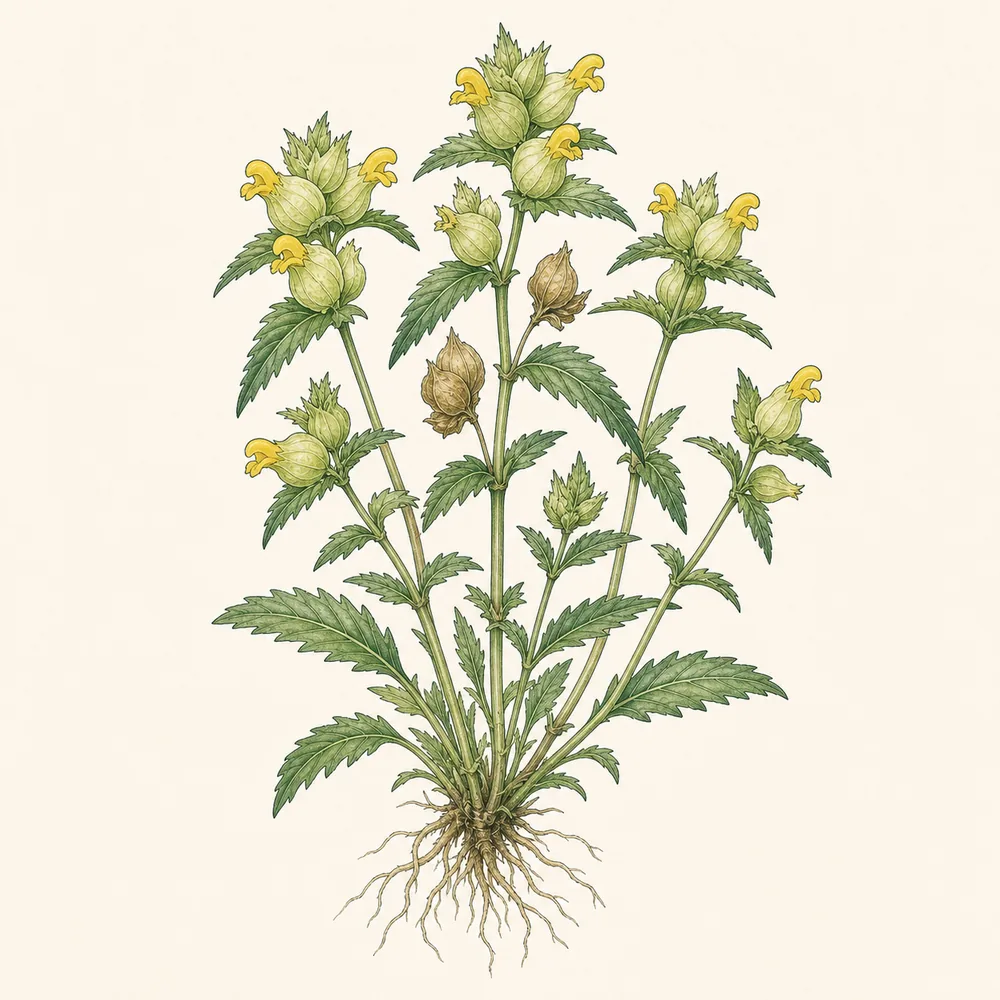
Sowing into existing turf rarely works because the grass wins. If you're starting a meadow from scratch, sow bird's-foot trefoil alongside yellow rattle — the rattle parasitises the grasses and weakens them, opening up the sward so the trefoil and other flowers can hold their own.
A caterpillar canteen
This is where bird's-foot trefoil earns its place. It's the main larval food plant of the common blue butterfly, and feeds the caterpillars of the dingy skipper and the six-spot burnet moth too. The flowers are also a magnet for bees hunting nectar.
The practical upshot: if you want the butterflies, you have to tolerate the caterpillars nibbling the leaves, and you have to leave the patch alone through summer. A meadow that's mown short in July is no use to anything — the whole point is to let it grow, flower and set seed.
The cut-and-collect regime
A wildflower patch is managed like hay, not like a lawn. Let it grow, flower and set seed through spring and summer, then cut it once, in late summer or autumn — from about September — when the seed has ripened and dropped.
Crucially, rake off and remove the cuttings after a few days. Leaving them to rot feeds the soil with nitrogen, which is the one thing you don't want — it favours grass over flowers. Removing the 'hay' keeps the ground lean and the meadow flowery year after year.
Common problems
Swamped by grass
The commonest failure. Coarse grasses out-compete it on fertile soil. Keep the ground poor, never feed, sow yellow rattle to weaken the grass, and cut-and-collect each autumn.
Flops and goes soft
Usually too rich a soil or too much shade. It wants a lean, open, sunny spot — rich compost or a shady corner gives sappy growth that sprawls and rots.
Poor germination
Old or deeply buried seed struggles. Sow fresh seed thinly onto bare soil in autumn, press it in rather than covering it, and don't let it sit in wet, heavy ground.
Disappears after a year or two
Often because the patch was mown short through summer before it could set seed. Let it flower and seed fully, and only cut once the pods have ripened and dropped.
Everything a trefoil patch needs
Poor free-draining soil, fresh seed, and a once-a-year cut.
We take no commission on anything in the "save your money" tier — if we don't think you should buy it, we don't link it. How our recommendations work
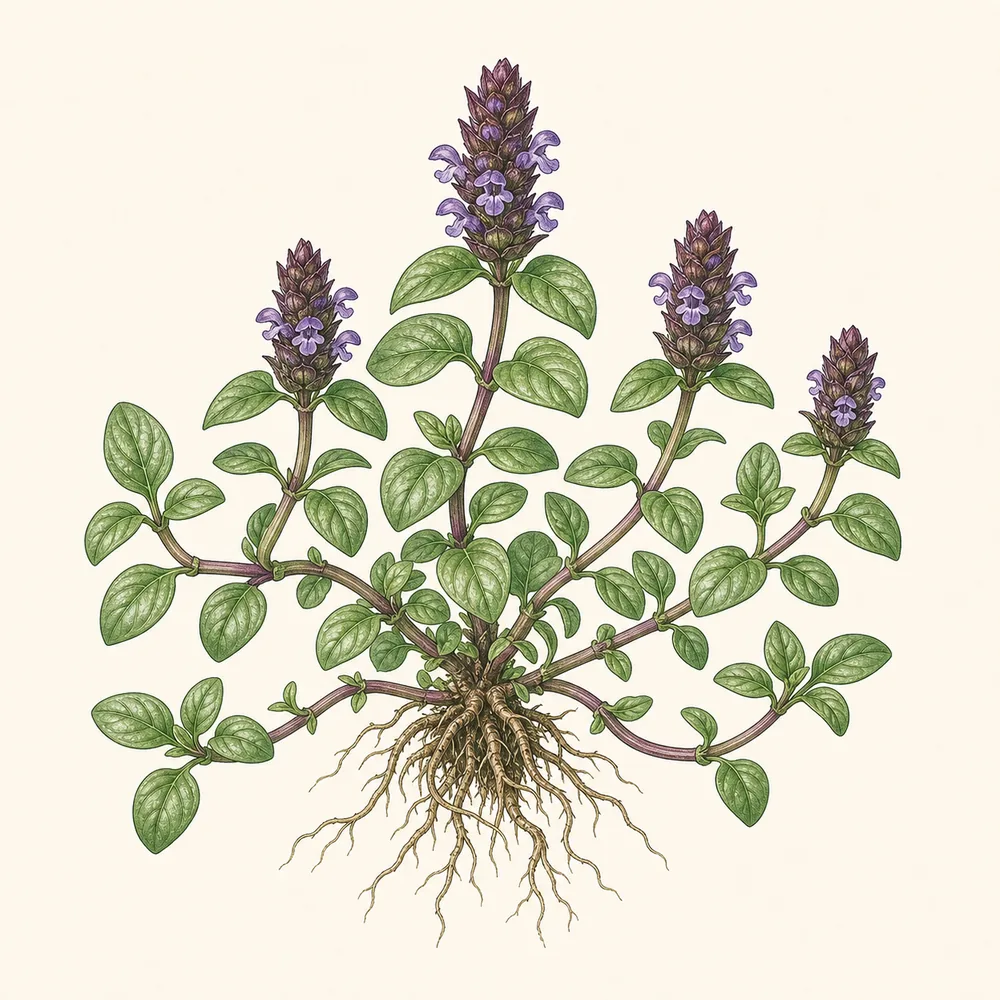
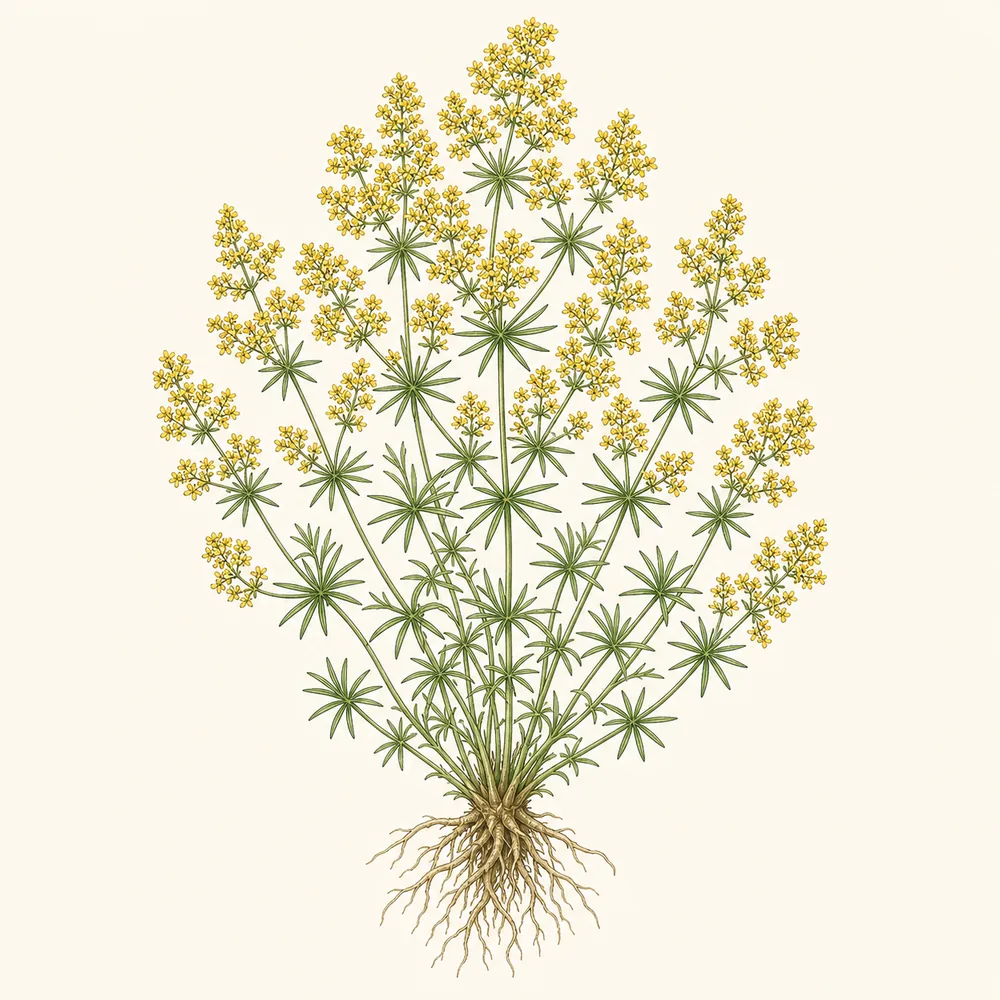
If you like this, try
Other plants with a similar temperament.
How we checked this
Care cross-checked against the RHS. The ASPCA does not list bird's-foot trefoil, so its pet-safety is unconfirmed and we have not stamped it safe. If our page and these sources ever disagree, believe them — and tell us.
Sources: RHS · ASPCA — toxic & non-toxic plants
Last reviewed · July 2026