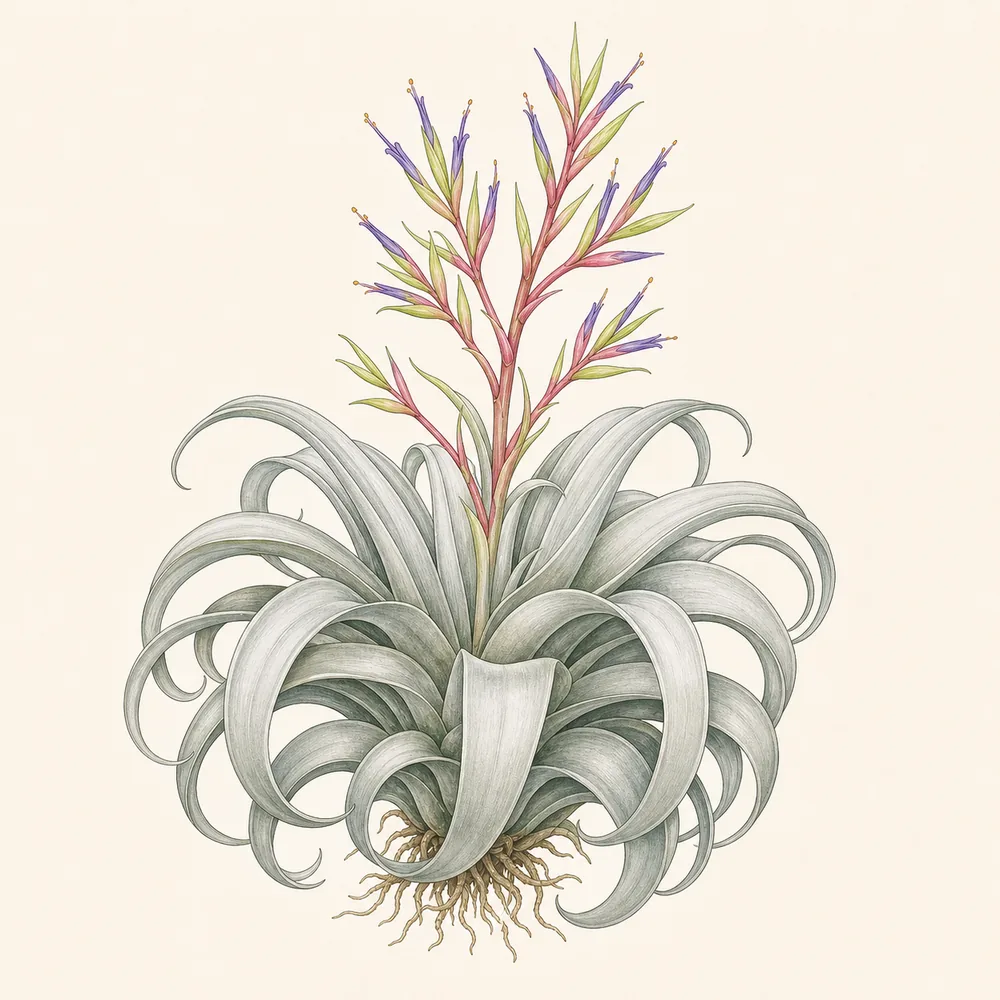
Xerographica Air Plant
The sculptural giant of the air plants — a silvery rosette of broad, curling leaves that grows on nothing but light and the occasional soak. It's the drought-tough one: it wants more light and far less watering than its thirstier cousins, which makes it one of the easiest to keep.
Not listed by ASPCA
The ASPCA doesn't list the xerographica air plant (Tillandsia), so we don't stamp it safe. It has no recorded toxic principle and several of its relatives are listed non-toxic, but with no database entry for this species we flag the gap honestly rather than assume.
Care at a glance
Everything that matters, in six lines. The detail is further down.
Light
Wants the brightest indirect light you can give it, and tolerates some gentle direct sun. Good light keeps the rosette tight and silvery.
Water
Soak in rainwater for 20–30 minutes roughly every two to three weeks — less often than other air plants — then dry it fully upside-down.
Temperature
Happy in warm rooms and copes with heat well. Keep it off cold glass and out of winter draughts.
Humidity
Being drought-adapted, it doesn't need the high humidity Spanish moss craves. Ordinary room air suits it.
Feeding
A dilute air-plant or orchid feed in the soaking water about once a month in spring and summer is plenty.
Mounting
It grows soil-free. Its broad base sits happily in an open bowl or on a stand; never pot it in compost, which rots the crown.
What to do, and when
Growth resumes. Return to soaking every couple of weeks and start the monthly feed as light strengthens.
Peak growth in the brightest light. Soak every two to three weeks, feed monthly, and a mature plant may send up a tall bloom.
Growth slows. Stretch the gaps between soaks and keep it in the brightest spot as daylight fades.
Rest. Soak sparingly, stop feeding, and keep it warm and very bright — the drought-tough one copes well with a dry winter room.
Why this one is the easy air plant
Xerographica comes from dry, sun-baked forests, and its broad, curling leaves are built to store water and shrug off drought. That's the whole secret to it: more light, less water than the fine, thirsty air plants like Spanish moss.
Because it holds so much reserve in those thick leaves, it forgives forgetfulness — a soak every couple of weeks is often plenty. The commonest way to kill it is kindness, by watering it as often as a thirstier species.
Soak well, then dry hard
When you do water, do it properly: a 20–30 minute soak in room-temperature rainwater rehydrates the whole plant. Then shake it out and stand it upside-down until the broad base is bone dry.
That base, where the leaves cup together, is the danger zone. Water pooling there is the one thing that rots an otherwise indestructible plant, so drying it thoroughly matters more than how often you soak.
Flowering and pups
A mature xerographica sends up a striking branched flower spike, sometimes taller than the plant itself, in shades of green, red and yellow. Like all bromeliads it flowers just once.
Afterwards it produces pups around the base. Leave them until they're a good size, then separate them to grow on — a slow but rewarding way to build a collection.
Common problems
Rotten, soft base
Water pooled in the crown. Soak less often, and always dry it fully upside-down so the base never stays wet.
Leaves rolling in and wrinkling
Genuinely thirsty — this is the plant's real thirst signal. Give it a good 20–30 minute soak.
Loose, floppy, opening-out rosette
Usually too little light. It wants brighter conditions than most air plants; move it to your brightest spot.
Bleached or scorched leaves
Too much harsh direct sun. It likes bright light but not baking midday sun through glass — give it bright indirect instead.
Everything a xerographica needs
Bright light, an occasional soak, and no soil at all.
We take no commission on anything in the "save your money" tier — if we don't think you should buy it, we don't link it. How our recommendations work
If you like this, try
Other plants with a similar temperament.
How we checked this
Care cross-checked against the RHS. The ASPCA does not list the xerographica air plant (Tillandsia), so its pet-safety is unconfirmed and we have not stamped it safe. If our page and these sources ever disagree, believe them — and tell us.
Sources: RHS · ASPCA — toxic & non-toxic plants
Last reviewed · August 2026