Cryptanthus
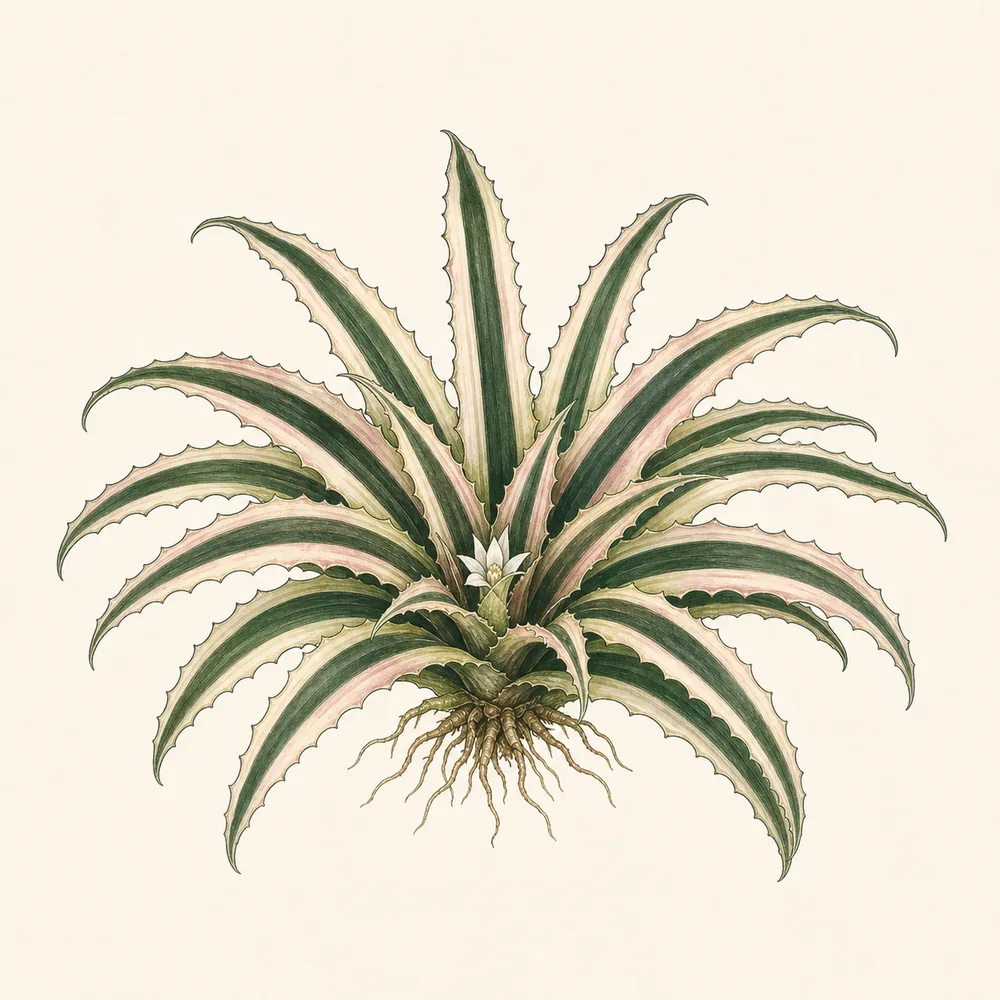
A small, flat, star-shaped bromeliad grown for its striped, wavy-edged leaves in pinks, greens and bronzes. It's the odd one out of the bromeliad family — a ground-dweller with no water-holding cup — so you water the compost rather than a central tank. Warmth and humidity keep it looking its best.
Non-toxic to cats & dogs (ASPCA)
The cryptanthus or earth star is listed as non-toxic to cats and dogs on the ASPCA database (as 'Earth Star', Cryptanthus). A safe, low, star-shaped bromeliad that's happy on a shady windowsill in a pet home.
Care at a glance
Everything that matters, in six lines. The detail is further down.
Light
Bright, filtered light keeps the leaf stripes strong. It takes more shade than most bromeliads, but too little light and the colours fade to plain green.
Water
Unlike its cousins it has no central cup — so water the compost, keeping it lightly moist but never soggy. Let the surface dry a little between waterings. Rainwater or distilled water is kinder than hard tap water.
Temperature
It likes it warm and hates cold. Keep it above about 15 °C and well away from cold draughts and chilly windowsills.
Humidity
A humidity-lover — ideal for a bathroom, a terrarium or a bottle garden. In dry rooms mist it often or stand it on a damp pebble tray.
Feeding
A very dilute balanced feed once a month through spring and summer. It's a light feeder — err well on the weak side.
Soil
A light, free-draining mix — orchid bark blended with a little peat-free compost. The shallow roots must never sit waterlogged.
What to do, and when
Growth resumes as the light and warmth return. Start light monthly feeding and pot up any pups from around the base of last year's plant.
Active growth. Keep the mix lightly moist, humidity high, and the leaves out of scorching direct sun so the stripes stay bright.
Ease back watering and stop feeding as growth slows. Watch for cold nights — it dislikes any chill.
Keep it warm and humid indoors, water sparingly, and never let it stand cold and wet. A steamy bathroom suits it now.
The bromeliad that breaks the rules
Most bromeliads are epiphytes that gather water in a central cup. Cryptanthus is different — its common name, earth star, is the giveaway. It grows on the ground rather than up in the trees, sits almost flat, and has no water-holding cup at all.
That changes how you water it. Instead of filling a central tank, you keep the compost lightly moist, letting the surface dry a touch between drinks. Everything else — warmth, humidity, bright filtered light, an airy mix — it shares with the rest of the family.
Warmth and humidity make it
This is a plant from warm, humid forest floors, and it shows. Cold, dry, centrally heated air turns the leaf tips brown and dulls the colours. It's one of the best bromeliads for a terrarium or bottle garden, where the enclosed air stays humid.
Out in the open room, a steamy bathroom or kitchen suits it, or stand the pot on a tray of damp gravel and mist the leaves regularly to lift the moisture around it.
Flowers once, then makes pups
Like all bromeliads, each rosette flowers just once — here, small white flowers nestle low in the centre — and then that rosette slowly fades over the following months. It's not a failure on your part; it's how the plant works.
As the parent declines it produces pups (offsets) around and between the leaves. Let them grow to a decent size with a few roots, then detach and pot them individually to keep a fresh generation going.
Common problems
Leaf colours fading to green
Too little light. Move it somewhere brighter but still out of harsh direct sun, and the stripes should return.
Brown, crispy leaf tips
Dry air or hard water. Raise the humidity, mist more often, and switch to rainwater or distilled water.
Soft, rotting centre or base
Overwatering or a soggy mix. Let the compost dry a little more between waterings and make sure the pot drains freely.
Parent rosette dying back
Normal after flowering — a bromeliad blooms once then slowly dies. Let it feed the pups, then detach and pot them on.
Everything an earth star needs
Warmth, humidity, an airy mix, and the compost kept just moist.
We take no commission on anything in the "save your money" tier — if we don't think you should buy it, we don't link it. How our recommendations work
If you like this, try
Other plants with a similar temperament.
How we checked this
Care cross-checked against the RHS. Non-toxicity taken from the ASPCA database, which lists the Earth Star (Cryptanthus) as non-toxic to cats and dogs. If our page and these sources ever disagree, believe them — and tell us.
Sources: RHS · ASPCA — toxic & non-toxic plants
Last reviewed · August 2026