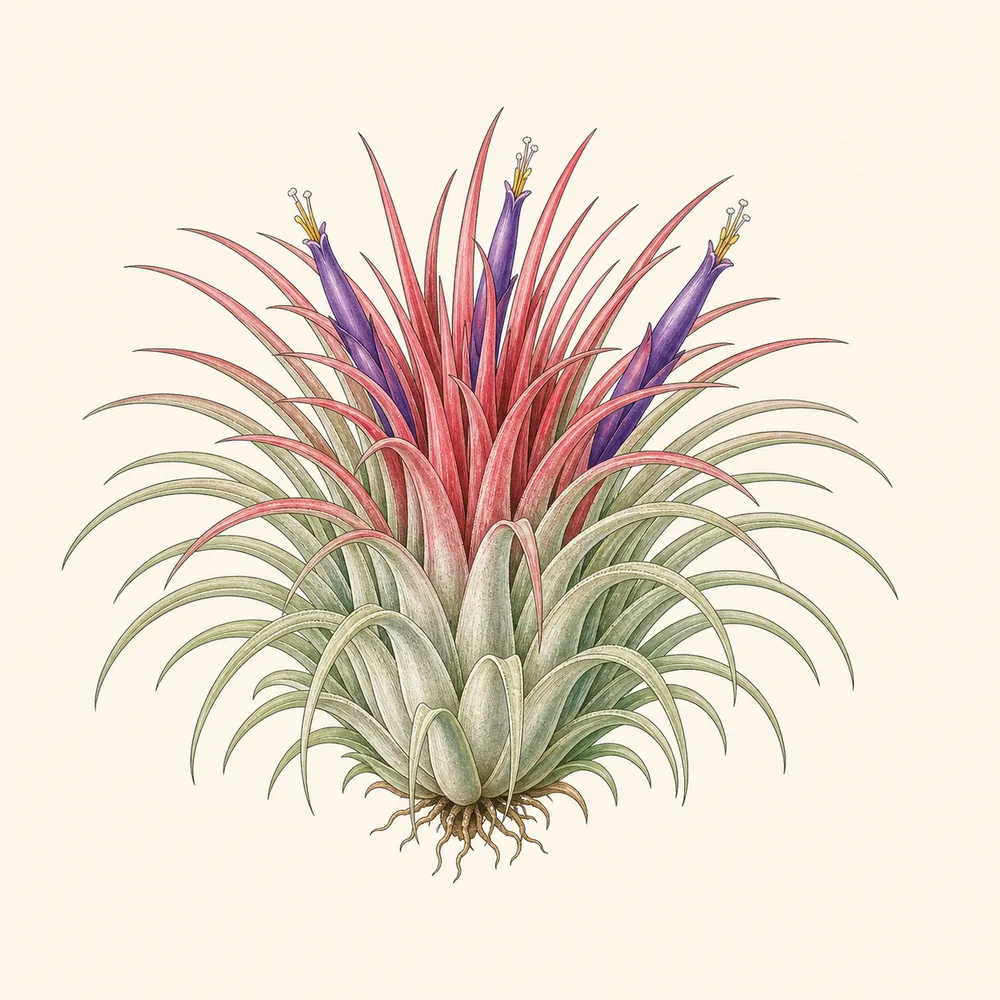
Air Plant
The plant that grows on nothing but air and water — no pot, no compost, no roots to speak of. It drinks and feeds through its leaves, so all it really asks is a regular soak, bright indirect light, and enough airflow to dry out afterwards.
Not listed by ASPCA
The ASPCA doesn't list the air plant (Tillandsia), so we don't stamp it safe. It has no recorded toxic principle and several of its relatives are listed non-toxic, but with no database entry for this species we flag the gap honestly rather than assume.
Care at a glance
Everything that matters, in six lines. The detail is further down.
Light
A bright spot out of harsh midday sun — near a window is ideal. Too dark and it slowly starves; scorching sun dries it to a crisp.
Water
Dunk it in room-temperature rainwater for 10–30 minutes every week or so, shake it out, and lay it upside-down to dry so no water sits in the centre.
Temperature
Ordinary warm room temperatures. Keep it away from cold draughts and frosty glass in winter.
Humidity
A bathroom or kitchen suits it well. In dry rooms, mist it between soaks to keep the leaves plump.
Feeding
Add a specialist air-plant or dilute orchid feed to the soaking water about once a month in spring and summer.
Mounting
It grows soil-free. Display it in a bowl, on driftwood or in a hanging holder — never bury the base in compost, which rots it.
What to do, and when
Growth picks up. Return to weekly soaks and start the monthly feed as the light strengthens.
Peak season — soak weekly, feed monthly, and mist in hot dry spells. Mature plants may throw up a colourful flower spike.
Ease back on soaking as growth slows and light drops. Keep it bright and drying out well between waters.
Near-rest. Soak less often, skip feeding, and keep it warm, bright and off cold windowsills.
Watering the plant with no roots
Air plants take up water and nutrients through tiny scales on their leaves, not through roots — the wiry roots they do grow are just anchors. That's why soaking beats misting for keeping them alive long-term: a proper 10–30 minute dunk in rainwater every week or so rehydrates the whole plant.
Tap water is usually fine but hard water leaves chalky marks and its softness can put them off. Rainwater or cooled boiled water is kinder. Water in the morning so the plant has all day to dry.
Why airflow is half the battle
Air plants breathe and dry through their leaves, so a stuffy, still corner is bad news — they need to dry within a few hours of watering. A spot with gentle air movement, near a window or in an open dish, keeps them healthy.
Avoid sealed terrariums and closed glass globes unless you can take the plant out to soak and dry it. Trapped damp is what turns the base brown and soft.
Flowering, then pups
Each air plant flowers only once in its life, often blushing red or purple before sending up a bright bloom. It isn't dying — after flowering it produces pups, baby plants around the base.
Leave the pups attached until they're about a third of the parent's size, then gently twist them free to grow on. One plant slowly becomes a colony this way.
Common problems
Brown, mushy base
Rot from water sitting in the crown. Always dry the plant upside-down after soaking and improve the airflow around it.
Leaf tips going brown and crispy
Too dry, or sun scorch. Soak more regularly, mist between soaks, and move it out of harsh direct sun.
Leaves curling and wrinkling
Thirsty. The leaves roll inwards when dehydrated — give it a good long soak and it should plump back up.
Pale, floppy, no growth
Usually too little light. Move it somewhere brighter and start the monthly feed in the growing season.
Everything an air plant needs
No pot, no compost — just water, light and airflow.
We take no commission on anything in the "save your money" tier — if we don't think you should buy it, we don't link it. How our recommendations work
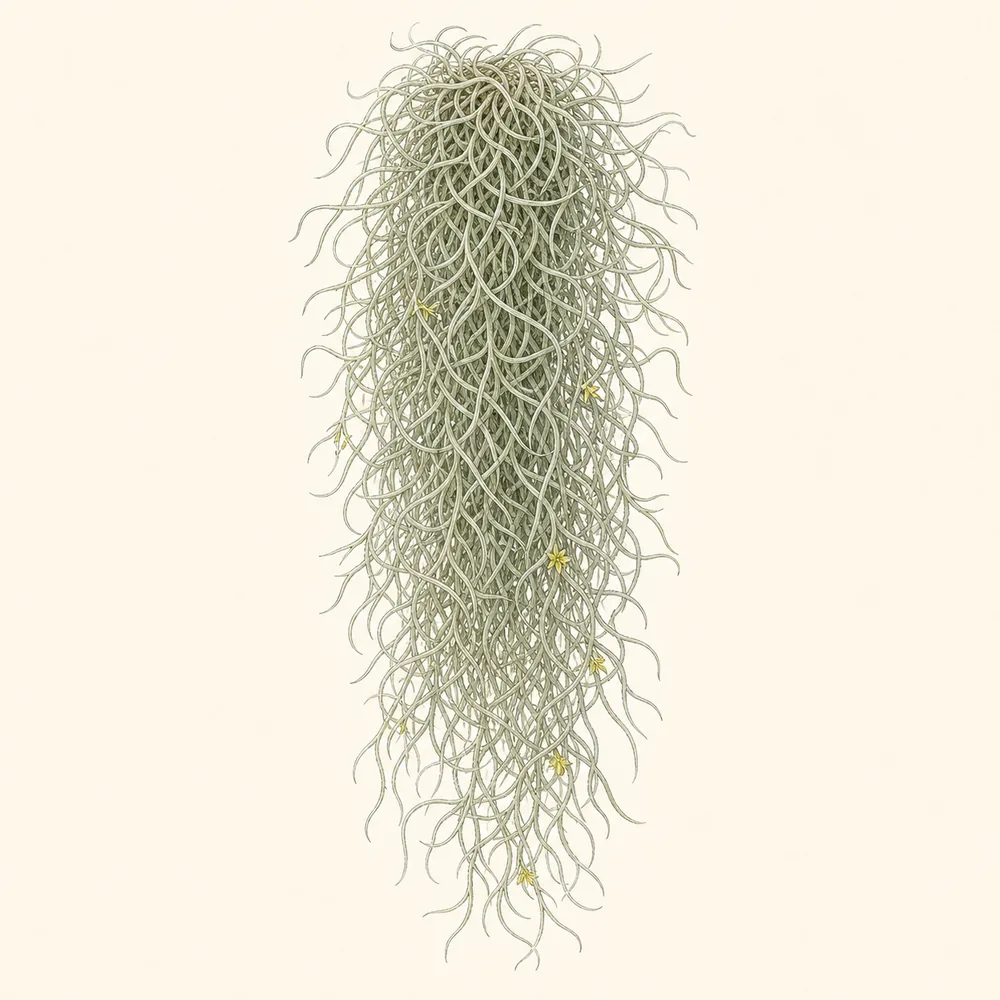
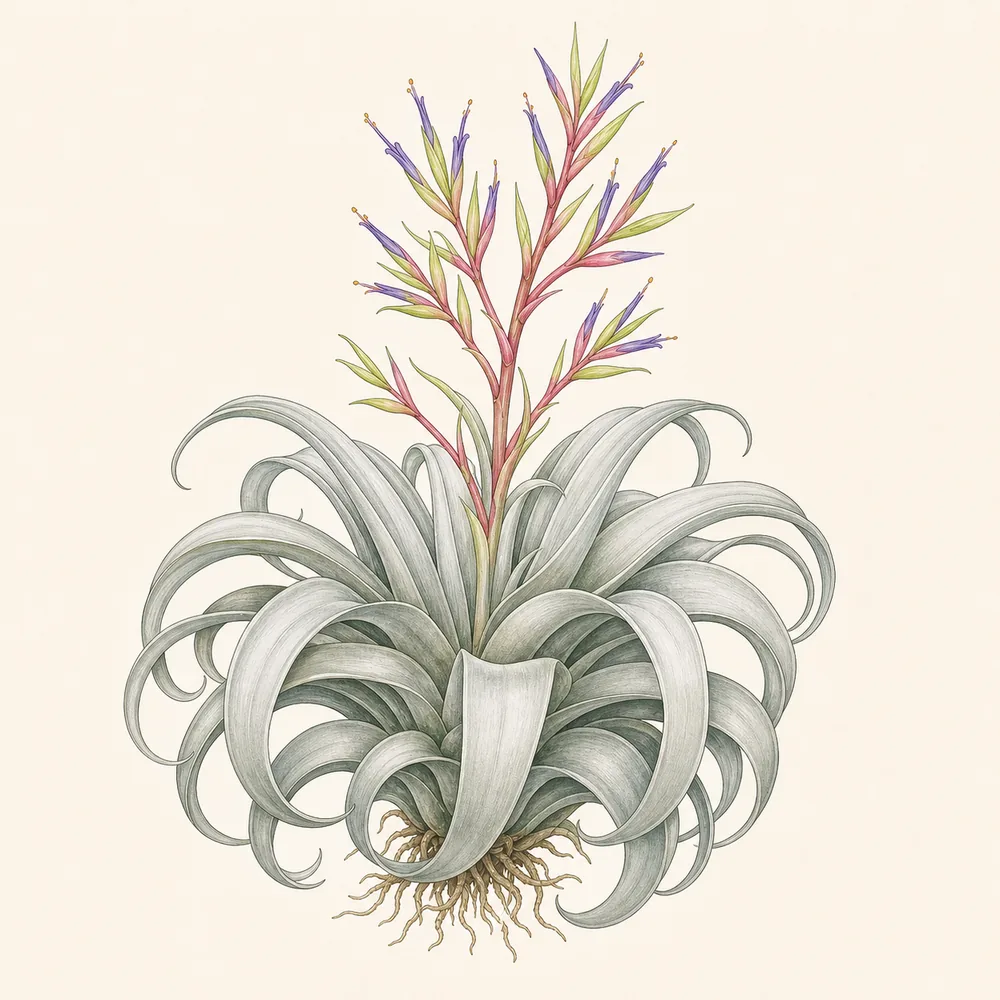
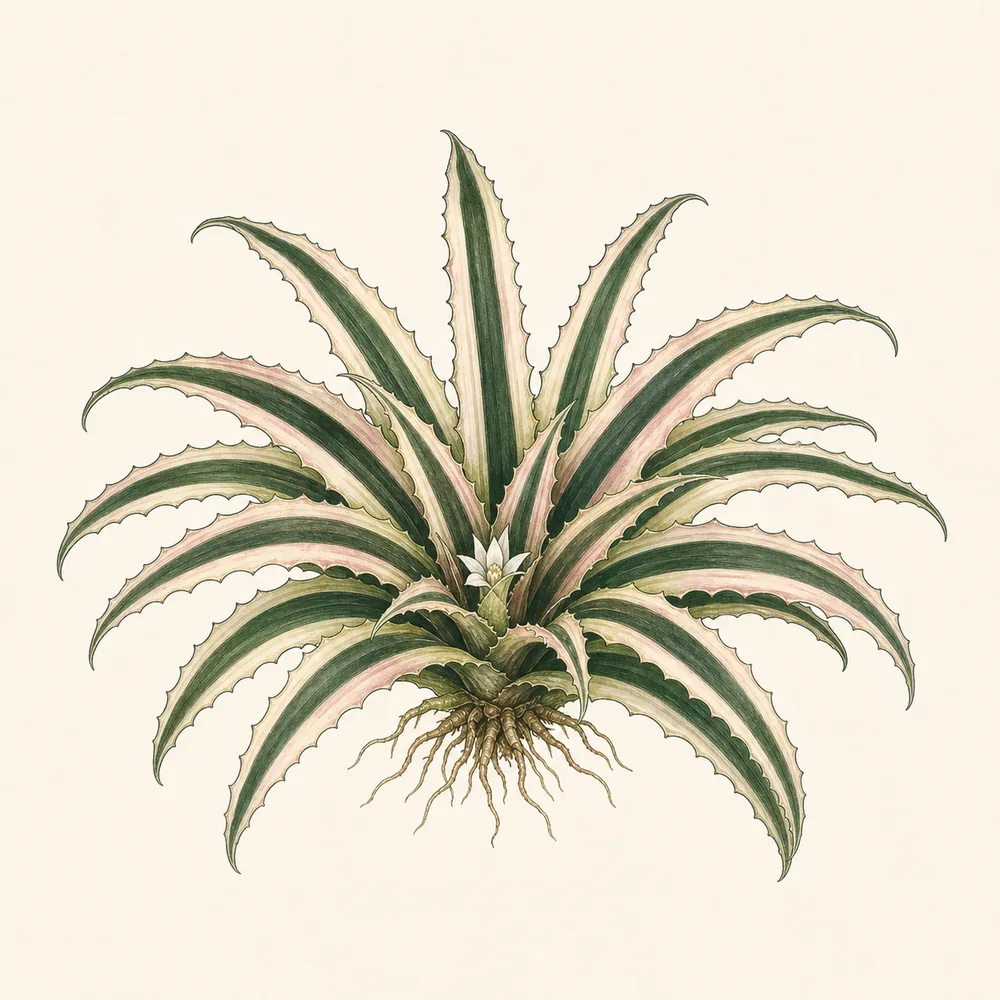
If you like this, try
Other plants with a similar temperament.
How we checked this
Care cross-checked against the RHS. The ASPCA does not list the air plant (Tillandsia), so its pet-safety is unconfirmed and we have not stamped it safe. If our page and these sources ever disagree, believe them — and tell us.
Sources: RHS · ASPCA — toxic & non-toxic plants
Last reviewed · August 2026