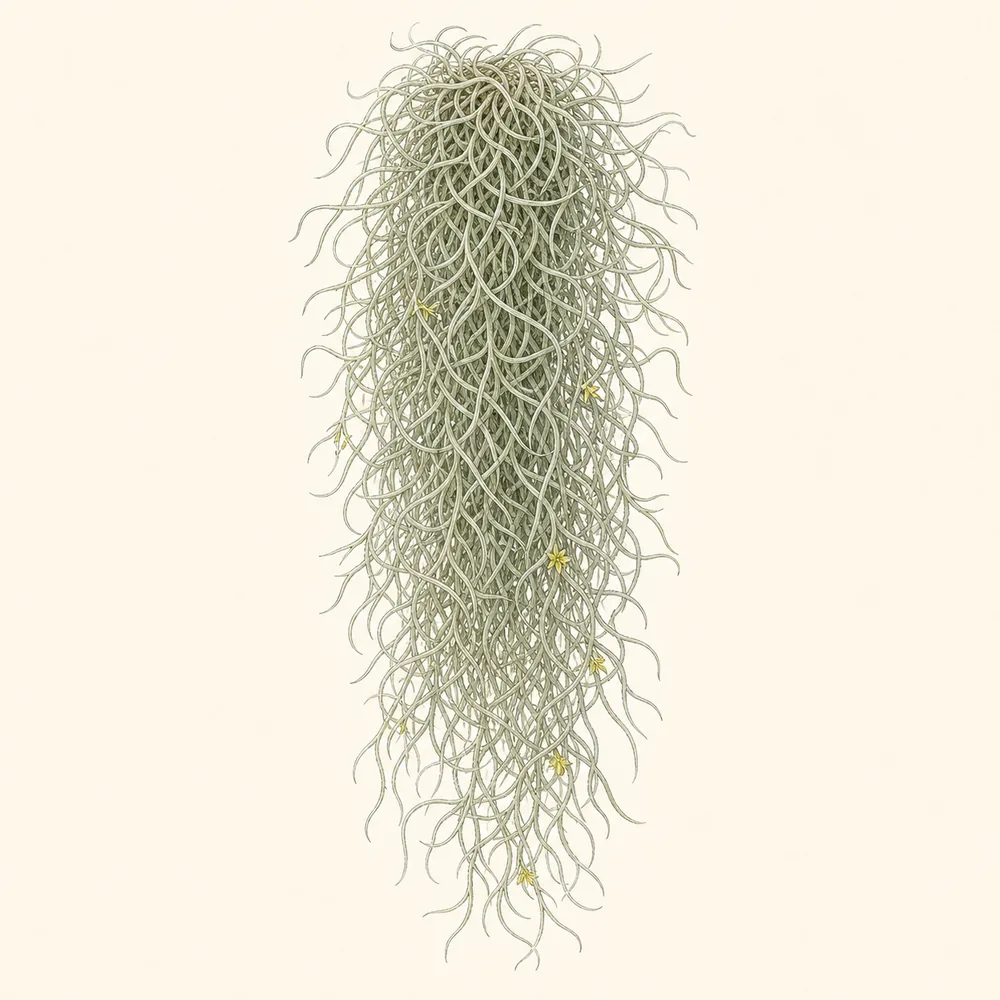
Spanish Moss
Not a moss at all but a rootless air plant that hangs in long, silvery curtains, drinking humidity and the odd soak straight through its threads. Give it damp air and moving air and it drapes beautifully; let it sit dry or stuffy and it browns from the inside.
Not listed by ASPCA
The ASPCA doesn't list Spanish moss (Tillandsia usneoides), so we don't stamp it safe. It has no recorded toxic principle and several of its relatives are listed non-toxic, but with no database entry for this species we flag the gap honestly rather than assume.
Care at a glance
Everything that matters, in six lines. The detail is further down.
Light
A bright spot out of scorching sun. Good light keeps the strands silvery and growing; deep shade thins them out.
Water
Mist every few days and give the whole clump a 10–20 minute dunk in rainwater weekly, then hang it up to dry fully.
Temperature
Warm room temperatures suit it. Keep it away from cold draughts and unheated rooms in winter.
Humidity
This is the make-or-break factor. It wants damp air, so a bathroom, kitchen or a spot it can be misted often suits it best.
Feeding
A dilute air-plant or orchid feed in the soaking water about once a month through spring and summer.
Mounting
It grows soil-free. Drape it over a hook, branch or rail so air moves right through the strands; never pack it in compost.
What to do, and when
Growth resumes. Step misting back up, soak weekly and begin the monthly feed as light and warmth return.
Peak growth. Keep humidity up, soak weekly and mist in hot dry weather; tiny fragrant flowers may appear.
Growth slows. Ease off soaking a little but keep misting, especially once the heating goes on and dries the air.
Rest. Soak less, stop feeding, and watch indoor heating — it dries the air, so mist to stop the strands crisping.
It lives on humidity, not roots
Spanish moss has no roots at all — every strand takes up water and nutrients through tiny grey scales along its length. That silvery colour is those scales; the plant greens up a little when it's wet and drinking.
Because it feeds on damp air as much as on soaking, humidity is the single biggest factor in keeping it alive indoors. A dry living room in winter is the hardest place to grow it well.
Mist, soak, and let it breathe
Combine frequent misting with a proper weekly soak. Mist keeps the surface damp between soaks; the soak rehydrates the whole clump. After soaking, hang it somewhere airy so it dries within a few hours.
Airflow matters as much as water. Packed tightly into a still corner, the inner strands stay wet, go brown and rot. Draped loosely where air moves through it, it stays fresh.
Trimming and dividing
Spanish moss just keeps getting longer, and you can trim it to any length with scissors — the cut strands carry on growing. Pull out any brown, mushy sections as you go.
To make more, simply pull off a handful and hang it somewhere else; each piece grows on independently. It's one of the easiest air plants to share.
Common problems
Browning from the inside
The clump is staying wet in the middle. Hang it looser, improve airflow, and make sure it dries fully after each soak.
Dry, brittle, crumbling strands
Too dry, usually from low humidity or winter heating. Mist more often and soak weekly in rainwater.
Thinning and going pale
Too little light, or underfeeding. Move it brighter and add a weak feed to the soak monthly in the growing season.
Chalky white marks
Hard-water deposits from tap water. Switch to rainwater or cooled boiled water for misting and soaking.
Everything Spanish moss needs
Damp air, moving air, and a weekly soak — no soil.
We take no commission on anything in the "save your money" tier — if we don't think you should buy it, we don't link it. How our recommendations work
If you like this, try
Other plants with a similar temperament.
How we checked this
Care cross-checked against the RHS. The ASPCA does not list Spanish moss (Tillandsia usneoides), so its pet-safety is unconfirmed and we have not stamped it safe. If our page and these sources ever disagree, believe them — and tell us.
Sources: RHS · ASPCA — toxic & non-toxic plants
Last reviewed · August 2026