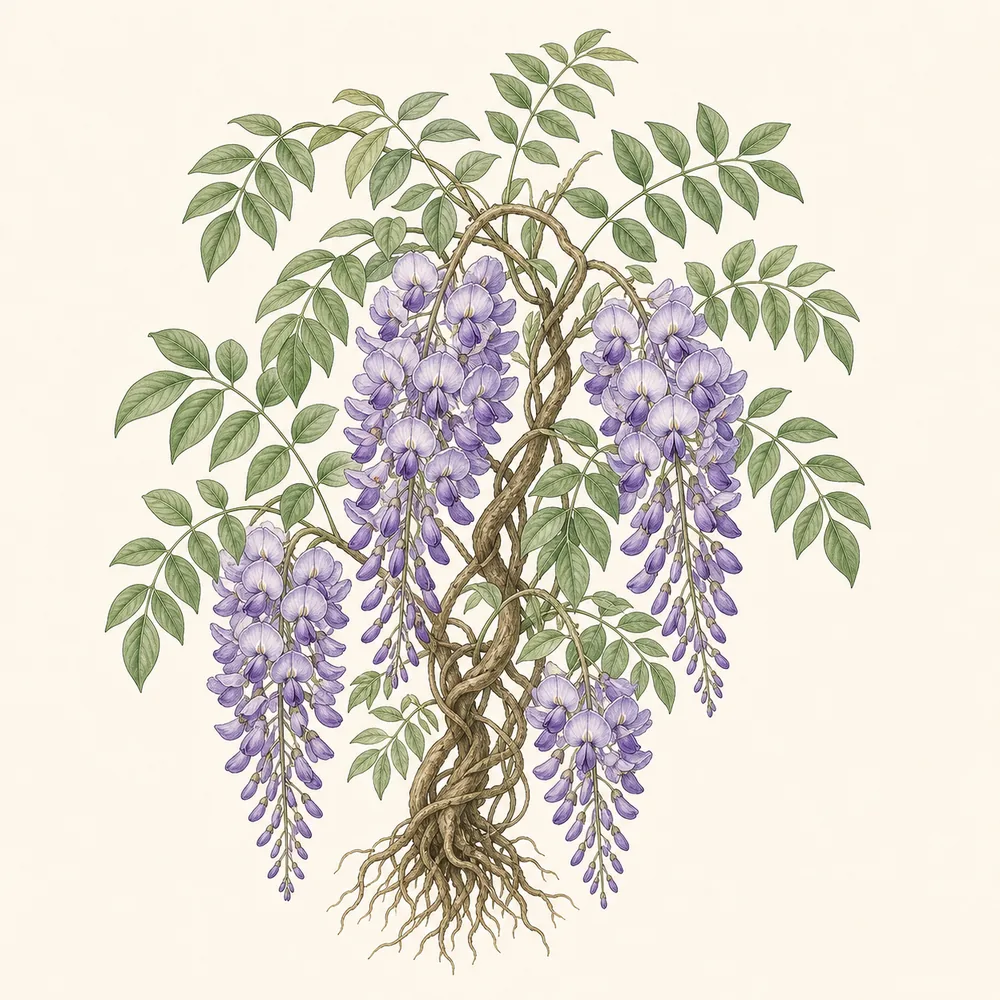
Wisteria
The classic English wall climber — cascading, scented racemes of lilac-blue in late spring that stop passers-by in their tracks. Vigorous and long-lived, but it only flowers freely if you master its twice-yearly prune.
Toxic to cats, dogs & people — the pods especially
Wisteria seeds and pods are toxic — they contain wisterin and a lectin — and the plant is flagged by both the ASPCA and RHS. Eating the velvety pods or bean-like seeds causes vomiting, diarrhoea and dehydration. The pods are attractive to children, so keep them out of reach.
Care at a glance
Everything that matters, in six lines. The detail is further down.
Position
Needs a warm, sunny wall or sturdy structure. Sun ripens the wood that carries next year's flowers.
Water
Keep newly planted wisteria watered, especially in spring — drought as buds form can cause them to drop.
Hardiness
Hardy once established, though a late frost can occasionally nip the opening flower buds.
Soil
Grows on most soils; avoid very shallow chalk. Improve the planting hole with garden compost.
Feeding
A high-potash feed such as sulphate of potash in spring aids flowering. Avoid high-nitrogen feeds — they push leaf, not bloom.
Pruning
Cut whippy summer growth back to five or six leaves in July, then to two or three buds in February. This is the key to flowering.
What to do, and when
The flowers open on the bare framework; tie in structural shoots and enjoy the scent.
In July, shorten this year's long whippy side-shoots back to five or six leaves.
Ease off watering and feeding; tie in any shoots needed to extend the framework.
In February, cut the summer-pruned shoots back to two or three buds to form flowering spurs.
The prune that makes it flower
Wisteria has a reputation for being shy to flower, and nearly always the cause is pruning — or the lack of it. The plant needs cutting back twice a year: once in July and again in February. Miss it and you get a wall of leaf and barely a bloom.
In July, shorten the long, whippy summer shoots to five or six leaves. In February, cut those same shoots back again to two or three buds. This builds the short flowering spurs that carry the racemes and keeps the whole plant in check.
Strong support and patience
Wisteria is hugely vigorous and heavy — it will pull down flimsy trellis and prise open weak gutters. Fix heavy-gauge wires or a solid framework to the wall before planting, and expect to manage it for decades.
Buy a grafted, named plant in flower rather than a cheap seedling. Seed-raised wisteria can take fifteen years or more to bloom, if it ever does; a grafted plant of a known variety flowers young and true to colour.
Common problems
Lots of growth, no flowers
Usually the twice-yearly prune has been missed, or the plant is a young seedling, or it's been fed too much nitrogen.
Buds dropping before they open
Dry roots in spring, or a late frost catching the buds. Keep it watered as flowers form.
Yellowing leaves between the veins
Chlorosis, often on alkaline soil. Feed with sequestered iron and mulch to improve the ground.
Pulling its support down
It's enormously vigorous. Mount heavy-gauge wires or a solid structure and prune it hard on schedule.
Everything a wisteria needs
A sunny wall, serious support, and the discipline to prune twice a year.
We take no commission on anything in the "save your money" tier — if we don't think you should buy it, we don't link it. How our recommendations work
If you like this, try
Other plants with a similar temperament.
How we checked this
Care cross-checked against the RHS. Toxicity confirmed against the ASPCA database and flagged by the RHS — the seeds and pods contain wisterin and a lectin, causing vomiting, diarrhoea and dehydration if eaten. If our page and these sources ever disagree, believe them — and tell us.
Sources: RHS · ASPCA — toxic & non-toxic plants
Last reviewed · July 2026