Climbing Hydrangea
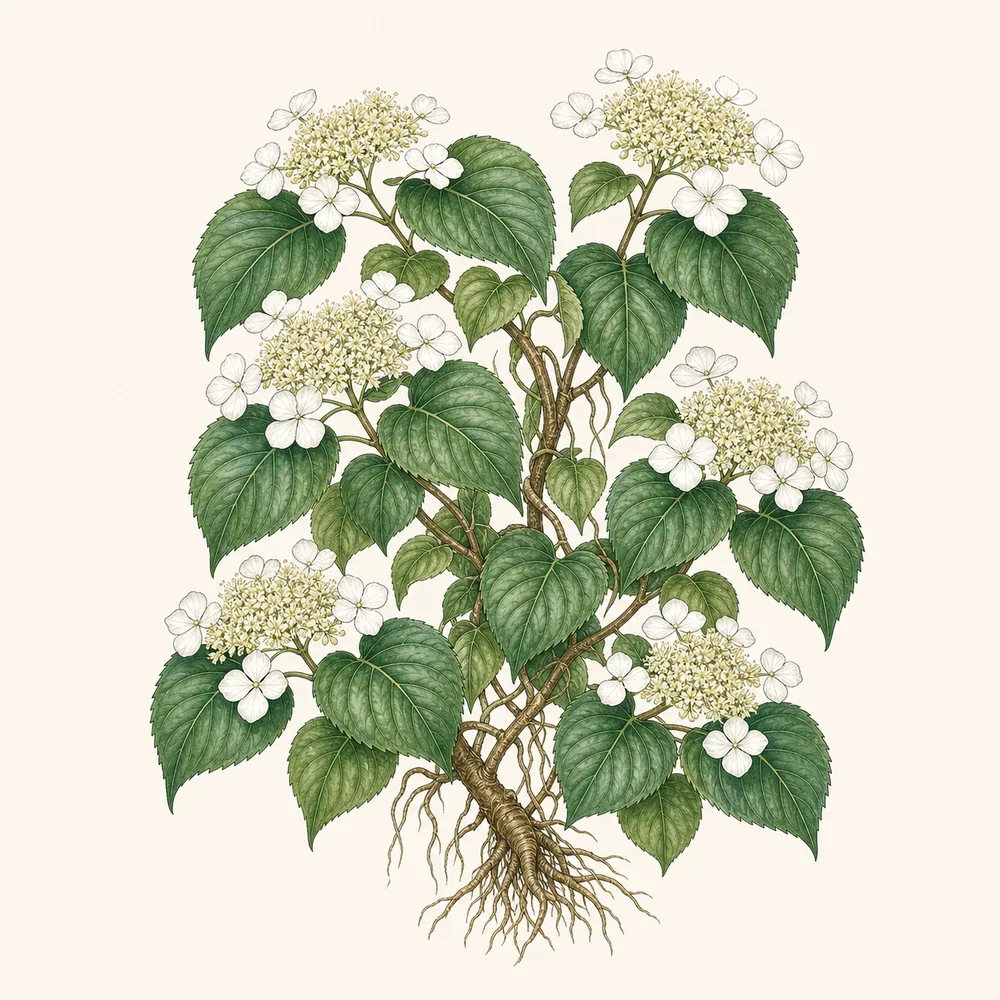
One of the few climbers that genuinely thrives on a cold, shady wall. It clings on by itself with aerial roots, is slow to settle in, then becomes a strong, self-supporting climber smothered in flat white lacecap flowers in early summer.
Toxic to cats & dogs if eaten
Climbing hydrangea (Hydrangea) is listed as toxic to cats and dogs on the ASPCA database. It contains cyanogenic glycosides; eating a lot causes vomiting, diarrhoea and lethargy. Small nibbles rarely cause serious harm, but keep grazing pets off it.
Care at a glance
Everything that matters, in six lines. The detail is further down.
Position
One of the best climbers for a north- or east-facing wall. It flowers in shade, though a little more light gives a few more blooms.
Water
Water well for the first couple of years — shady walls stay dry. Once established it's far more self-reliant.
Hardiness
Tough and completely hardy across the UK. No winter protection required.
Soil
A rich, moist but well-drained soil with plenty of leaf-mould or compost worked in suits it best.
Feeding
A general feed and a thick mulch of compost in spring. Little else is needed once it's growing well.
Pruning
Barely needs pruning. Trim back overlong or outward shoots just after flowering to keep it flat against the wall.
What to do, and when
Growth resumes and it starts to cling — feed, mulch and be patient with young plants still finding their feet.
Flat white lacecap flowers open in early summer against fresh green leaves; keep the roots moist.
Leaves turn butter-yellow before falling, and the peeling cinnamon bark comes into its own.
Bare but structural — the reddish, flaking stems and old flower heads give winter interest against the wall.
Patience first, then it flies
Climbing hydrangea has a reputation for doing nothing for a year or two, and it's deserved. It spends its early life building roots, and it can seem to sulk before it starts to climb — but once it's established, it becomes genuinely vigorous and self-clinging, eventually covering a large wall unaided.
It grips by aerial roots along the stems, so it needs no wires or trellis on a solid wall. Just help the first shoots make contact, keep it watered, and don't give up on it in that slow opening act.
The right wall for it
This is the plant to reach for when you have a difficult shady, cold aspect. It flowers happily on a north wall where most climbers refuse, and the flat white lacecap heads light up a dim corner in early summer.
It does earn its keep beyond the flowers, too: good yellow autumn colour and handsome peeling, cinnamon-coloured bark that shows once the leaves drop.
Common problems
No flowers for the first years
Normal. It establishes slowly and often won't flower well until it's a few years old — keep it fed, watered and be patient.
Not clinging to the wall
The aerial roots need contact and moisture to grip. Tie the first shoots in temporarily and keep the young plant well watered.
Wilting in dry summers
Drought at the roots, common on a sheltered wall. Water deeply and mulch thickly to hold moisture.
Yellowing leaves in summer
Usually dryness or, on very chalky soil, a little chlorosis. Improve the soil with organic matter and keep it moist.
Everything a climbing hydrangea needs
A shady wall, moist rich soil, and the patience to let it establish.
We take no commission on anything in the "save your money" tier — if we don't think you should buy it, we don't link it. How our recommendations work
If you like this, try
Other plants with a similar temperament.
How we checked this
Care cross-checked against the RHS. Toxicity taken from the ASPCA database, which lists Hydrangea as toxic to cats and dogs — cyanogenic glycosides causing vomiting, diarrhoea and lethargy if a lot is eaten. If our page and these sources ever disagree, believe them — and tell us.
Sources: RHS · ASPCA — toxic & non-toxic plants
Last reviewed · July 2026