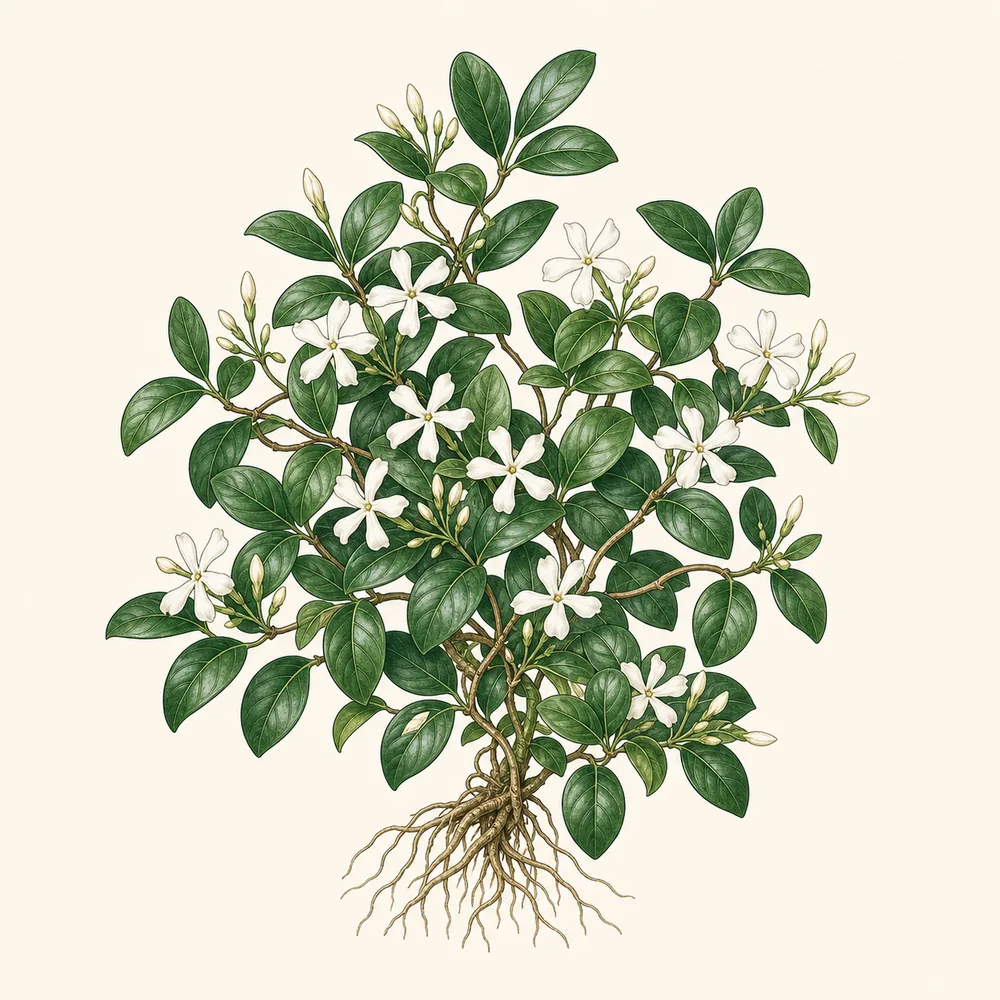
Star Jasmine
An evergreen, self-twining climber grown for glossy dark leaves and small white pinwheel flowers that scent a whole garden on a warm evening. Slightly tender, so it wants a sheltered, sunny wall to give its best.
Safe around cats & dogs
Star jasmine (Trachelospermum jasminoides) is listed as non-toxic to cats and dogs on the ASPCA database. It isn't a true jasmine, and it's a safe, sweetly scented evergreen climber for a garden with pets.
Care at a glance
Everything that matters, in six lines. The detail is further down.
Position
A warm, sheltered spot in full sun or light shade. It flowers most freely with sun on its face and shelter from cold winds.
Water
Keep it watered through its first two summers while the roots establish; once settled it copes with ordinary spells of dry weather.
Hardiness
Borderline hardy. A warm wall and a mulch over the roots see it through most UK winters; in cold gardens it can lose leaves in a hard frost.
Soil
Any decent, well-drained soil, ideally neutral to slightly acid. It dislikes cold, wet feet in winter.
Feeding
A general-purpose feed in spring and a mulch of compost. Too much nitrogen gives leaf at the expense of flower.
Pruning
It twines by itself, so little is needed. Tidy and shorten wayward growth after flowering in late summer to keep it in bounds.
What to do, and when
New growth resumes — feed, mulch the roots and tie in or guide any loose stems onto their support.
Peak flowering and scent from midsummer; keep young plants watered and enjoy it near a door or seat.
Growth slows; ease off watering and let the wood ripen before winter.
Evergreen but resting. Protect the roots with a mulch and expect some leaf drop or bronzing in hard frosts.
It's all about the wall
Star jasmine is grown as much for scent as for looks, and both depend on warmth and shelter. Against a sunny, protected wall it flowers for weeks and shrugs off winter; in an exposed, shady spot it sulks, barely flowers, and browns in the cold.
It climbs by twining, so it needs something to wrap around — wires or a trellis rather than a bare wall. Guide the first stems onto the support and it takes over from there.
Getting it through winter
The roots are the vulnerable part, so a thick mulch in autumn matters more than fleecing the top. A plant that loses some leaves in a hard frost will usually reshoot from the base in spring.
In a genuinely cold or windy garden, grow it in a large pot you can move to shelter, or accept that it may be cut back some winters.
Common problems
Few or no flowers
Usually too little sun, or too much nitrogen feed. Give it the sunniest sheltered wall you have and ease off rich feeding.
Leaves browning in winter
Cold-damage on a borderline-hardy plant. Mulch the roots and expect some reshooting in spring; move to a warmer spot if it recurs.
Yellowing leaves
Often waterlogged soil or, on chalky ground, a lack of iron. Improve drainage and mulch; a sequestered-iron feed helps on alkaline soil.
Slow to get going
Star jasmine takes a year or two to establish before it climbs strongly. Keep it watered and be patient — it speeds up.
Everything a star jasmine needs
A warm wall, wires to twine up, and shelter from cold winds.
We take no commission on anything in the "save your money" tier — if we don't think you should buy it, we don't link it. How our recommendations work
If you like this, try
Other plants with a similar temperament.
How we checked this
Care cross-checked against the RHS. Toxicity confirmed against the ASPCA database, which lists Trachelospermum jasminoides (star jasmine) as non-toxic to cats and dogs. If our page and these sources ever disagree, believe them — and tell us.
Sources: RHS · ASPCA — toxic & non-toxic plants
Last reviewed · July 2026