Wintergreen
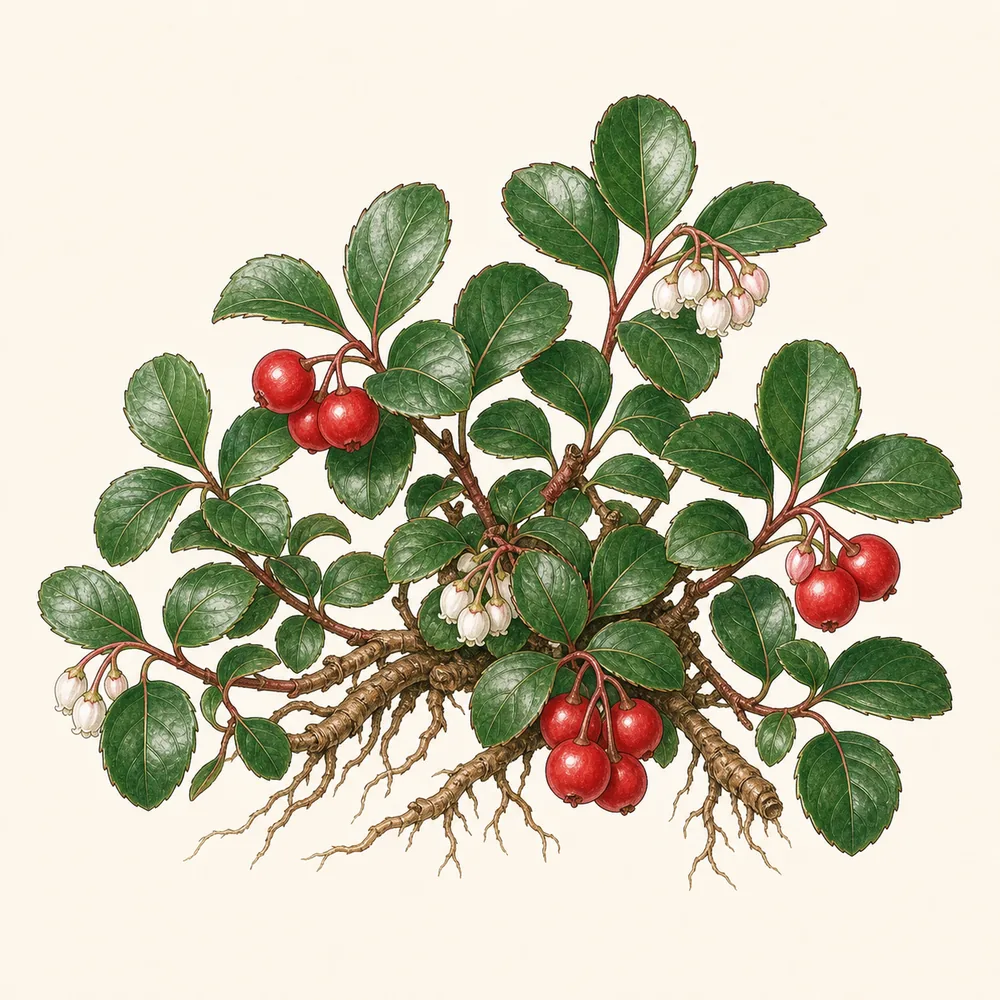
A low, creeping evergreen that makes glossy dark-green ground cover in acid soil and shade, then lights up autumn and winter with fat scarlet berries that sit among the leaves for months. Crush a leaf and you get the unmistakable minty scent of oil of wintergreen. Easy and undemanding on the right ground, it's one of the best small shrubs for a shady, damp corner.
Not listed by ASPCA
The ASPCA doesn't list wintergreen (Gaultheria), so we don't stamp it safe. Note its leaves and oil hold methyl salicylate ('oil of wintergreen'), which can be harmful if eaten in quantity — so treat it with caution. With no database entry we flag the gap honestly rather than guess.
Care at a glance
Everything that matters, in six lines. The detail is further down.
Position
One of the few shrubs that's genuinely happy in shade. Dappled or full shade suits it; avoid hot, baking sun, which scorches the leaves.
Water
It likes soil that stays reliably moist, ideally watered with rainwater. Don't let it dry out, especially in its first year and in dry shade under trees.
Hardiness
Tough and fully hardy across the UK, evergreen through the coldest winters and holding its berries through frost.
Soil
An ericaceous plant that needs acid soil — it won't thrive on chalk or lime. On alkaline ground, grow it in ericaceous compost in pots and water with rainwater.
Feeding
Undemanding on decent leafy soil. A mulch of leaf mould or a light ericaceous feed in spring is plenty.
Pruning
No real pruning needed. Trim back any stems straying out of place in spring; it spreads slowly by creeping roots to form a low mat.
What to do, and when
New growth begins on the creeping stems. Plant now into acid, leafy soil, water in with rainwater, and mulch with leaf mould to lock in moisture.
Small, waxy pink-white bell flowers appear among the leaves through summer, quietly setting the berries to come. Keep the ground moist in dry weather.
The show begins — fat scarlet berries ripen and the glossy leaves often flush bronze-red. It's a good time to plant while the soil is still warm.
Evergreen and colourful, with the red berries persisting for months against dark foliage — one of the best low plants for winter interest in shade.
Ground cover for acid shade
Wintergreen earns its keep by thriving where a lot of plants sulk: shade. It creeps slowly by underground runners to make a low, dense mat of glossy evergreen leaves under shrubs, at the front of a woodland border, or along a shady path.
The one firm rule is soil. It's an ericaceous plant that needs acid, moist, humus-rich ground and won't do well on chalk or lime. If your soil is alkaline, grow it in a pot or raised bed of ericaceous compost and water with rainwater rather than hard tap water.
Berries and scent that last for months
After a summer of small waxy bell flowers, wintergreen produces its real draw — fat scarlet berries that ripen in autumn and sit among the dark leaves right through winter, often into spring. Set against the glossy foliage, they're brilliant for the coldest, dullest months.
Crush a leaf and you'll catch the sharp, minty smell of oil of wintergreen — the plant's leaves and oil contain methyl salicylate, the source of that classic scent and flavouring. It's the same compound our safety note flags as best treated with caution rather than eaten.
Slow, well-behaved and low-maintenance
This is about as low-effort as a shrub gets. It spreads gently rather than aggressively, so it fills a space over a few years without swamping neighbours, and it needs no real pruning — just trim any stray stems in spring.
The main thing is not to let it bake or dry out. In dry shade under greedy tree roots it can struggle, so a spring mulch of leaf mould and a drink in droughts keeps the mat lush and the berry crop generous.
Common problems
Yellowing leaves, poor growth
Almost always lime in the soil or water. Wintergreen needs acid conditions — grow in ericaceous compost and water with rainwater.
Scorched, crisping leaves
Too much hot sun, or the soil drying out. Move it into shade and keep the ground reliably moist, especially in summer.
Sparse growth, few berries
Often dry shade under trees, or too deep a gloom. Mulch and water to keep it moist, and give it dappled rather than pitch-dark shade.
Slow to spread
Patience — it creeps gently by nature. Plant in groups for quicker cover and keep it fed with leaf mould to speed things along.
Everything a wintergreen patch needs
Acid, moist soil in shade, plenty of leaf mould, and rainwater.
We take no commission on anything in the "save your money" tier — if we don't think you should buy it, we don't link it. How our recommendations work
If you like this, try
Other plants with a similar temperament.
How we checked this
Care cross-checked against the RHS. The ASPCA does not list wintergreen (Gaultheria), so its pet-safety is unconfirmed and we have not stamped it safe. If our page and these sources ever disagree, believe them — and tell us.
Sources: RHS · ASPCA — toxic & non-toxic plants
Last reviewed · August 2026