Leucothoe
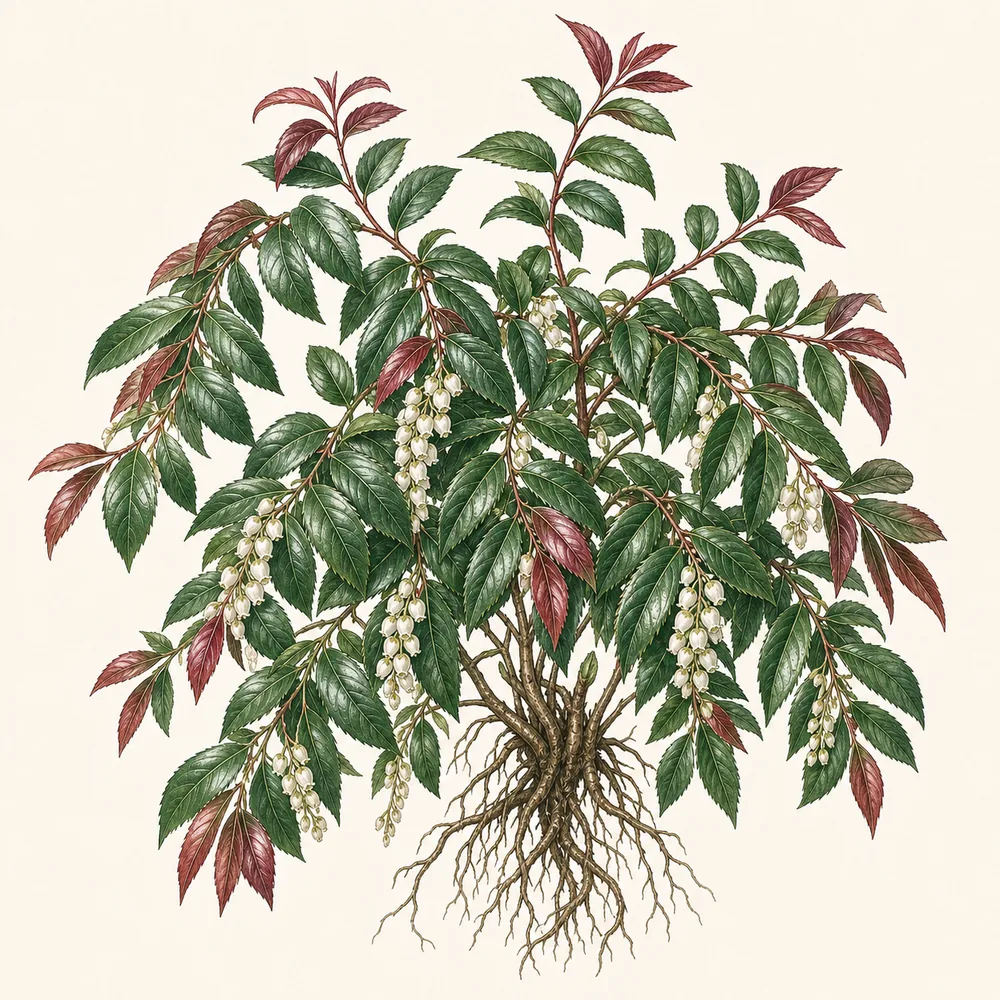
An arching evergreen shrub grown above all for its foliage, which shifts through cream, pink, bronze and deep wine-red as the seasons turn, with the richest colour in autumn and winter. Easy in the same acid, shady conditions that suit rhododendrons and pieris, it's a superb foliage plant for a woodland border — but, like its ericaceous relatives, it's toxic if eaten.
Toxic if eaten (ericaceous, grayanotoxins)
Leucothoe is an ericaceous shrub and, like its rhododendron, pieris and mountain-laurel relatives, contains grayanotoxins. Eating the leaves can cause drooling, vomiting and, in quantity, more serious heart and nerve effects, so we treat it as one to keep away from grazing pets and out of reach of prunings.
Care at a glance
Everything that matters, in six lines. The detail is further down.
Position
Happiest in dappled or part shade, much like rhododendrons. Deep shade dulls the foliage colour; harsh midday sun can scorch the leaves.
Water
Likes soil that stays reliably moist, ideally watered with rainwater. Don't let it dry out, especially while establishing and in dry shade under trees.
Hardiness
Hardy across most of the UK. In very cold, exposed gardens a sheltered spot protects the evergreen leaves from harsh, drying winds.
Soil
An ericaceous shrub that must have acid soil — it won't thrive on chalk or lime. On alkaline ground, grow it in ericaceous compost in a pot and water with rainwater.
Feeding
A spring feed of ericaceous fertiliser and a mulch of leaf mould keeps the foliage healthy and richly coloured. Avoid heavy general feeds.
Pruning
Minimal pruning. Thin out a few of the oldest stems at the base after flowering to keep it fresh; wear gloves and clear away the toxic prunings.
What to do, and when
Small white pieris-like flowers hang in clusters along the arching stems, and fresh new growth often flushes pink or bronze. Plant now into acid soil and mulch with leaf mould.
The foliage settles to green over summer. Keep the soil reliably moist, especially in dry shade, and water new plants with rainwater through any dry spells.
The main foliage show — leaves turn through bronze, red and deep wine-purple as the temperature drops. A good time to plant while the soil is still warm.
Evergreen and often at its most richly coloured, holding deep reds and purples through frost to keep the border alive in the coldest months.
Grown for its foliage, not its flowers
Leucothoe does flower — small, white, pieris-like bells in spring — but that's not why gardeners grow it. The draw is the foliage, which changes colour through the year: fresh pink or bronze new growth, green in summer, then a rich turn to bronze, red and wine-purple in autumn and winter.
That makes it one of the best evergreen shrubs for year-round colour in a shady border, especially the compact, brightly variegated forms. Plant it where the low winter light can catch the leaves and it earns its space every month of the year.
Acid soil and shade, like a rhododendron
Leucothoe wants exactly what rhododendrons, azaleas and pieris want: acid, moist, humus-rich soil in dappled or part shade. It won't grow on chalk or lime, so if your soil is alkaline, grow it in a pot of ericaceous compost and water it with rainwater rather than hard tap water.
Give it shelter from harsh, drying winds and scorching midday sun, both of which can brown the evergreen leaves. In the right spot it's genuinely easy and low-maintenance — the main effort is getting the soil and light right at the start.
Toxic — site it with care
Like its ericaceous cousins, leucothoe contains grayanotoxins and is toxic if eaten. That doesn't make it a plant to avoid — plenty of rhododendrons and pieris grow safely in gardens — but it does mean thinking about where you put it.
Keep it away from grazing animals and out of reach where pets browse, and clear up the prunings rather than leaving cut stems where they might be chewed. Wear gloves when you cut it, and don't compost the trimmings into anything livestock can reach.
Common problems
Yellowing leaves, poor growth
Almost always lime in the soil or water. Leucothoe needs acid conditions — grow in ericaceous compost and water with rainwater.
Scorched or browning leaves
Harsh sun, cold drying winds, or dry soil. Move it to sheltered part shade and keep the ground reliably moist.
Dull foliage colour
Too deep a shade, or too little of the seasonal cold that fires up the tints. Give it dappled light rather than gloom for the best colour.
Sparse, tired old plants
Age and congestion. Thin out a few of the oldest stems at the base after flowering to encourage fresh, well-coloured growth.
Everything a leucothoe needs
Acid, moist soil in sheltered part shade, and rainwater.
We take no commission on anything in the "save your money" tier — if we don't think you should buy it, we don't link it. How our recommendations work
If you like this, try
Other plants with a similar temperament.
How we checked this
Care cross-checked against the RHS. Leucothoe is an ericaceous (Rhododendron-family) shrub containing grayanotoxins, the same class of toxin the RHS and ASPCA flag in rhododendron, pieris and mountain laurel. If our page and these sources ever disagree, believe them — and tell us.
Sources: RHS · ASPCA — toxic & non-toxic plants
Last reviewed · August 2026