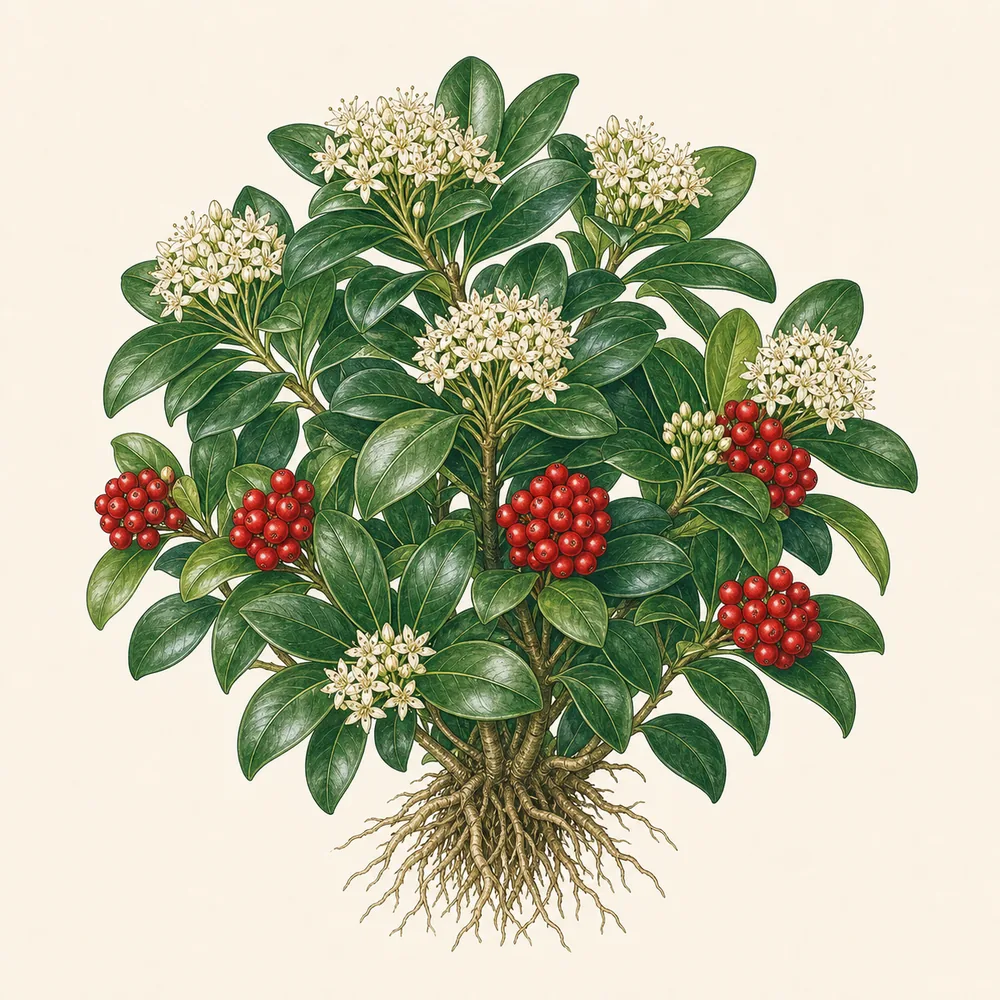
Skimmia
A neat, dependable evergreen for shade, earning its keep almost year-round: red-tinged buds through winter, scented spring flowers, and — on female plants with a male nearby — a lasting crop of glossy red berries. Slow, tidy and low-fuss, it's one of the best shrubs for a shady spot or a winter pot.
Toxic if eaten (berries & leaves)
Skimmia (Skimmia japonica) is on the RHS list of potentially harmful plants. The bright red berries and the foliage contain alkaloids that can cause vomiting and stomach upset if eaten. The showy berries are the main hazard around pets and children.
Care at a glance
Everything that matters, in six lines. The detail is further down.
Position
One of the best shrubs for shade — happy in dappled or fairly deep shade. Too much hot sun bleaches the leaves to a sickly yellow-green.
Water
Likes reliably moist soil and dislikes drying out, but won't tolerate waterlogging. Water pots regularly and mulch borders to hold moisture.
Hardiness
Hardy across the UK and unbothered by cold. Its winter buds and berries are a big part of the appeal in the coldest months.
Soil
Prefers acid or neutral, humus-rich soil. On chalk it tends to yellow, so grow it in ericaceous compost in a pot and don't add lime.
Feeding
A yearly mulch of leaf mould and an ericaceous feed in spring keeps the leaves a healthy green. Pale, yellowing foliage usually means the soil is too limy.
Pruning
Slow and naturally rounded, so it seldom needs cutting. Trim lightly after flowering only to shape, keeping berries on female plants where you can.
What to do, and when
The clusters of buds open into scented white or cream flowers through April. It's the main pollination window, so male and female plants flowering together set the autumn berries.
Quietly getting on with it in the shade. Keep the soil moist through dry spells, mulch to lock in moisture, and water containers regularly so they don't dry out.
Berries ripen to glossy red on pollinated female plants and the fat flower buds form for next year. A good time to plant while the soil is still warm and damp.
Peak interest — female plants hold their red berries and males like 'Rubella' show off red-tinged buds all season. Excellent in a shady winter pot by the door.
Berries need a boy and a girl
Most skimmias are dioecious — male and female flowers grow on separate plants, and only females carry the berries. Plant a lone female and it flowers but never fruits; plant only males and you get buds and blossom but no berries at all.
For a berry crop you need a male and a female flowering near each other. One male like 'Rubella' will pollinate several females such as 'Nymans' or 'Veitchii' planted within a few metres. If berries are all you're after, check the label carefully before buying.
The best shrub for a shady corner
Skimmia genuinely thrives where many shrubs sulk — dappled to fairly deep shade, under trees or against a north wall. In too much sun the leaves bleach to a pale, unhealthy yellow, so shade is a feature, not a compromise.
It's slow, evergreen and neatly rounded, needing almost no pruning, which makes it ideal for low-maintenance planting and winter containers. A male like 'Rubella', with its red winter buds, is a mainstay of shady doorstep pots through the cold months.
Keep it green: acid soil and moisture
Yellowing leaves are the commonest skimmia complaint, and the usual cause is soil that's too alkaline. Skimmia is happiest on acid to neutral, humus-rich ground; on chalk, grow it in ericaceous compost in a pot rather than fighting the soil.
The other trigger is drought and hot sun together. Keep the roots cool and moist with a leaf-mould mulch, water pots and dry borders through summer, and site it out of harsh afternoon sun to keep the foliage a deep, glossy green.
Common problems
Yellow, bleached leaves
Usually soil that's too limy, or too much hot sun. Grow in acid or ericaceous compost, move it into shade, and use a sequestered iron feed as a quick green-up.
Flowers but no berries
A female with no male nearby, or an all-male planting. Check the sexes — you need a male and female flowering close together, or a self-fertile reevesiana type.
Scorched, crisp leaf edges
Sun scorch and drought on a plant in too bright or dry a spot. Shift it into shade, mulch well and keep the soil moist, especially for container plants.
Wilting despite moist soil
Often root problems from waterlogging or, in pots, vine weevil grubs. Improve drainage, never leave it standing wet, and check the rootball for cream C-shaped larvae.
Everything a skimmia needs
Shade, acid-to-neutral soil, steady moisture — and a male alongside a female for berries.
We take no commission on anything in the "save your money" tier — if we don't think you should buy it, we don't link it. How our recommendations work
If you like this, try
Other plants with a similar temperament.
How we checked this
Care cross-checked against the RHS, which lists Skimmia as a potentially harmful plant — berries and foliage contain alkaloids. If our page and these sources ever disagree, believe them — and tell us.
Sources: RHS · ASPCA — toxic & non-toxic plants
Last reviewed · August 2026