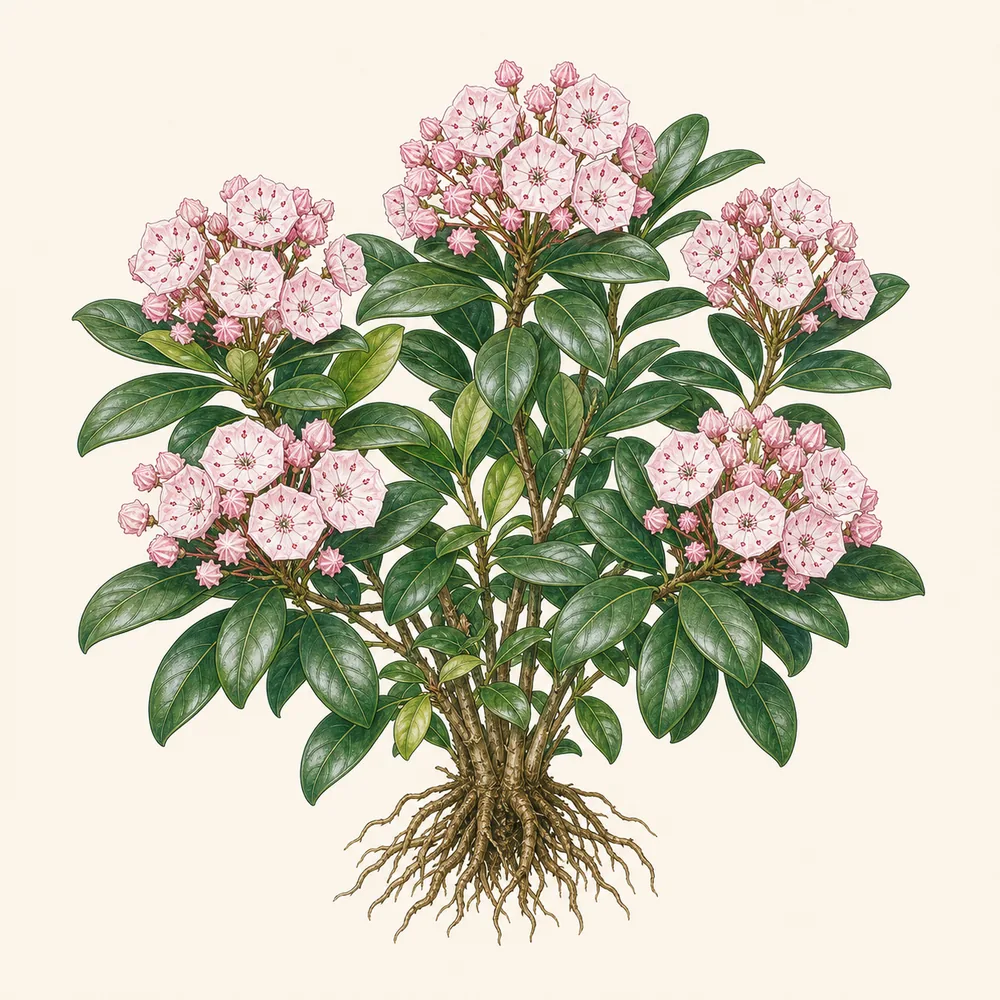
Mountain Laurel
A handsome evergreen relative of the rhododendron, prized for early-summer flowers that look like tiny pleated parasols or iced buns, opening from crimped, geometric buds. It wants the same acid soil and dappled shade as its cousins, and rewards patience with one of the loveliest shrub flowerings of June.
Seriously toxic to cats, dogs & horses
Mountain laurel (Kalmia) is listed as toxic to cats, dogs and horses on the ASPCA database. Like its rhododendron relatives it holds grayanotoxins in every part — serious cardiac and nerve poisoning can follow even a small nibble. Beautiful in flower, but site it well away from grazing animals and keep prunings out of reach.
Care at a glance
Everything that matters, in six lines. The detail is further down.
Position
Dappled or part shade suits it best, with shelter from cold winds. It flowers more freely with some sun but resents hot, dry, exposed spots.
Water
Shallow-rooted and intolerant of drought — keep the soil reliably moist, ideally with rainwater, and never let a young plant dry out in summer.
Hardiness
Tough and fully hardy across the UK. The flowers open in early summer, so they're rarely troubled by frost the way rhododendron blooms can be.
Soil
Must have acid (ericaceous) soil, moist but well-drained and rich in leaf mould. On chalk or neutral ground, grow it in ericaceous compost in a container and never add lime.
Feeding
A mulch of leaf mould each year plus an ericaceous fertiliser in spring keeps it green. Yellowing between the veins points to soil that's too limy.
Pruning
Slow-growing and naturally neat, so it rarely needs pruning. Deadhead spent flowers if you can reach, and remove any dead or straggly shoots after flowering.
What to do, and when
New growth flushes and the distinctive crimped buds swell towards the tips of the shoots. Mulch with leaf mould and feed with an ericaceous fertiliser as growth begins.
The main event — pleated, parasol-like flowers open through June into July. Keep the shallow roots reliably moist afterwards while next year's buds are being set.
A good planting window while the soil stays warm and damp. The glossy evergreen leaves carry the shrub through, so top up the mulch and settle new plants in.
Fully hardy and evergreen, it holds its own through the cold. Check container plants haven't dried out in mild spells, and firm in anything lifted by frost.
Same needs as a rhododendron
Kalmia is an ericaceous woodland shrub, so treat it exactly as you would a rhododendron: acid soil (pH 4.5–6), dappled shade, shelter from wind, and a shallow root run kept cool and moist with leaf mould.
On neutral or chalky soil it will slowly yellow and starve. Grow it instead in a large container of ericaceous compost, water with rainwater rather than hard tap water, and never let lime, mushroom compost or spent bonfire ash near it.
Worth the wait
Mountain laurel is slow-growing and can be quietly unremarkable for its first few years, which is why it's less common in gardens than it deserves. It doesn't need feeding hard to hurry it — steady moisture and a yearly mulch do more.
The reward is the flower. The buds are fluted and geometric, like tiny piped icing, and open into five-sided cups in early summer, often two-toned. Few shrubs match it, and an established plant flowers reliably year after year.
Handle the poison with respect
This is one to place thoughtfully. Every part of Kalmia contains grayanotoxins, the same class of compounds as in rhododendron, and they're seriously toxic to cats, dogs and — especially — grazing horses and livestock.
Keep it well away from paddocks and areas where animals graze, and don't leave prunings or fallen leaves where stock or pets might browse them. Even a small amount can cause serious cardiac and nerve poisoning, so bag and bin clippings rather than composting them loose.
Common problems
Yellow leaves with green veins
Lime-induced chlorosis from soil that's too alkaline. Move into ericaceous compost, switch to rainwater, and use a sequestered iron feed as a short-term fix.
Few or no flowers
Usually too much shade, a plant still settling in, or last summer's drought stopping buds forming. Give it a little more light and keep it moist through summer.
Leaf spots or scorched patches
Fungal leaf spot in damp, still air, or sun scorch on an exposed plant. Improve airflow, clear fallen leaves, and shelter it from harsh afternoon sun and drying wind.
Sudden wilting and dieback
Often Phytophthora root rot where the soil sits wet. Kalmia wants moist but well-drained ground — improve drainage and never plant in a spot that waterlogs.
Everything a mountain laurel needs
Acid soil, dappled shade, steady moisture — and a spot well away from grazing animals.
We take no commission on anything in the "save your money" tier — if we don't think you should buy it, we don't link it. How our recommendations work
If you like this, try
Other plants with a similar temperament.
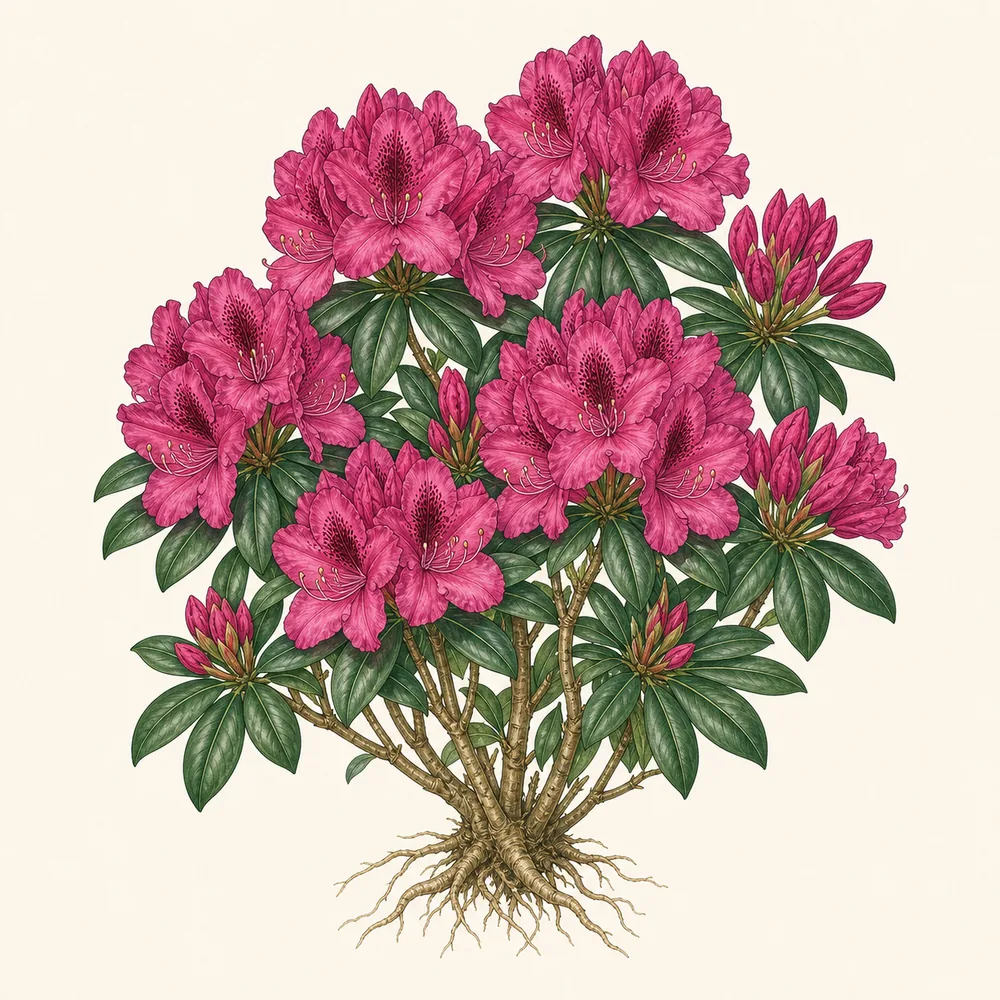
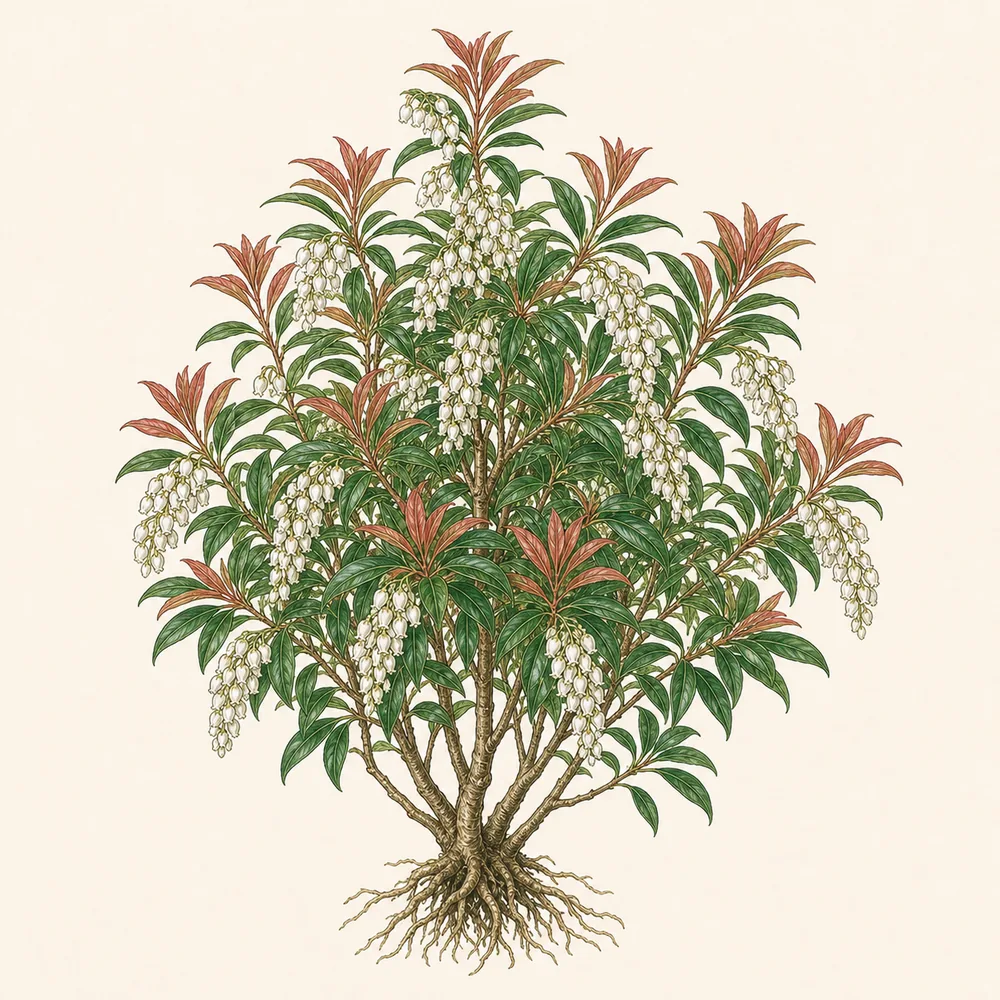
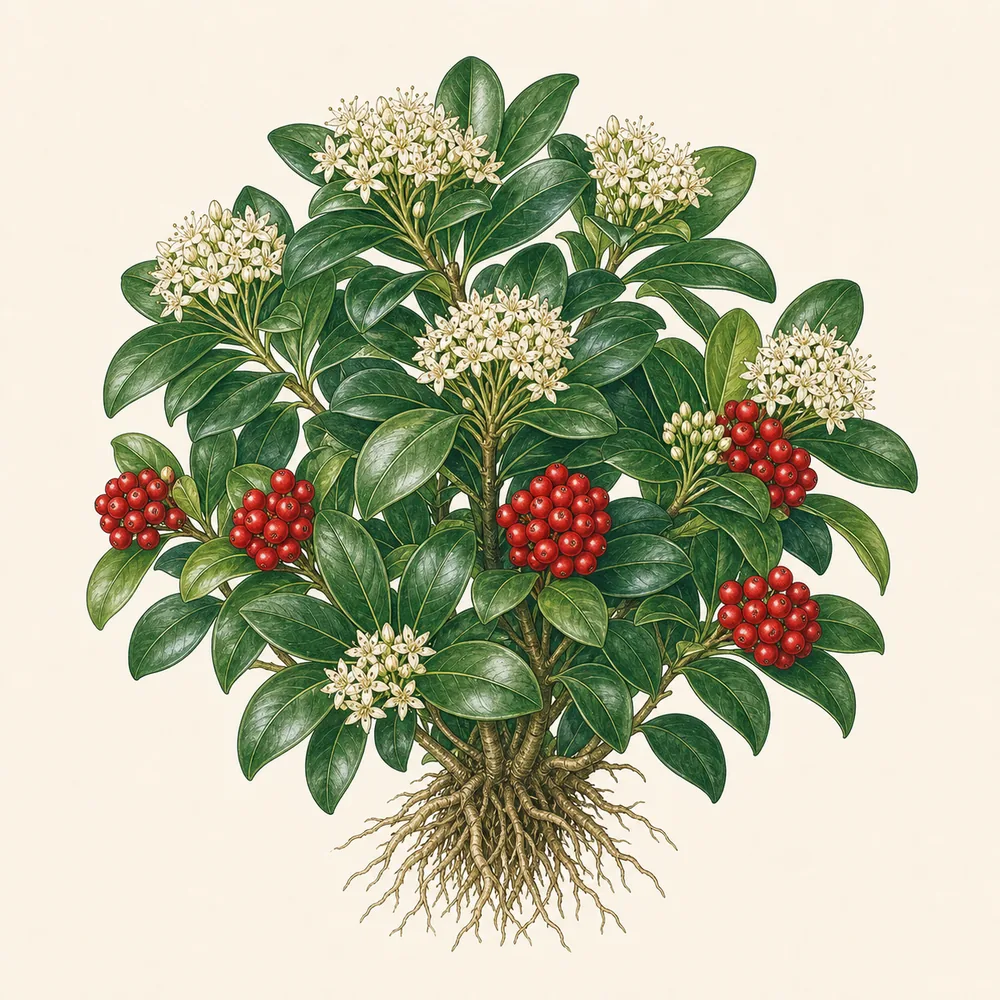
How we checked this
Care cross-checked against the RHS. Toxicity taken from the ASPCA database, which lists Mountain Laurel (Kalmia) as toxic — grayanotoxins, serious cardiac/nerve effects. If our page and these sources ever disagree, believe them — and tell us.
Sources: RHS · ASPCA — toxic & non-toxic plants
Last reviewed · August 2026