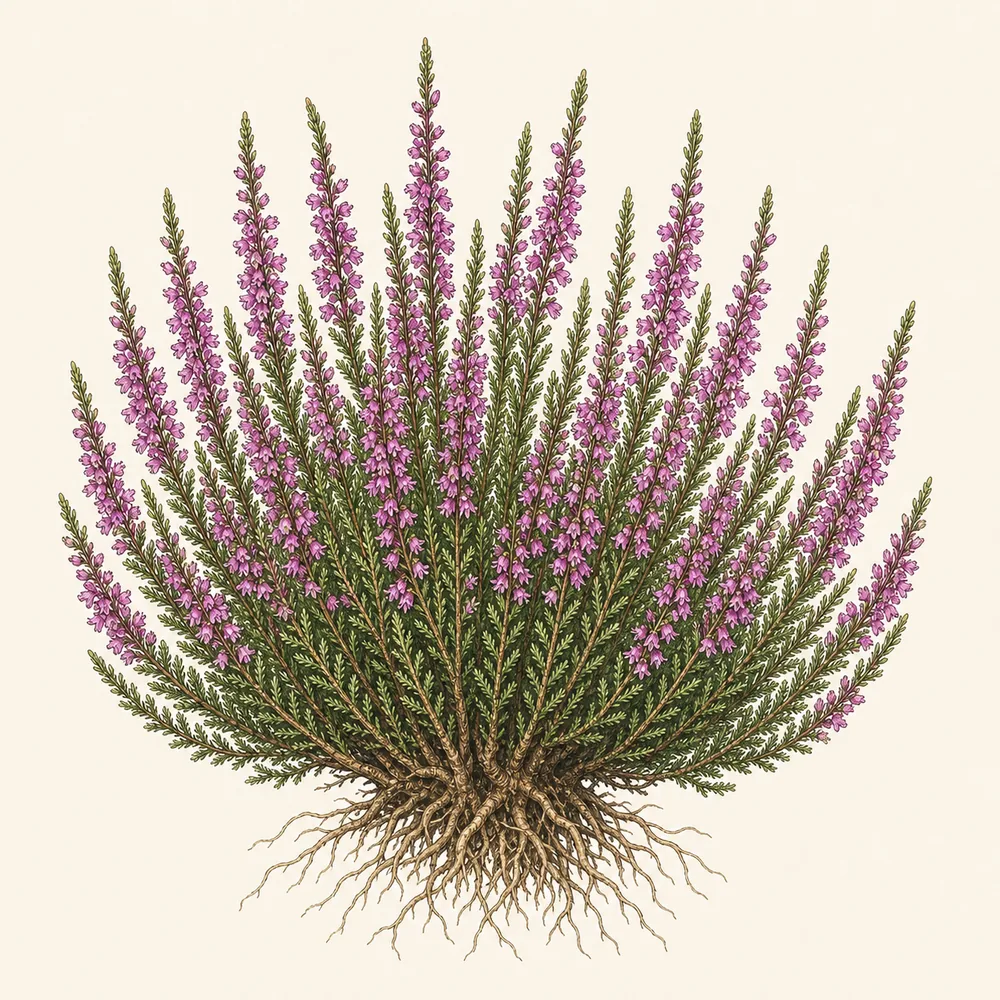
Heather
Low, evergreen ground cover that carpets acid soil in a haze of pink, purple and white flowers from summer into autumn — and it's a magnet for bees. Easy on the right ground, the whole knack is acid soil, full sun, and a shear-over straight after flowering to keep it neat.
Not listed by ASPCA
The ASPCA doesn't list heather (Calluna), so we don't stamp it safe. It has no recorded serious toxicity and is widely grown around animals. With no database entry we flag the gap honestly rather than guess.
Care at a glance
Everything that matters, in six lines. The detail is further down.
Position
Needs an open, sunny spot for dense growth and the best flowering. In shade it grows leggy and flowers poorly.
Water
Keep new plants watered through their first year, ideally with rainwater. Once settled it's fairly drought-tolerant.
Hardiness
A hardy native of British moors and heaths, tough and reliable even in cold, exposed gardens.
Soil
Calluna must have acid soil — it won't grow on chalk or lime. On alkaline ground, grow it in ericaceous compost in pots.
Feeding
Thrives on poor, acid ground. If anything, use only a light ericaceous feed; rich soil makes it soft and floppy.
Pruning
Shear lightly straight after the flowers fade, cutting back into last year's growth but not into bare old wood.
What to do, and when
New growth begins. Plant new heathers now, water them in with rainwater, and mulch with bark or ericaceous compost.
Summer-flowering Calluna comes into bloom from July, alive with bees. Keep new plants watered through dry spells.
Flowering continues into autumn, and many varieties have richly coloured foliage. Shear over each plant once its flowers have faded to keep it compact.
The evergreen foliage carries the colour through the cold, some turning bronze or red. Avoid walking on frozen plants; do no cutting now.
It's all about acid soil
Heather has one non-negotiable demand: acid soil. Calluna is a plant of moorland and heath, and it simply will not grow on chalky or limy ground — the leaves yellow, it starves, and it dies. Before planting, it's worth a cheap soil test to check your pH.
If your garden is alkaline, don't despair — grow heather in pots or raised beds of ericaceous (lime-free) compost instead, and water it with rainwater rather than hard tap water, which is often limy enough to undo your efforts over time.
Shear after flowering to keep it neat
The one job heather really needs is a shear-over right after it finishes flowering. Take a pair of shears and trim off the faded flower stems, cutting back into the previous season's growth. This keeps each plant tight, bushy and covered in fresh foliage.
The key is not to cut into the bare old wood at the base — like many heathers, Calluna is reluctant to reshoot from it, and hard cutting leaves dead gaps. Trim little and regularly each year and plants stay neat for a decade or more before they need replacing.
A magnet for bees
Few garden plants pull in pollinators like heather. In late summer, when many flowers are going over, a drift of Calluna hums with bees — honeybees and bumblebees especially — and heather honey is prized for it.
Plant it in generous groups rather than dotted singles, both for the best display and to make it a proper feeding station for insects. Combine summer-flowering Calluna with winter-flowering heaths (Erica) nearby and you can offer nectar across much of the year.
Common problems
Yellowing leaves, poor growth
Almost always lime in the soil or water. Heather needs acid conditions — grow in ericaceous compost and water with rainwater.
Leggy, sparse, woody plants
Too much shade, or never sheared. Grow in full sun and shear over each year after flowering to keep growth dense.
Bare gaps that won't regrow
The plant was cut back into old wood, which rarely reshoots. Trim only into last year's growth; replace very old, bare plants.
Wilting, dying patches
Often drought on young plants, or waterlogging. Keep new plants watered but ensure the ground drains freely — heather dislikes wet feet.
Everything a heather bed needs
Acid soil, full sun, and a shear-over after flowering.
We take no commission on anything in the "save your money" tier — if we don't think you should buy it, we don't link it. How our recommendations work
If you like this, try
Other plants with a similar temperament.

How we checked this
Care cross-checked against the RHS. The ASPCA does not list heather (Calluna), so its pet-safety is unconfirmed and we have not stamped it safe. If our page and these sources ever disagree, believe them — and tell us.
Sources: RHS · ASPCA — toxic & non-toxic plants
Last reviewed · August 2026