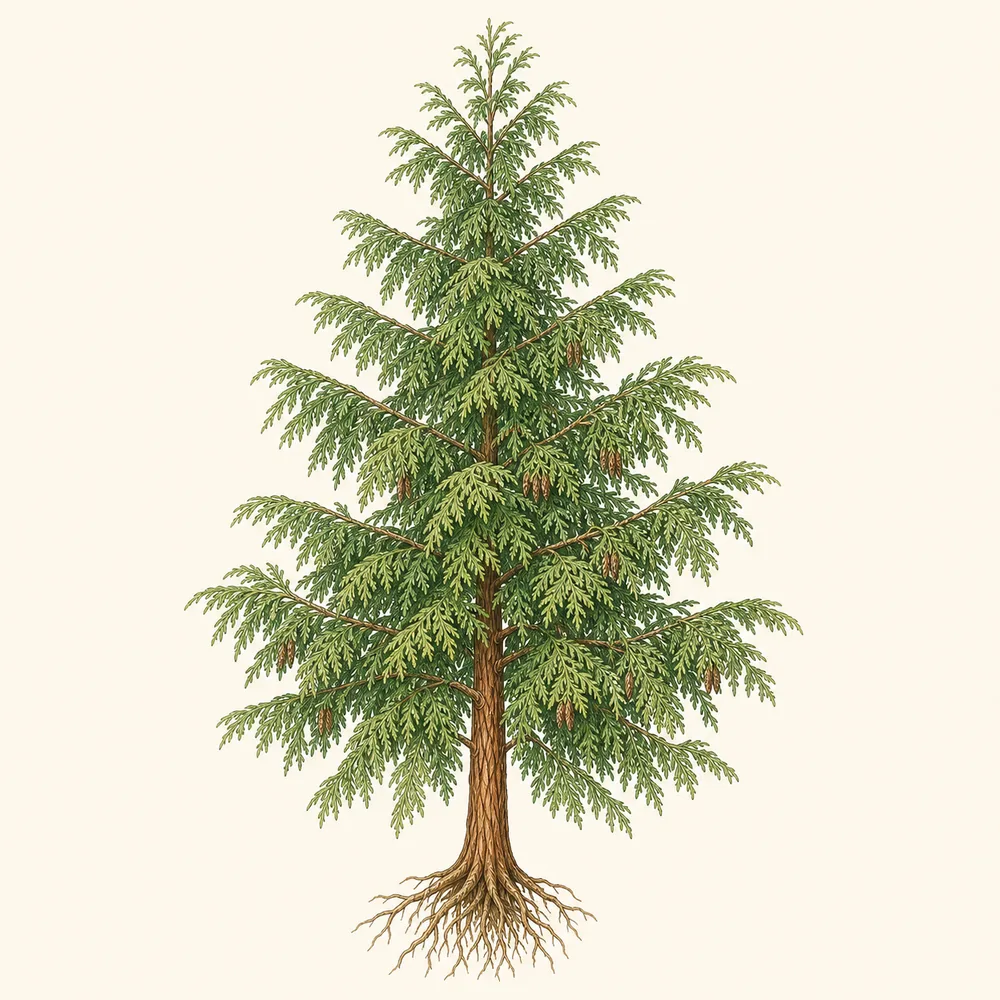
Western Red Cedar
A fast, glossy conifer hedge with foliage that smells of pineapple or fruit when clipped. Nearly as quick as leylandii but far more forgiving: unlike leylandii, thuja will reshoot from old brown wood, so an overgrown hedge can be cut hard back and brought under control.
Not listed by ASPCA
The ASPCA doesn't list western red cedar (Thuja), so we don't stamp it safe. Its aromatic foliage can irritate skin on handling. With no database entry we flag the gap honestly rather than guess.
Care at a glance
Everything that matters, in six lines. The detail is further down.
Position
Grows well in full sun to part shade, making a dense, glossy green screen. More light gives the fullest growth.
Water
Keep young plants watered through their first two summers. It prefers a soil that doesn't dry out badly.
Hardiness
Hardy across the UK and wind-tolerant, so it works as a screen on exposed as well as sheltered sites.
Soil
Happy on most soils, including heavier ground, as long as it isn't waterlogged. Copes better with damp than leylandii.
Feeding
A spring mulch helps young plants along. An established hedge grows fast enough without much feeding.
Trimming
Trim once or twice from May to August. It reshoots from old wood, so it can be cut hard back to renovate.
What to do, and when
Growth restarts from May and the clipped foliage smells strongly fruity. Give the first trim of the year and shape the sides.
Main growing season — a second clip in July or August keeps the hedge dense and neat. Any hard renovation is best done now while it can regrow.
Growth slows; a last light tidy by early autumn is fine. Water in any young plants during dry spells before winter.
Largely dormant, so leave trimming alone. A good time to plan renovation cuts for the coming spring on an overgrown hedge.
The forgiving alternative to leylandii
Western red cedar — thuja — gives you almost the same thing as leylandii: a fast, dense, evergreen conifer screen. But it fixes leylandii's biggest flaw. Thuja reshoots from old, brown wood, so if the hedge gets overgrown you can cut it hard back and it will green up again.
That single difference makes it far more forgiving. Where a neglected leylandii is stuck bare if you overcut it, an overgrown thuja can be renovated over a season or two and brought back to a tidy, manageable size. For most gardeners it's the better long-term choice.
Fragrant, glossy and dense
Run your hand along a thuja hedge, or clip it, and the foliage releases a distinctive fruity, pineapple-like scent — one of its real charms and something leylandii lacks. The leaves are a glossier, richer green too, and they turn a slight bronze in hard winters before greening up again.
It clips into a dense, formal face and holds its shape well between trims. Note that the aromatic foliage can irritate skin on some people, so wear gloves and long sleeves when cutting it.
Growth rate and trimming
Thuja is fast but a touch more controllable than leylandii, typically 30–60 cm a year. That still means regular attention — trim once or twice between late spring and late summer to keep it dense and to the height you want.
Because it regrows from old wood, timing renovation matters: do any hard cutting back in spring or early summer, when there's a full growing season ahead for it to reshoot and clothe the cut faces with fresh green.
Common problems
Browning or bronzing foliage
Often winter cold or drought stress; thuja can bronze in hard winters and green up in spring. Persistent brown patches may be thuja blight — improve air flow and remove affected growth.
Overgrown, too large a hedge
Unlike leylandii, thuja can be renovated. Cut hard back in spring or early summer and it will reshoot from the old wood.
Thin, gappy growth
Usually too much shade or dry roots. Keep young plants watered, mulch, and give a little more light where you can.
Bare base
The hedge grown too tall, or dense shade below. Trim to a slight batter so light reaches the lower growth.
Everything a thuja hedge needs
A fast, fragrant screen you can actually cut back — plus a couple of trims a year.
We take no commission on anything in the "save your money" tier — if we don't think you should buy it, we don't link it. How our recommendations work
If you like this, try
Other plants with a similar temperament.
How we checked this
Care cross-checked against the RHS. The ASPCA does not list western red cedar (Thuja), so its pet-safety is unconfirmed and we have not stamped it safe. If our page and these sources ever disagree, believe them — and tell us.
Sources: RHS · ASPCA — toxic & non-toxic plants
Last reviewed · August 2026