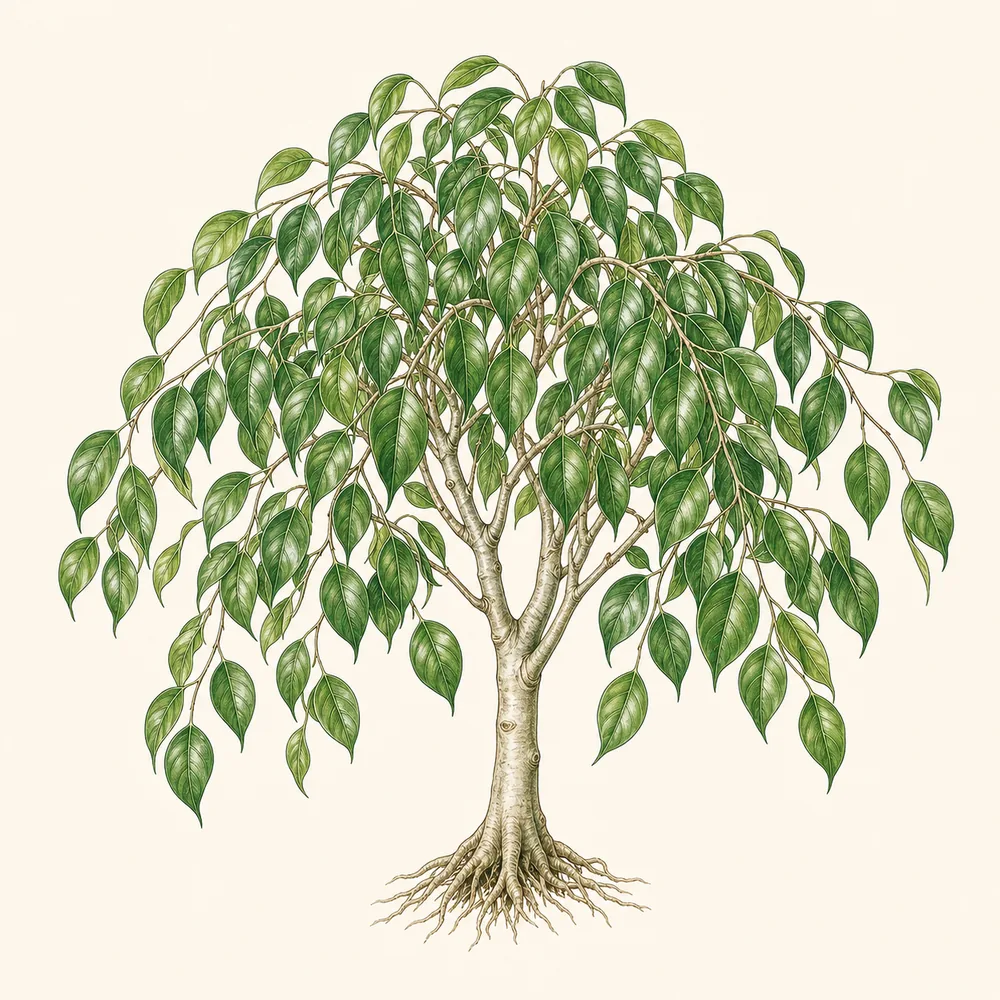
Weeping Fig
An elegant indoor tree with slender, arching branches and glossy, pointed leaves. Handsome and long-lived, but famously touchy — it drops its leaves at the slightest change and takes a while to settle.
Toxic to cats & dogs if chewed
The weeping fig (Ficus benjamina) is listed as toxic to cats and dogs on the ASPCA database. Its milky sap contains ficin and other irritants; chewing causes mouth irritation, drooling and vomiting, and the sap can irritate skin. Keep pets from chewing it.
Care at a glance
Everything that matters, in six lines. The detail is further down.
Light
Give it a consistently bright spot out of harsh midday sun. Good, steady light keeps it full; too little and it thins and drops leaves.
Water
Water when the top few centimetres are dry, then drain fully. It dislikes both drought and soggy roots — erratic watering triggers leaf drop.
Temperature
Steady room warmth. It hates cold draughts and sudden temperature swings — keep it above 13 °C and away from doors and cold glass.
Humidity
Copes with normal rooms but prefers a little extra humidity. Dry, heated air makes leaf drop worse.
Feeding
A balanced houseplant feed monthly through spring and summer keeps the canopy dense and green.
Soil
A good peat-free houseplant mix that drains freely. It likes to be reasonably snug in its pot rather than swimming in compost.
What to do, and when
Growth resumes. Repot only if truly pot-bound, resume feeding, and prune to shape before the main growth flush — wash your hands after cutting.
Peak growth. Keep it in steady bright light, water as the top dries, and feed monthly. Turn it occasionally so it grows evenly.
Growth slows with the light. Ease back on water and feed, and expect a few leaves to drop as conditions shift.
Slower growth and its touchiest season. Water sparingly, keep it warm and off cold draughts, and don't panic at some seasonal leaf drop.
Why it drops its leaves
The weeping fig's reputation for shedding leaves is well earned. It responds to almost any change — a new position, a shift in light, a cold draught, a swing in watering — by dropping a flush of leaves. It isn't dying; it's protesting.
The fix is consistency. Find it a bright, draught-free spot and then leave it there. Resist moving it around the house, and it will settle, re-leaf, and reward you with a full, graceful canopy.
Handle the milky sap with care
Like all figs, a cut stem bleeds a milky white sap that contains ficin and other irritants. It can irritate skin and eyes, and it is why the plant is listed as toxic to pets that chew it.
None of this makes it a bad houseplant, but do wash your hands after pruning, keep the sap away from your eyes, and keep the plant out of reach of pets that like to nibble.
Pruning and shaping
Weeping figs take well to pruning and can be kept as a neat indoor tree for years. Trim to shape in spring, cutting back overlong or crossing branches just above a leaf node.
Mature specimens can even have their flexible young stems braided or trained. Whatever you do, prune before the summer growth flush so it can quickly fill back in.
Common problems
Sudden leaf drop
Its trademark reaction to change — a move, a draught, or erratic watering. Settle it in one bright, stable spot and keep care consistent.
Yellowing leaves
Usually overwatering or cold. Let the top dry more between drinks and move it somewhere warmer and out of draughts.
Sticky leaves or floor
Scale insects, which weeping figs are prone to. Wipe them off, treat with a suitable product, and check the plant regularly.
Thin, sparse canopy
Too little light. Move it to a brighter position and it will slowly fill back in with steady care.
Everything a weeping fig needs
A bright, stable spot, steady watering — and the discipline to leave it put.
We take no commission on anything in the "save your money" tier — if we don't think you should buy it, we don't link it. How our recommendations work
If you like this, try
Other plants with a similar temperament.
How we checked this
Care cross-checked against the RHS. Toxicity taken from the ASPCA database, which lists the weeping fig (Ficus benjamina) as toxic — ficin/psoralen sap causing oral and skin irritation. If our page and these sources ever disagree, believe them — and tell us.
Sources: RHS · ASPCA — toxic & non-toxic plants
Last reviewed · July 2026