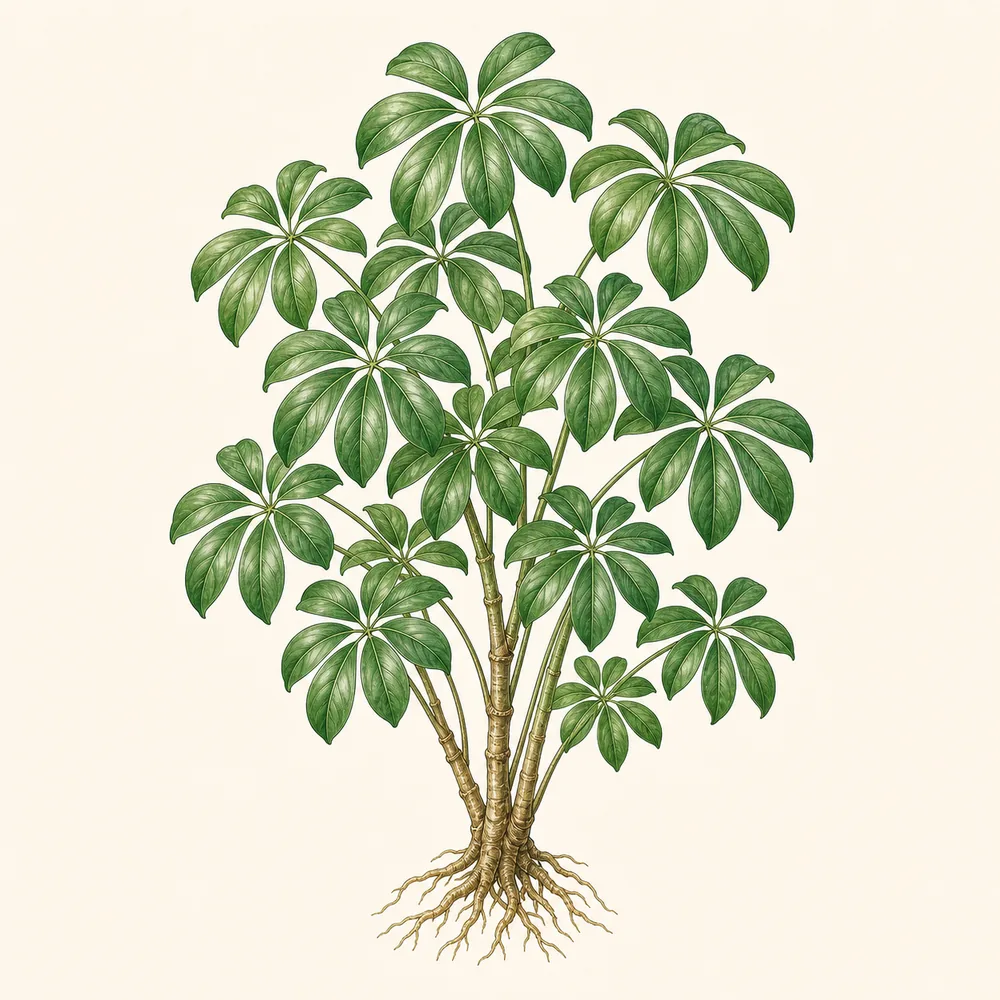
Umbrella Tree
A glossy, fast-growing foliage plant whose leaflets radiate out like the spokes of an umbrella. Tough, forgiving and easy to keep bushy — one of the more reliable indoor trees.
Toxic to cats & dogs if chewed
The umbrella tree (Schefflera) is listed as toxic to cats and dogs on the ASPCA database. It contains insoluble calcium oxalate crystals; chewing causes intense mouth and throat irritation, drooling and vomiting. Keep it away from pets that nibble.
Care at a glance
Everything that matters, in six lines. The detail is further down.
Light
Bright indirect light keeps it full and compact. It tolerates medium light but grows leggy in gloom; avoid harsh direct sun.
Water
Water when the top few centimetres are dry, then drain fully. It is far more forgiving of a missed watering than of soggy roots.
Temperature
Ordinary room warmth. Keep it above 13 °C and off cold draughts, which can trigger leaf drop.
Humidity
Happy in normal room humidity. A little extra keeps the leaves glossy, but it isn't fussy about dry air.
Feeding
A balanced houseplant feed monthly through spring and summer keeps up its fast, leafy growth.
Soil
A good peat-free houseplant mix that drains freely. It grows fast, so pot on every year or two as it fills its pot.
What to do, and when
Growth restarts. Repot if crowded, resume feeding, and prune leggy stems to encourage bushier regrowth as the light returns.
Peak growth. Keep it in bright indirect light, water as the top dries, and feed monthly. Turn the pot so it grows evenly.
Growth slows with the light. Ease back on water and feed, and move it away from radiators as the heating comes on.
Slower growth. Water sparingly, keep it above 13 °C and off cold draughts, and expect little new growth until spring.
Keeping it bushy, not leggy
Umbrella trees grow fast, and in poor light they stretch — stems lengthen, the gaps between leaves widen, and lower leaves drop, leaving a bare, leaning plant. The two fixes are simple: more light and regular pruning.
Cut leggy stems back in spring and the plant branches from below the cut, quickly filling out bushier than before. Combine that with a bright spot and you keep the dense, full look that makes it worth growing.
Watering the easy way
This is a forgiving plant that far prefers to run a little dry than to sit wet. Let the top few centimetres of compost dry out, then water thoroughly and let the excess drain away.
Overwatering is the main way people lose one — cold, soggy roots cause blackening leaves and stem rot. When in doubt, wait another day before watering.
Wipe the leaves and watch for pests
The glossy leaflets collect dust, which dulls them and blocks light. Wipe them over with a damp cloth every few weeks to keep them shining and let the plant breathe.
It is a little prone to scale and spider mites, especially in dry winter air — a regular wipe-down is also your chance to spot trouble early and deal with it before it spreads.
Common problems
Leggy, sparse growth
Too little light. Move it brighter and prune the long stems in spring — it will branch and bush out from below the cuts.
Blackening or dropping leaves
Usually overwatering or cold. Let the top dry more between drinks, improve drainage, and keep it off cold draughts.
Sticky leaves or a sooty film
Scale insects, which schefflera are prone to. Wipe them off, treat with a suitable product, and check regularly.
Fine webbing between the leaflets
Spider mites, common in dry winter air. Rinse the foliage, raise humidity a little, and treat repeatedly until clear.
Everything an umbrella tree needs
Bright indirect light, restrained watering — and a spring prune to keep it full.
We take no commission on anything in the "save your money" tier — if we don't think you should buy it, we don't link it. How our recommendations work
If you like this, try
Other plants with a similar temperament.
How we checked this
Care cross-checked against the RHS. Toxicity taken from the ASPCA database, which lists the umbrella tree (Schefflera) as toxic — insoluble calcium oxalates. If our page and these sources ever disagree, believe them — and tell us.
Sources: RHS · ASPCA — toxic & non-toxic plants
Last reviewed · July 2026