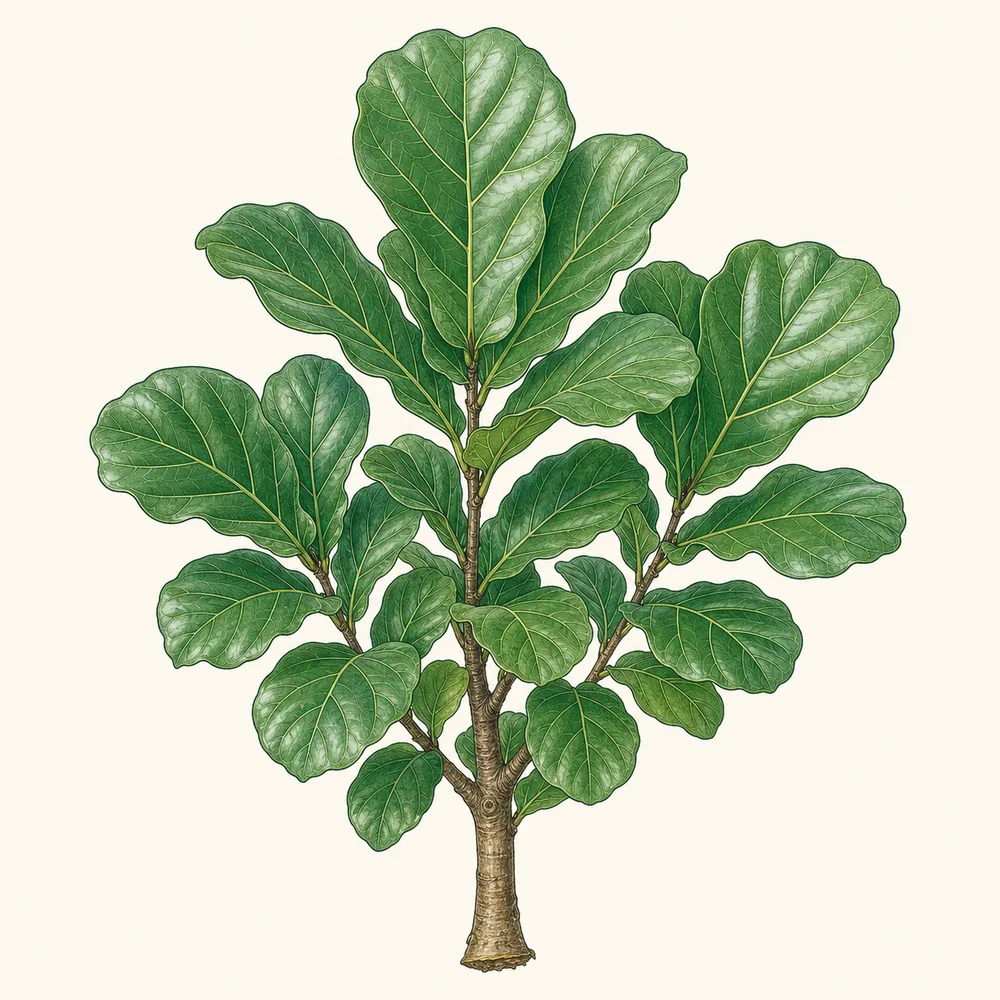
Fiddle-Leaf Fig
The Instagram houseplant — a small indoor tree of huge, glossy violin-shaped leaves. Gorgeous, but it has a reputation for sulking. The secret is boring: bright light, steady watering, and leaving it alone in one good spot.
Mildly toxic to cats, dogs & horses if chewed
A Ficus — the milky sap contains ficin and psoralen, which cause mouth and gut irritation if eaten and can irritate skin on contact. Unpleasant rather than dangerous, but keep it away from pets that chew and wash your hands after pruning. Source: ASPCA.
Care at a glance
Everything that matters, in six lines. The detail is further down.
Light
As much bright light as you can give it, near a window; a little gentle direct sun is fine. Gloom makes it drop leaves.
Water
Soak thoroughly and drain. Consistency is everything — it hates both drought and soggy roots.
Temperature
Warm and steady. Cold draughts and sudden changes are the fast route to dropped leaves.
Humidity
Happier above ~40%. Keep it away from radiators and drying vents.
Feeding
A balanced feed spring to late summer supports those big leaves.
Soil
A peat-free houseplant mix with added bark or perlite for drainage.
What to do, and when
Growth restarts. Repot if pot-bound, resume feeding, and pick its permanent bright spot now.
Main growth. Water on a steady rhythm, feed monthly, and wipe the big leaves free of dust.
Ease off water and feed as light drops. Move it clear of radiators before the heating comes on.
Resting. Water less, no feed, and shield it from cold draughts and hot dry air alike.
It hates change more than anything
The fiddle-leaf fig’s famous drama — dropping leaves, brown patches — is nearly always a reaction to change: a new home, a move across the room, a cold draught, or a swing between bone-dry and soggy. It is a creature of habit.
Find it one bright, draught-free spot and commit to it. Water on a steady rhythm, and resist the urge to shuffle it around. A settled fiddle-leaf is a surprisingly tough plant.
Light, and keeping the leaves clean
Those big leaves need bright light to earn their keep, and they collect dust that blocks it. Wipe them with a damp cloth every few weeks and turn the plant occasionally so it grows evenly rather than leaning to the window.
Brown spots have two opposite causes: dark, mushy patches usually mean overwatering, while dry, crispy edges mean it went too dry or the air is too arid. Read the leaf before you reach for the watering can.
Common problems
Dropping leaves
Shock from a move, a cold draught, or erratic watering. Keep everything steady.
Brown spots or patches
Dark/mushy = overwatering; dry/crispy = too dry. Match the fix to the type.
Leaning to the window
Reaching for light. Rotate the pot a quarter-turn each week.
Dull, dusty leaves
Wipe with a damp cloth so they can photosynthesise properly.
Everything a fiddle-leaf fig needs
It needs steadiness more than it needs stuff.
We take no commission on anything in the "save your money" tier — if we don't think you should buy it, we don't link it. How our recommendations work
If you like this, try
Other plants with a similar temperament.
How we checked this
Care cross-checked against the RHS and NC State Extension. Toxicity confirmed against the ASPCA Ficus (fig) entry — toxic to cats, dogs and horses; principles ficin and psoralen; gastrointestinal and dermal irritation. If our page and these sources ever disagree, believe them — and tell us.
Sources: RHS · NC State Extension · ASPCA — Ficus
Last reviewed · July 2026