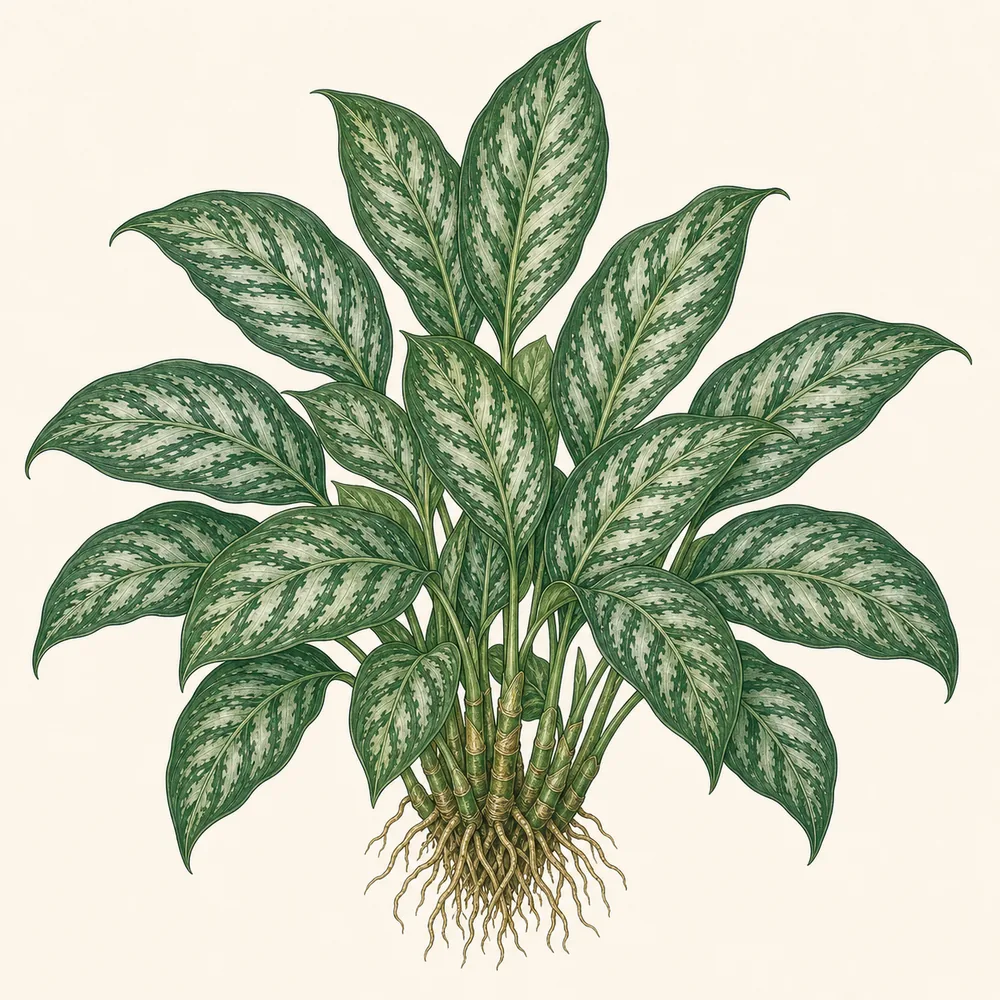
Chinese Evergreen
Broad, patterned leaves in silver, cream, green — and, in newer kinds, startling pinks and reds. One of the best-looking plants that genuinely tolerates a shady room, as long as you keep it warm.
Mildly toxic to cats, dogs & people if chewed
An aroid — the leaves contain insoluble calcium oxalate crystals, so chewing causes mouth and throat irritation, drooling and sometimes vomiting. Mild and self-limiting, but keep it away from pets and toddlers that nibble. Source: ASPCA.
Care at a glance
Everything that matters, in six lines. The detail is further down.
Light
Dark-green kinds take low light well; pink and heavily variegated ones need brighter (indirect) light for colour.
Water
Moderate and even. Let the surface dry between drinks; don’t keep it soggy.
Temperature
Warmth-loving. Cold and draughts are its real enemy — chilling damages the leaves.
Humidity
Tolerates normal rooms; brown tips can mean the air is very dry.
Feeding
A weak feed spring to summer keeps the leaves coming.
Soil
Good peat-free houseplant compost with a little drainage.
What to do, and when
Growth resumes. Repot if congested and resume feeding as warmth returns.
Main growth. Water when the top dries and feed monthly.
Ease off water and feed; watch for cold as the nights draw in.
Its vulnerable season — keep it warm (above 15 °C), away from draughts, and only lightly moist.
Colour in a shady room
Aglaonema is one of the few genuinely handsome plants that will take a low-light spot — the classic silver-and-green kinds positively prefer shade to strong sun. The vivid pink and red cultivars are the exception: they need decent (indirect) light to keep their colour, and fade to green in gloom.
Match the plant to the spot and it’s close to foolproof — no fussing over light for the green sorts, a brighter shelf for the colourful ones.
Warmth is the one rule
If a peace lily is dramatic about water, an aglaonema is dramatic about cold. It hails from tropical forest floors and resents temperatures below about 15 °C, cold windowsills, and draughts — all of which show up as blotchy, greyish damage.
Keep it warm and evenly (not heavily) watered and it will reward you for years with very little effort.
Common problems
Yellowing leaves
Overwatering or cold. Ease off water; move it somewhere warmer.
Brown leaf tips
Dry air or tap-water salts. Raise humidity; try rainwater.
Greyish, mushy patches
Cold damage. Keep it above 15 °C and out of draughts.
Faded colour
Coloured kinds are too dark. Give more indirect light.
Everything a Chinese evergreen needs
Warmth and the right spot do most of the work.
We take no commission on anything in the "save your money" tier — if we don't think you should buy it, we don't link it. How our recommendations work
If you like this, try
Other plants with a similar temperament.
How we checked this
Care cross-checked against the RHS and NC State Extension. Toxicity confirmed against the ASPCA Chinese evergreen entry — insoluble calcium oxalates; oral irritation, drooling, vomiting (mild). If our page and these sources ever disagree, believe them — and tell us.
Sources: RHS · NC State Extension · ASPCA — Chinese Evergreen
Last reviewed · July 2026